



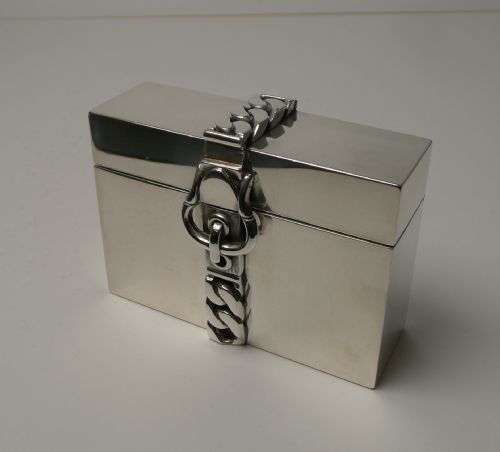

Small Silver Container
These small silver container pieces span Victorian and Edwardian trinket boxes to horn snuff mulls, offering practical pocket-sized storage for the discerning collector.
Small Silver Container
A small silver container encompasses a variety of pocket and desk wares, including pill boxes, snuff boxes, trinket boxes, pyx boxes, and stamp cases. The pieces found here range from Georgian and Victorian items to Edwardian, George V, and Mid-Century Modernist designs.
Buyers will most frequently encounter small sterling silver boxes embellished with materials such as mother of pearl, tortoiseshell, horn, and amethyst. Forms vary from novelty snipe boxes to round Indian silver vessels and spot-hammered Arts & Crafts pieces.
Origins span English provincial centres like Birmingham and Chester alongside Scottish, Anglo-Indian, Dutch, and Italian workshops. This diversity ensures that each small silver container carries distinct regional characteristics from the nineteenth and twentieth centuries.
Materials and construction techniques
Silversmiths utilised solid sterling silver and silver gilt, often hammering or chasing the metal to create decorative surfaces like the spot-hammered finishes seen in Arts & Crafts examples. Construction frequently incorporated hinges and snug-fitting lids suited for holding pills, snuff, or stamps.
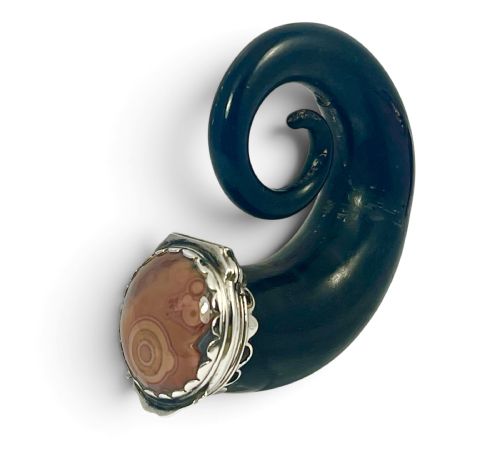
Organic materials such as mother of pearl, tortoiseshell, horn, and agate were painstakingly shaped and inlaid into the silver frames. These natural elements contrast with the bright metal, reflecting the meticulous handiwork of Victorian and Edwardian artisans.
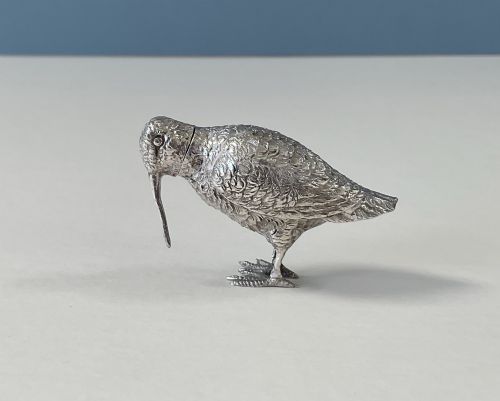
A tiny silver snipe perches quietly on the lid, keeping watch over your headache remedies.
Assessing quality and craftsmanship
Quality rests in the crispness of the chasing, the tightness of the lid closure, and the seamless integration of organic inlays like tortoiseshell or mother of pearl within the silver structure. Superior pieces display clear hallmarks and balanced proportions that elevate utilitarian items into fine decorative art.
The sophistication of the design dictates distinction, separating standard production pill boxes from intricate novelty items and specialised desk accessories. The refinement of secondary materials, such as polished horn or faceted amethyst, further distinguishes the better examples.
FA BARRETT·ASPREY·NATHAN & HAYES
The Small Silver Container Glossary
- Snuff box
- A small receptacle designed to hold dry powdered tobacco for inhalation. These pieces often combine silver with tortoiseshell or horn.
- Trinket box
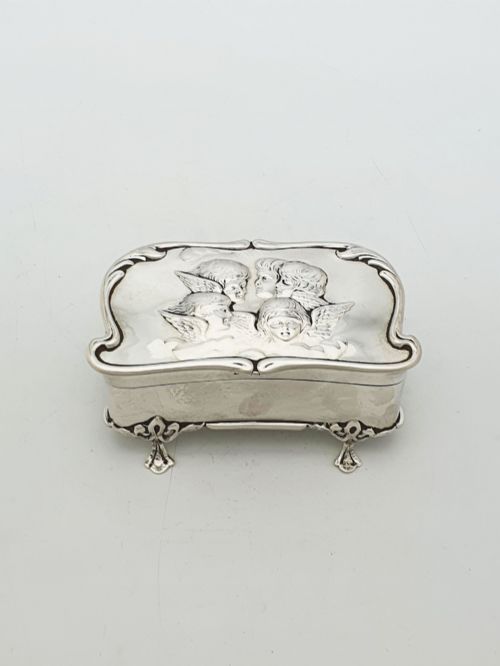
- A small decorative container used for storing rings, small jewellery, or personal keepsakes. They frequently appear with velvet or gilt interiors.
- Silver gilt
- Silver that has been coated with a thin layer of gold on its interior or exterior surfaces. This technique adds warmth and protects the underlying silver from tarnishing.
- Hallmark
- An official stamp applied to precious metals indicating purity, origin, and assay office. These marks help date the piece accurately.
Small Silver Container: Frequently Asked Questions
What were small silver containers used for?
These items served intimate daily purposes, holding medicinal pills, aromatic snuffs, postage stamps, or small personal trinkets. Their portable nature made them essential pocket companions for Victorians and Edwardians.
Over time, their utility shifted from strictly functional items to decorative desk accessories and collectible display pieces. Today, they continue to serve as elegant storage for small keepsakes.
How do I date a silver pill box?
Dating relies heavily on the assay hallmarks stamped into the silver, which indicate the specific year and town of testing. Stylistic clues such as Edwardian filigree or Arts & Crafts spot-hammering also point to distinct decades.
Additionally, the choice of secondary materials like tortoiseshell or mother of pearl aligns with the prevailing tastes of nineteenth and twentieth-century design periods.
How should I care for antique silver boxes?
Maintenance requires gentle cleaning with a soft cloth to preserve the natural patina and avoid damaging delicate inlays like horn or amethyst. Harsh chemical dips should be avoided, particularly on gilt interiors or organic surfaces.
Storing the pieces in stable humidity conditions protects both the silver structure and vulnerable materials such as tortoiseshell from warping or cracking.
Are novelty silver boxes collectable?
Novelty boxes shaped as animals, such as birds or snipe, command strong interest from collectors due to their whimsical designs and scarcity. Makers like Asprey produced particularly imaginative pieces that stand apart from standard geometric boxes.
Their charm lies in the clever concealment of the storage compartment within a detailed sculptural form.