



Cherub Silver Box
A cherub silver box brings together small-scale domestic metalwork and the lively, sculptural modelling of putti from the late Victorian and Edwardian eras.
Cherub Silver Box
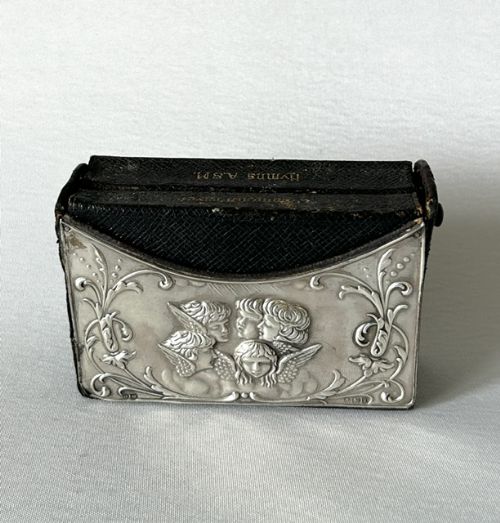
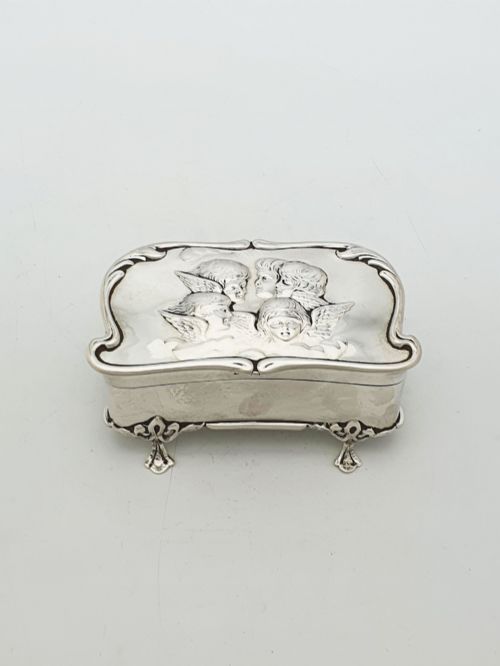
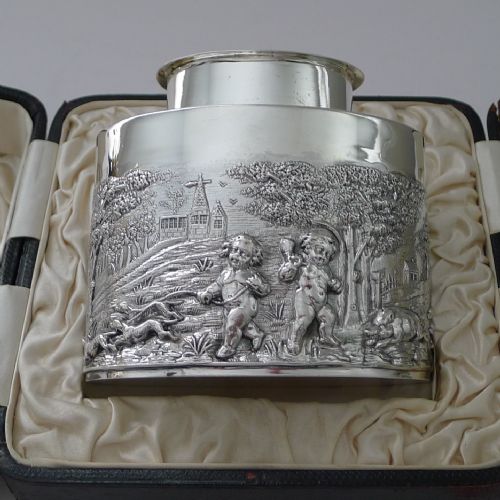
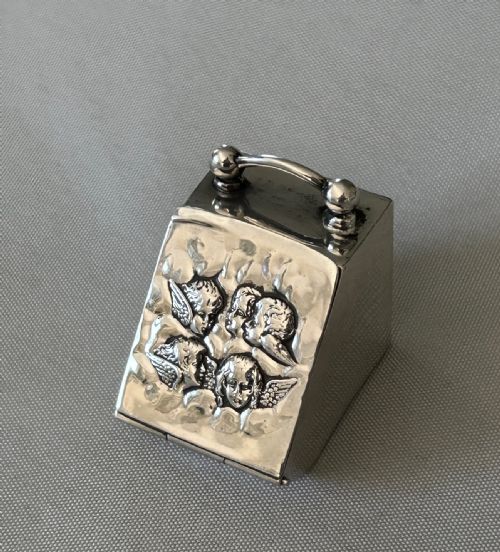
A cherub silver box is typically a small container intended for trinkets, jewellery, snuff, or pills, decorated with relief scenes of putti or winged infants. These pieces appear frequently from the late nineteenth and early twentieth centuries, spanning the Victorian, Edwardian, and c1900 periods.
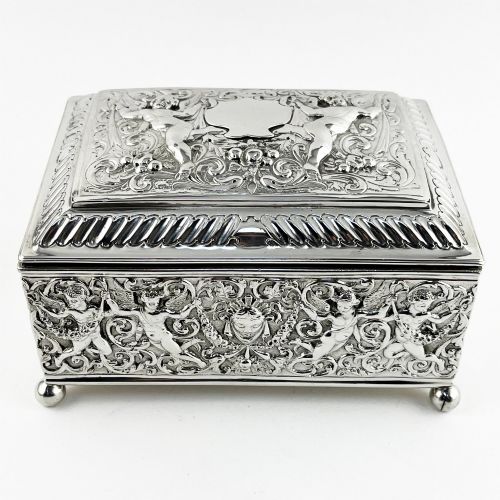
The domestic forms include round pill boxes, heart-shaped trinket caskets, rectangular ring boxes with velvet interiors, and larger table boxes. Many items originate from British assay offices such as Chester and Birmingham, alongside continental European workshops including German Hanau production.
How they were made
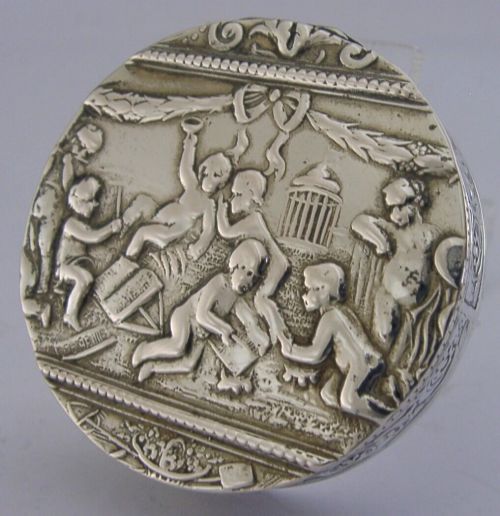
Makers utilised solid sterling silver, silver gilt, and 800-standard silver, often combining heavy gauge sheet metal with cast and chased relief panels. Continental silver boxes frequently relied on detailed repoussé work, where designs were hammered from the reverse to create raised figural scenes on the lid and sides.
Internal elements often featured fitted velvet linings, paper elements, or gilt washes to protect the metal and cushion small items. Hinges, clasps, and bezels were soldered carefully by hand to ensure tight closures on pocket-sized snuff boxes and larger dressing table caskets.
Several boxes depict cherubs not just lounging, but actively fishing, playing musical instruments, and driving miniature coal scuttles.
What varies in quality
The definition and depth of the chased cherub motifs distinguish finer boxes from simpler stamped examples, as skilled silversmiths hand-tooled facial expressions and wing feathers after casting. Heavier metal weight and sturdy hinges indicate better structural integrity, preventing distortion of the lid under regular handling.
Makers' marks, import hallmarks, and clear town stamps add documentary clarity that elevates certain pieces above unmarked continental novelties. Retaining intact interior velvet linings and clean silver-gilt interiors also preserves the original condition of the container.
William Comyns And Sons·William Hutton And Sons Ltd·H Matthews·Paul Storr
The Cherub Silver Box Glossary
- Repoussé
- A method of shaping metal by hammering from the reverse side to form a raised design. This technique allowed silversmiths to create three-dimensional cherub scenes on box lids.
- Hallmark
- Official stamps struck into precious metals to indicate the standard of purity, the assay office, and the date of manufacture. British pieces display town marks and date letters alongside the lion passant.
- Gilt interior
- A thin layer of gold applied to the inside of a silver box to prevent tarnishing from acidic contents like snuff or pills. This treatment adds a warm yellow contrast to the bright exterior silver.
- Hanau silver
- Refers to items produced by nineteenth-century German silversmiths specialising in historical revival styles and ornate figural boxes. Many pieces carry pseudo-hallmarks mimicking older European standards.
Cherub Silver Box: Frequently Asked Questions
What were cherub silver boxes used for?
These small containers served practical purposes on dressing tables and in pockets, holding pins, rings, matches, snuff, or medicinal pills.
Their decorative figural lids also made them popular dressing table ornaments and sentimental gifts during the Victorian and Edwardian eras.
How do I identify a Hanau silver box?
Hanau pieces often feature dense repoussé scenes of cavorting putti across every surface, accompanied by decorative scrollwork.
They frequently display stamped numbers or pseudo-hallmarks rather than official British assay office marks, reflecting late nineteenth-century German export production.
Are interior linings original?
Many surviving trinket and ring boxes retain their fitted velvet or silk linings, which cushioned delicate jewellery.
Because fabrics degrade over time, replacement linings appear frequently, though original papers and degraded silk remnants still survive in well-preserved examples.
How should I clean silver boxes with relief scenes?
Gentle dusting with a soft brush helps remove dirt from the recessed crevices of chased cherub figures without wearing down the high points.
Harsh abrasive polishes should be avoided because they flatten crisp repoussé work and scour away delicate silver-gilt interior finishes.