



Victorian Silver Canister
These pieces of victorian silver canister unite utility and decoration, offering a refined storage vessel that collectors seek for both history and display.

Victorian Silver Canister
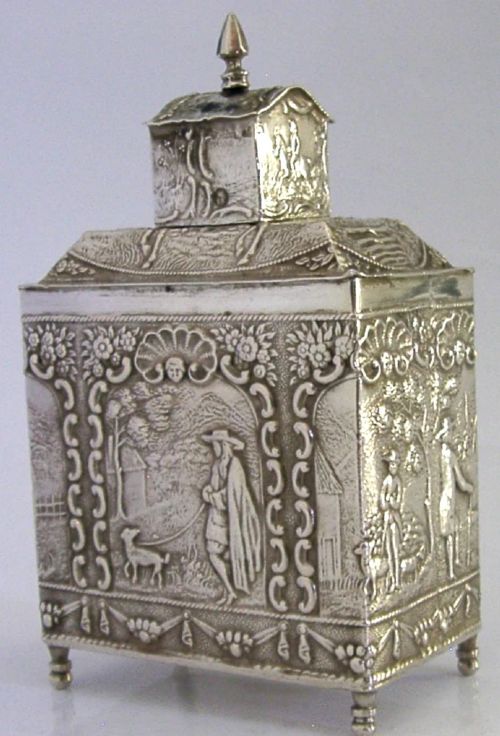
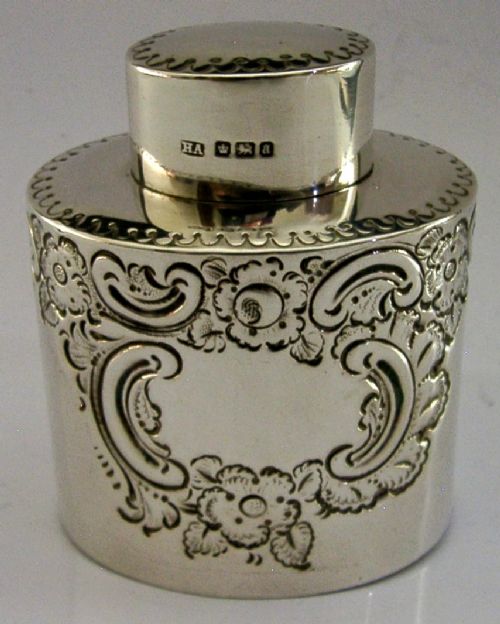
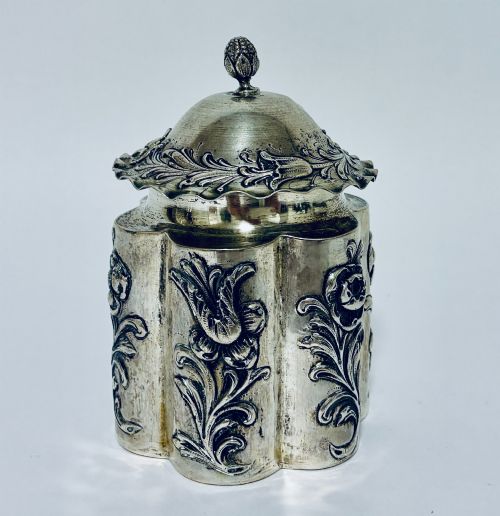
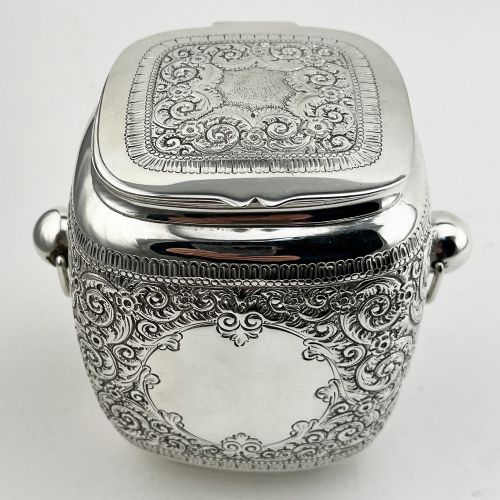
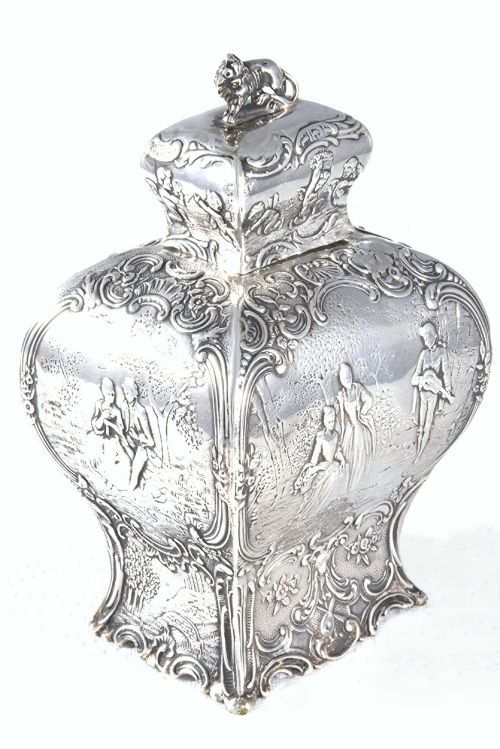
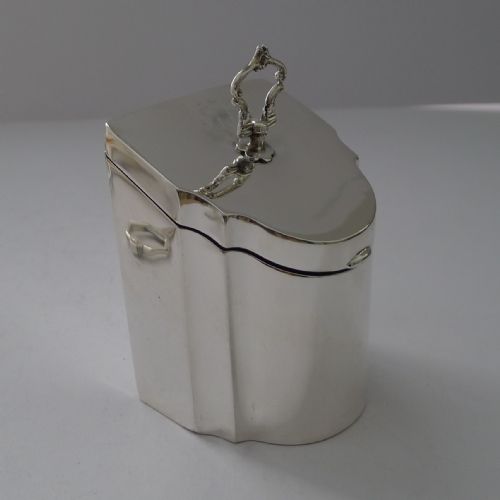
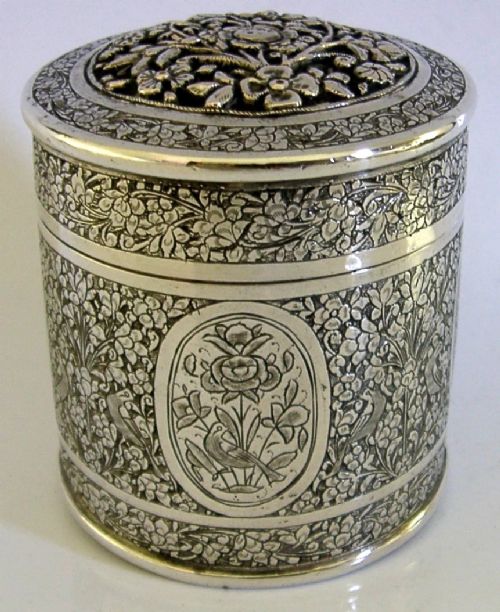
When you search for a victorian silver canister, you encounter items primarily designed for storing tea, alongside related forms like biscuit barrels, trinket boxes, and lunch boxes. The pieces on this page span the nineteenth century and the early twentieth century, taking shapes such as knife box forms, bombe profiles, and oval cylinders.
You meet examples fashioned from sterling silver, silver plate, and Old Sheffield plate, frequently paired with materials like cut crystal, ebonised wood, burr maple, and ceramic jasperware. These objects originate from English workshops as well as continental, Dutch, and Ottoman makers.
Tea caddies and canisters form the vast majority of the selections available, reflecting the domestic habits of the period. Their survival in such diverse forms ensures that a buyer finds everything from plain utilitarian boxes to heavily embossed containers.
Materials and construction
Makers utilised sterling silver and silver plate over copper bases, shaping the metal through hammering, casting, and repousse work to achieve high relief decoration. Heavy gauge sheet metal provided the rigidity needed for daily domestic handling.
Many containers incorporate mixed media, joining precious metals with cut crystal bodies, turned ebonised wood bases, or fitted burr maple interiors. Lids often feature pull off mechanisms or hinged closures designed to seal tightly against moisture.
Several canisters feature fierce embossed Green Men guarding your dried leaves from imaginary nineteenth century tea thieves.
Factors determining quality
The weight and thickness of the metal establish the primary tier of quality, with heavier gauge pieces offering a more substantial feel in the hand. Substantial metal thickness allows for crisp, deep embossing that resists denting.
The definition and hand-finishing of decorative motifs, such as repousse floral patterns or chased rococo revival scrolls, separate standard production from superior craftsmanship. Fitted interiors, intact hallmarks, and the quality of secondary materials like crystal or wood further define the upper tier.
Martin Hall And Co·Thomas Bradbury·William Hutton·Atkin Brothers·John Grinsell And Son·William Comyns·Deakin And Francis
The Victorian Silver Canister Glossary
- Repousse
- A metalworking technique where the artist hammers the metal from the reverse side to form a raised design in relief on the front. This method was widely utilised on nineteenth century tea caddies to create ornate floral and figurative scenes.
- Sterling silver
- An alloy consisting of ninety-two point five percent silver and seven point five percent other metals, usually copper, chosen for durability. British pieces typically display a hallmark confirming this standard.
- Old Sheffield plate
- A composite material made by fusing a thin sheet of silver to a thicker copper base before rolling them into sheets. This technique preceded modern electroplating and is identified by thin lines of exposed copper at edges.
- Bombe
- A bulging, convex furniture and vessel profile popular in various revival styles. The curved sides give the canister a rounded, undulating appearance.
- Pull off lid
- A lid designed to lift straight off the neck of a canister without a hinge or screw thread. These lids rely on a precise, snug fit to stay secure during storage.
Victorian Silver Canister: Frequently Asked Questions
What was a victorian silver canister used for?
These vessels were primarily created to store dry goods like tea leaves in domestic settings, protecting the valuable contents from light and moisture.
Over time, many adapted to serve as general storage for trinkets, biscuits, or small personal items on dressing tables and dining sideboards.
How do I clean a silver canister?
Maintenance requires gentle washing with warm water and mild soap, followed by drying with a soft cloth to prevent water spots. Avoid abrasive polishes that can wear away thin silver plating or soften hand-chased details on repousse surfaces.
Are these canisters safe for food storage?
While historic pieces were designed for consumable goods like tea or biscuits, tarnished silver and aged linings mean modern users generally treat them as decorative display items.
If storing dry goods, ensure the interior is thoroughly cleaned and free of old residue or degrading lining materials.
How do I identify the date of a silver piece?
British items usually bear hallmarks that include date letters, assay office symbols, and maker's marks which pinpoint the exact year of manufacture. Comparing stylistic cues such as rococo revival scrolls or neoclassical symmetry also helps narrow down the period.