





Birmingham Silver Caddy
A birmingham silver caddy brings refined craftsmanship to the tea table, offering an enduring piece of heritage shaped by silversmiths over centuries.

Birmingham Silver Caddy
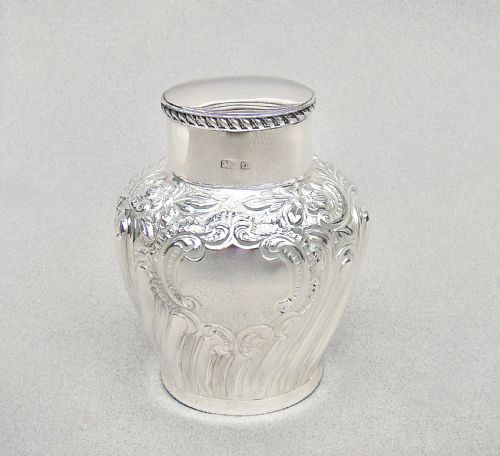
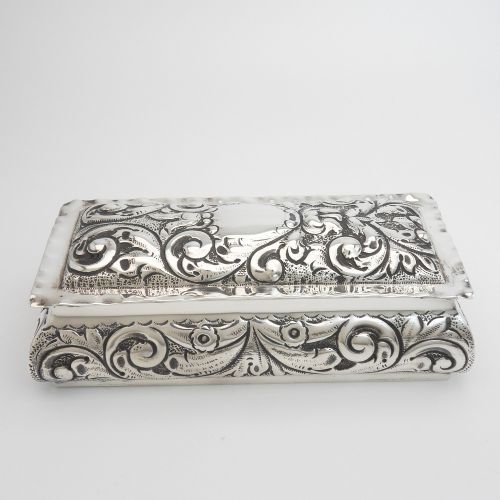
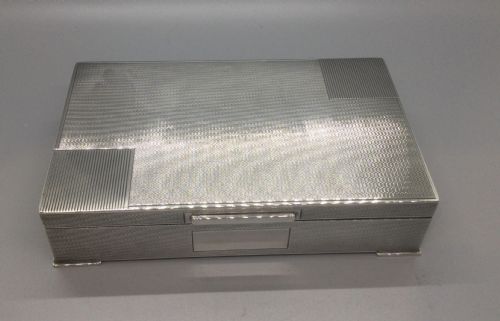
When searching for a birmingham silver caddy, collectors encounter a diverse range of vessels and utensils produced in the Midlands assay office, spanning from the Georgian era through to the Art Deco period. Tea caddies, specialised spoons, and decorative boxes form the core of these offerings, reflecting changing domestic habits and refined tastes.
The specimens seen most frequently on this page include Georgian caddy spoons shaped as leaves or jockey caps, alongside Edwardian and Victorian tea containers bearing clear Birmingham hallmarks. These items bridge utilitarian function and decorative artistry, utilising sterling silver paired occasionally with gilding, glass, wood, or mother of pearl.
How They Were Made
Silversmiths utilised sterling silver as the primary medium, often shaping vessels through rigorous hammering and repousse techniques to achieve textured, dimensional ornamentation. Bright-cutting and delicate engraving were frequently applied to caddy spoons and box lids to catch the light.
Internal gilding, known as wash gilding, was regularly added to boxes and spoons to protect the silver from corrosive tea leaf juices. Selected pieces incorporated organic accents like ebony, wood, paper, or mother of pearl for contrast and tactile variety.
Listings span periods from Georgian and Victorian to Edwardian, Art Deco, and 1940.
What Varies in Quality
The distinction between standard production and exceptional work rests upon the crispness of the chasing, the weight of the sterling silver, and the distinctness of the Birmingham hallmarks. Finer items display purposeful hand-detailing in repousse motifs rather than flat, machine-pressed uniformity.
Makers known for specialised novelty forms, such as articulated jockey caps or organic leaf designs, achieved superior depth and structural integrity. Preservation of original gilding and hinges further elevates the standing of an individual piece.
Joseph Willmore·Thomas Hayes·William Neale·A & J Zimmerman Ltd·George Unite·Ernest Druiff & Co·Henry Williamson Ltd·Cocks & Bettridge·Samuel Pemberton·Joseph Taylor·John Thornton·Bracher & Sydenham·T. H. Hazlewood·John Bettridge·James Collins·Synyer & Beddoes·Taylor & Perry·A. E. Jones·Foxhall & Co·Alfred Taylor·Levi & Salaman
The Birmingham Silver Caddy Glossary
- Hallmark
- Official stamps applied by an assay office to guarantee the purity of precious metals. Birmingham items feature the anchor symbol alongside maker marks and date letters.
- Repousse
- A metalworking technique where the silversmith hammers the metal from the reverse side to form a raised design in relief on the front.
- Bright-cut engraving
- A faceted surface engraving style using angled chisel cuts that create shimmering geometric patterns.
- Gilding
- The application of a thin layer of gold over the sterling silver surface, frequently used on the interior bowls of spoons to prevent tarnishing.
- Caddy spoon
- A short-handled spoon specifically designed for measuring loose tea leaves from a caddy into a pot.
Birmingham Silver Caddy: Frequently Asked Questions
What is a birmingham silver caddy used for?
These vessels were historically designed to store loose tea leaves securely in the home, preserving the aroma and quality of costly imported teas.
Today, collectors utilise them as decorative display items, trinket holders, or tactile examples of historic Midlands silversmithing.
How do I identify a birmingham silver piece?
Identification relies upon locating the official assay office mark stamped directly into the metal, which for Birmingham is represented by an anchor.
Alongside this symbol, secondary stamps typically reveal the lion passant for sterling silver, a maker's punch, and a specific date letter.
How do I clean antique silver?
Maintaining these pieces requires minimal intervention using a soft, lint-free cloth to gently remove surface dust without abrasive polishes.
Harsh chemical dips should be avoided entirely to preserve delicate details like bright-cut engraving and original gilt interiors.
What periods do these silver items cover?
The available selection spans multiple eras, beginning with Georgian examples from the late eighteenth century and extending through Victorian and Edwardian reigns.
Later items reach into the Art Deco period and the mid-twentieth century, showcasing evolving design trends across generations of makers.