
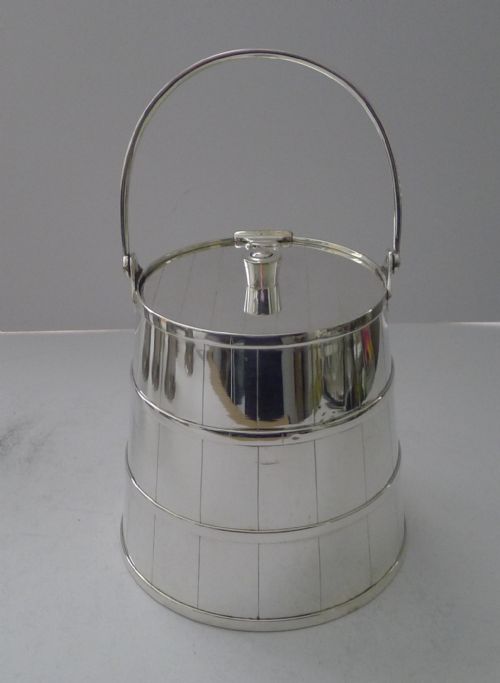
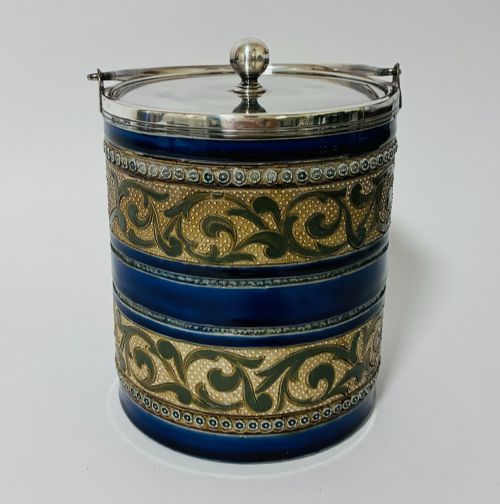
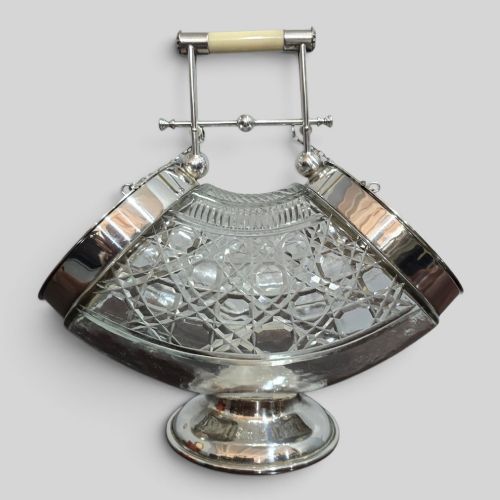
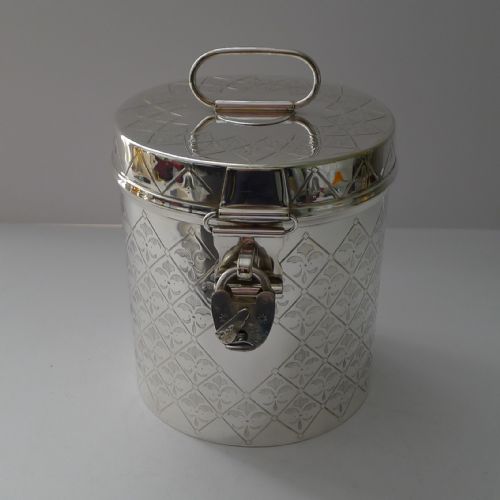
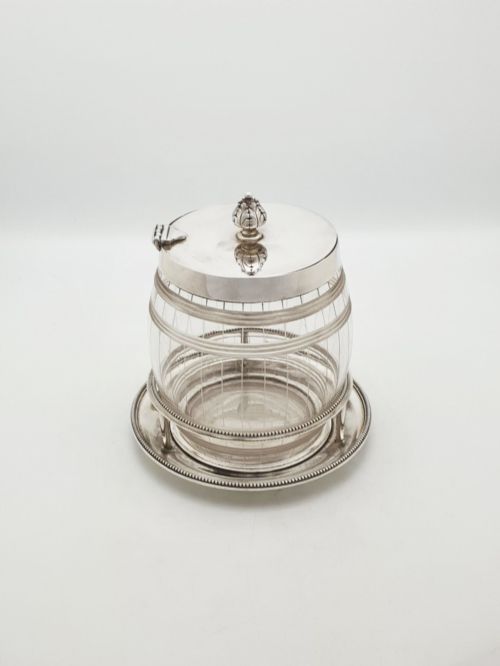
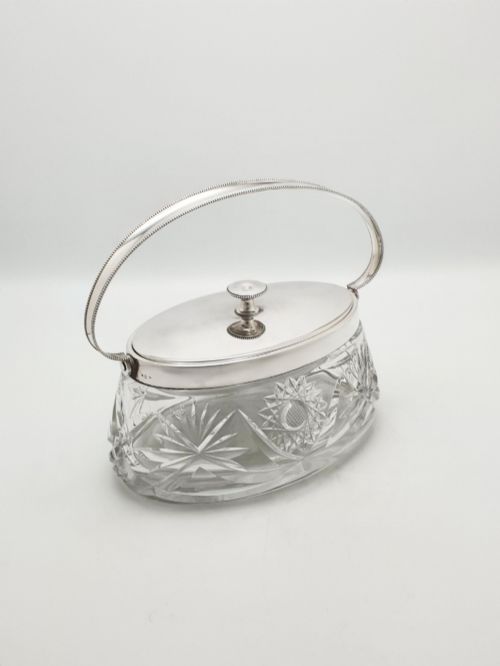
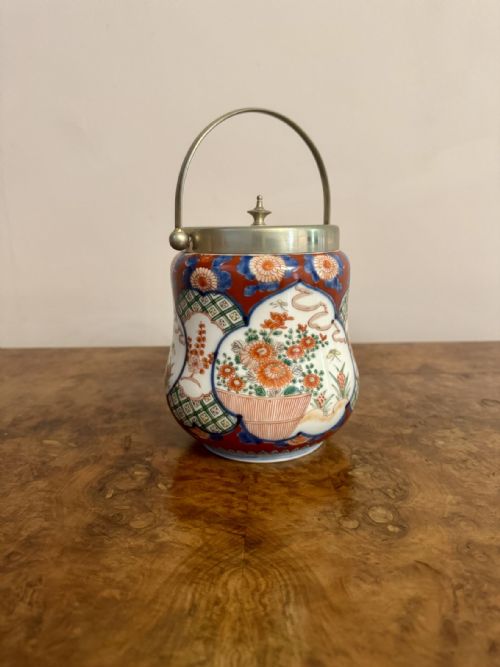


Silver Biscuit Barrel
A silver biscuit barrel is a formal container for storing dry biscuits on the dining table, combining precious metal with glass, ceramic or wood.
Identifying the Silver Biscuit Barrel
A silver biscuit barrel is a specialised container designed to keep biscuits fresh and presentable for the table. The phrase encompasses both solid silver vessels and plated containers mounted with silver.
The most common forms found on this page pair silver mounts with cut glass bodies, alongside solid silver boxes and lidded caddies dating from the Georgian period through to the 1930s.
Examples span several distinct eras, including Georgian, Victorian, Edwardian, and Art Deco designs. Makers utilised varied styles such as Dutch Empire, Arts and Crafts, and Art Nouveau across English, German, and Indian origins.
Materials and Construction
Makers combined sterling silver, solid silver, and silver plate with contrasting elements like cut glass, crystal, Copeland china, Moorcroft pottery, and ebonised or hand-carved oak. Metalwork involved casting, engraving, and silver plating on copper bases.
Many items integrate blown and cut glass bodies with hinged or lift-off silver lids and mounts, while others rely entirely on solid silver or carved wood structures.
Retail Price Guide 2026
Typical UK retail prices for silver biscuit barrel, calculated from the Sellingantiques database of over a million retail prices indexed since 2003. This retail price guide relies exclusively on Sellingantiques data; no external sources or auction records are used, so the figures do not describe the wider market.
Some hefty Victorian examples double as ice buckets, proving that afternoon treats occasionally shared space with evening refreshments.
Assessing Quality and Execution
Quality rests on the weight of the metal and the clarity of the glass or ceramic body. Heavy gauge silver and deep, crisp hand-engraving distinguish superior vessels from lighter pieces.
The integration of materials dictates the standard of manufacture, where well-fitted hinged lids and substantial mounts indicate higher tier production by recognised firms.
WMF·Mappin and Webb·John Grinsell and Henry Bourne
The Silver Biscuit Barrel Glossary
- Hallmark
- Official stamps applied to precious metals indicating the standard of purity, the assay office, and the date of manufacture. These marks provide the definitive history of solid silver pieces.
- Silver Plate
- A manufacturing technique where a thin layer of silver is fused to a base metal, typically copper. This method allowed makers to produce large decorative vessels at a lower cost than solid silver.
- Cut Glass
- Glass decorated by grinding facets or patterns into the surface using a wheel. It frequently forms the cylindrical or bell-shaped body of Victorian and Edwardian barrels.
- Caddy
- A small container originally used for storing tea, occasionally used interchangeably with boxes and barrels for dry goods. These lidded forms appear across 19th-century listings.
Frequently Asked Questions
What is a silver biscuit barrel used for?
These vessels were created to store and serve biscuits at the dining table during formal meals and afternoon tea.
The lidded design kept baked goods protected from moisture while offering an ornamental display piece for the sideboard.
How do I clean a silver biscuit barrel?
Maintenance requires gentle cleaning with a specialised silver cloth to preserve the polished surface without damaging any integrated glass or ceramic components.
Abrasive polishes should be avoided to protect engraved details and plated finishes from thinning over time.
Are these barrels made of solid silver?
Construction materials vary significantly between solid sterling silver and silver-plated metal mounted onto glass, ceramic, or wood.
Examination of the hallmarks or metal stamps reveals whether a piece is solid silver or silver plated on a base metal.
How can I tell the period of a biscuit barrel?
Stylistic indicators such as heavy cut glass with Victorian registry marks, Edwardian oak mounts, or geometric Art Deco forms point to specific decades of production.
Assay office hallmarks and makers' marks supply precise dating evidence for solid silver and silver-plated examples.