


Silver Cookie Jar
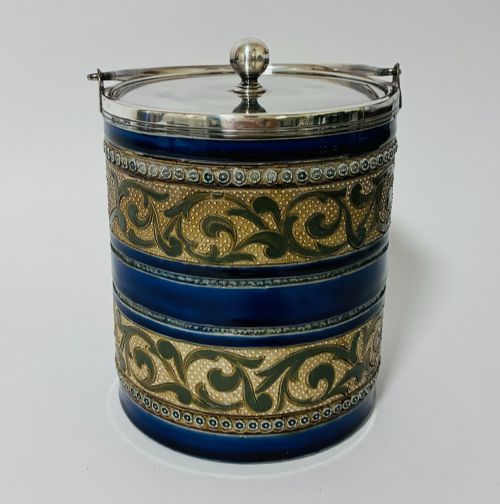
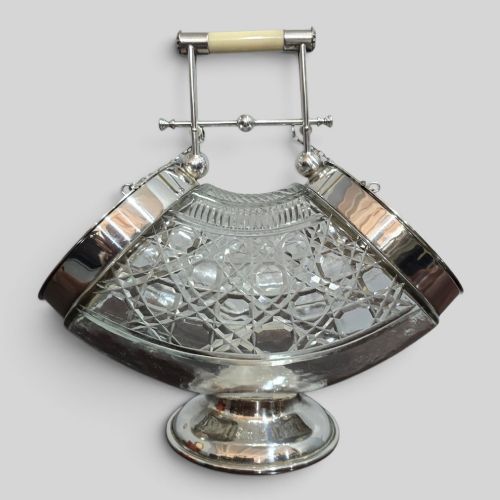
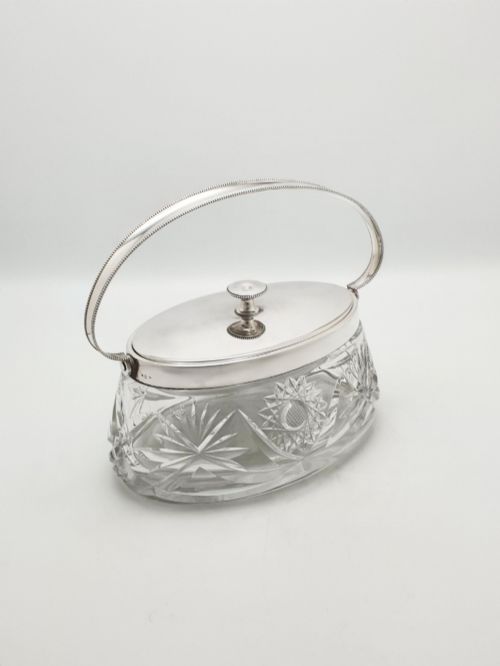
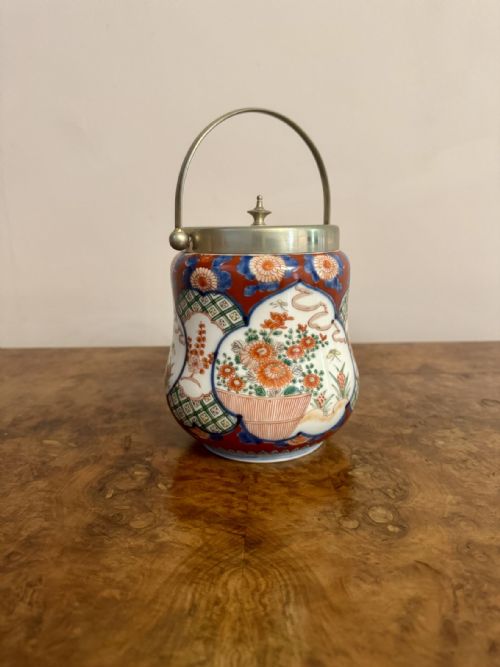
A silver cookie jar, more commonly known as a biscuit barrel or biscuit box, combines metal mounts with ceramic or glass bodies to store tea biscuits.
Silver Cookie Jar
A silver cookie jar matches the traditional British biscuit barrel, designed for the dining table or drawing room during the Victorian and Edwardian eras. These containers serve to keep baked goods fresh while presenting an ornamental form.
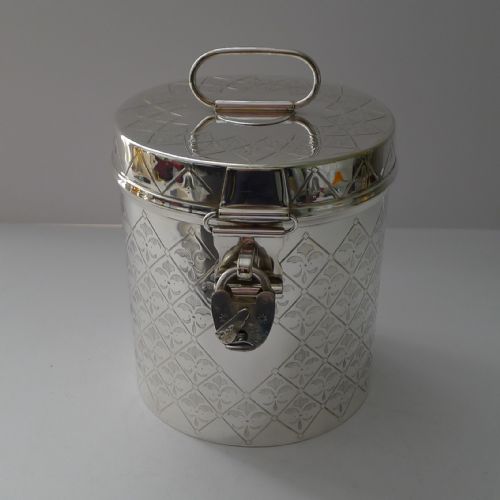
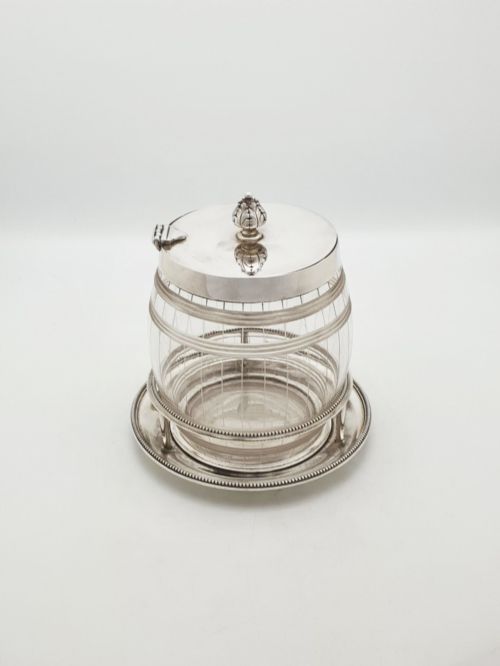
The most common versions on this page pair silver plated mounts with cut glass bodies, ceramic jars, or oak frames. Examples span from the 1860s through the George V period, showing styles from simple cylindrical drums to novelty shapes.
Makers such as Mappin and Webb, Elkington, and Walker & Hall produced these items alongside potteries like Wedgwood, Doulton Lambeth, and Carlton Ware. Collectors encounter both utilitarian forms and highly decorated presentation pieces.
Materials and Manufacturing Techniques
Silversmiths formed the mounts, lids, handles, and swing frames using silver plate on base metals, or solid sterling silver for higher end pieces. Piercing, embossing, and engraved decoration frequently adorn these metal components.
Glass bodies rely on heavy hobnail cutting, faceting, or coloured glass techniques like cranberry glass. Ceramic vessels utilise earthenware, stoneware, flow blue, and Jasperware bodies, often with fitted metal lids.
Listings feature pieces spanning the Victorian, Edwardian, and George V periods, incorporating cut glass, oak, and Jasperware.
Evaluating Quality and Craftsmanship
Quality rests in the weight of the metalwork, the crispness of the chased or pierced decoration on the silver plate, and the depth of the glass cutting. Substantial gauge silver and robust hinges separate standard items from finer productions.
The integration of materials dictates overall execution, seen in how precisely a cut glass liner fits its silver plated frame or how securely a ceramic body meets its hinged lid. Recognised maker marks provide a reliable indicator of superior workshop standards.
Mappin and Webb·Elkington and Co·Robert and Belk·Walker and Hall·John Grinsell and Sons·James Dixon and Sons
The Silver Cookie Jar Glossary
- Biscuit barrel
- A covered container designed specifically for holding biscuits at the tea table. This form gained immense popularity in British households during the nineteenth century.
- Silver plate
- A thin layer of silver fused to a base metal, typically nickel silver or copper. This technique allowed manufacturers to produce decorative tableware at a lower cost than solid silver.
- Jasperware
- A type of fine stoneware developed by Wedgwood, characterised by a unglazed matte finish and applied white relief figures. Common colours include blue and sage green.
- Cranberry glass
- A type of transparent pinkish red glass coloured with gold chloride. It appears frequently in Victorian and Edwardian tableware.
- Flow blue
- A cobalt blue transfer printing technique on earthenware that blurred slightly during firing. This effect created a soft, hazy appearance on ceramic bodies.
Silver Cookie Jar: Frequently Asked Questions
What is a silver cookie jar?
A silver cookie jar is a covered container traditionally referred to in Britain as a biscuit barrel or biscuit box. These pieces were standard dining accessories used to store dry biscuits.
Most examples combine a silver-plated or sterling silver mount and lid with a body made from cut glass, ceramic, or oak.
How were biscuit barrels used?
Victorian and Edwardian households placed these containers on the dining table or sideboard during afternoon tea or after dinner. The fitted lid kept the contents crisp until served to guests.
Many designs feature a swing handle for easy transport from the pantry to the entertaining rooms.
How do I date a silver biscuit barrel?
Dating relies on a combination of maker marks, hallmarking date letters on silver components, and stylistic clues. Victorian examples often display heavy ornamentation, while Edwardian and later pieces lean toward lighter forms or distinct ceramic bodies.
Materials such as cranberry glass and Jasperware also point to specific decades of production.
Can I use an antique biscuit barrel today?
These pieces function well for storing dry goods like biscuits or cookies, provided the interior glass or ceramic liner remains intact and clean. Modern users frequently repurpose them as decorative storage containers on kitchen counters or dining tables.
Careful hand washing protects the delicate silver plate and historic ceramic surfaces from damage.