


English Silver Biscuit Barrel
When you search for an english silver biscuit barrel, you meet the finest vessels made to keep Victorian and Edwardian dining tables properly supplied.
English Silver Biscuit Barrel
An english silver biscuit barrel is a substantial container designed for the Victorian and Edwardian dining table, appearing most frequently in forms combining silver plate with cut glass, ceramic, or carved oak.
These vessels span the Victorian, Edwardian, and George V periods, manifesting as cylindrical drums, shell shapes, or trophy bodies often mounted with hinged lids and swing handles.
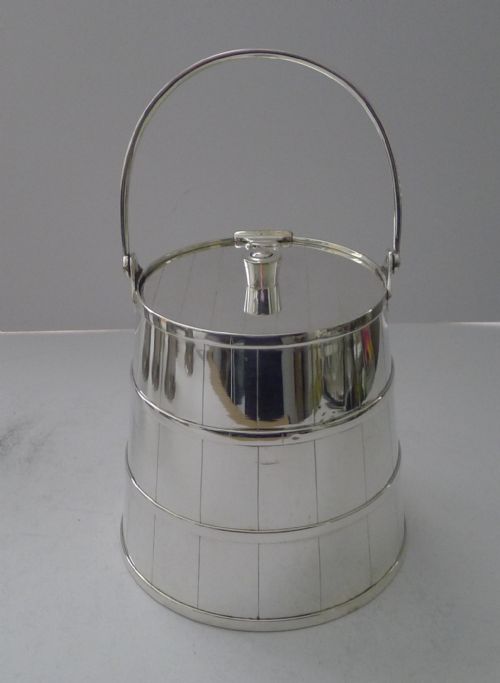
While many take the standard cylindrical barrel profile, buyers also encounter novelty designs such as squirrels or specialised ice bucket variants.
Materials and Construction
Makers joined heavy silver plate or solid sterling silver mounts to bodies of thick cut crystal, ceramic stoneware like Wedgwood Jasper Ware, and hand-carved oak.
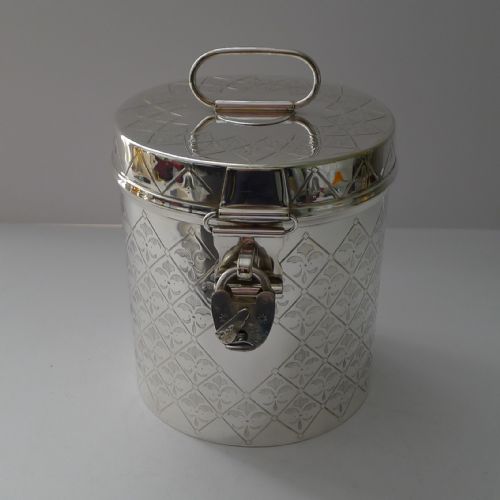
Metal components often received intricate fern engraving, geometric cutting, or locking mechanisms to secure the contents within the barrel.
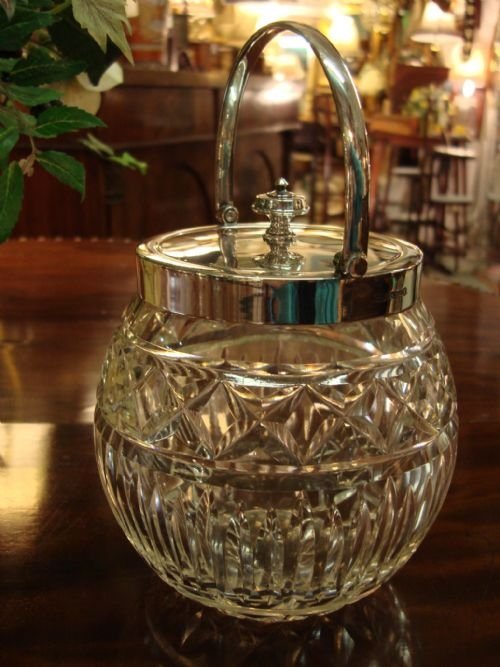
Glass bodies display deep diamond cutting and moulding, fitted securely into silver plated rims and bases.
Certain barrels feature a carved oak squirrel perched atop the lid, keeping perpetual guard over the biscuits within.
Distinctions in Quality
Quality rests upon the weight of the metal and the depth of the glass cutting, where heavier oak bodies and thicker crystal denote superior craftsmanship.
The sophistication of the mounting hardware, such as secure locking mechanisms and well-balanced swing handles, separates standard pieces from the finest workshop output.
Mappin and Webb·John Grinsell and Sons·Fenton Brothers·James Dixon and Sons·Elkington
The English Silver Biscuit Barrel Glossary
- Silver Plate
- A base metal coated with a layer of silver. This technique provided the appearance and lustre of solid silver at a more accessible cost for nineteenth-century households.
- Jasper Ware
- A type of fine stoneware developed by Wedgwood, characterised by a matte finish and applied white classical reliefs. These bodies frequently formed the main container of the barrel.
- Cut Glass
- Glass shaped and patterned by abrasive wheels. Deep wheel-cutting created the sparkling facets seen on Victorian crystal barrels.
- Sterling Silver
- An alloy consisting of ninety-two point five percent silver and seven point five percent other metals, usually copper. Items made to this standard carry official hallmarked stamps.
English Silver Biscuit Barrel: Frequently Asked Questions
What were biscuit barrels used for?
These barrels held dry sweet biscuits and crackers for afternoon tea or formal dining in Victorian and Edwardian homes.
The fitted lids kept moisture out and maintained the crispness of the biscuits while resting on the sideboard.
How do I date a silver biscuit barrel?
Dating relies on matching the stylistic cues, such as aesthetic movement fern engraving or heavy oak construction, to the Victorian or Edwardian eras.
Sterling silver pieces often carry precise hallmarks including date letters that pinpoint the exact year of assay.
Can I use an antique biscuit barrel today?
These lidded vessels function well on modern dining tables for storing dry goods or as decorative display pieces.
Careful hand washing preserves the delicate balance between the silver mounts and the glass or ceramic bodies.