


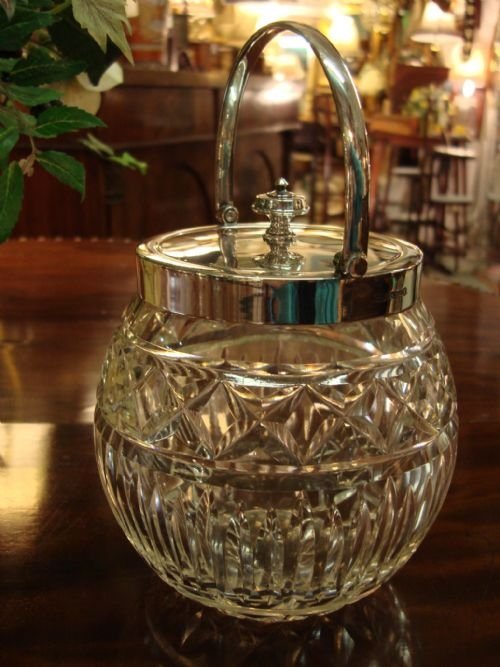
Cut Glass Biscuit Barrel
These cut glass biscuit barrel pieces combine heavy crystal bodies with gleaming metal mounts to grace any formal tea table.
Cut Glass Biscuit Barrel
A cut glass biscuit barrel stands as a handsome table vessel designed to hold dry baked goods during formal tea services and gatherings. When searching this phrase, collectors encounter cylindrical or novel forms shaped from heavy glass or crystal.
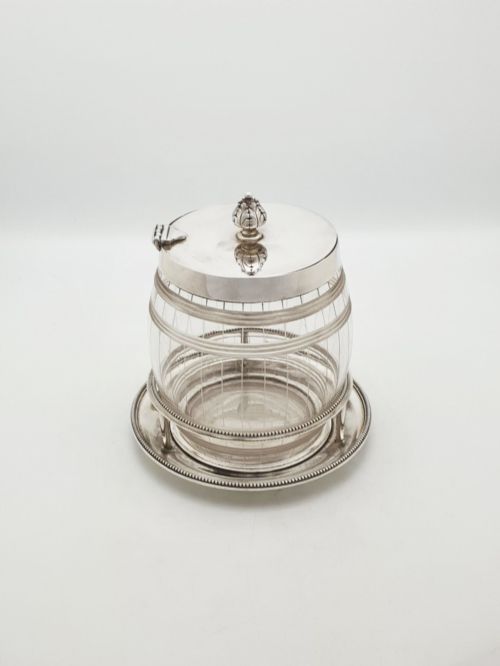
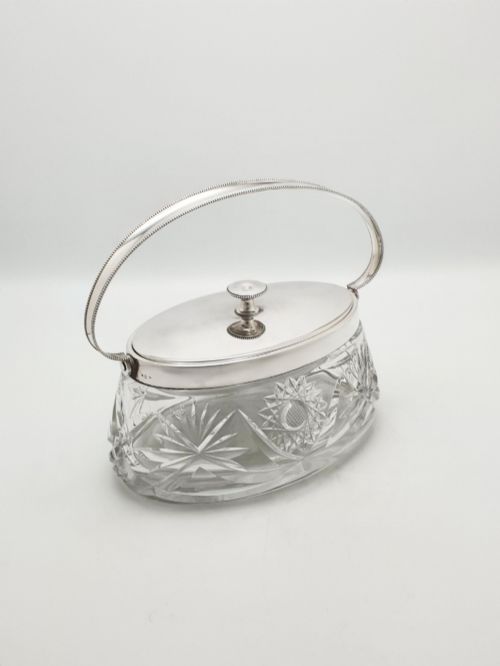
The domestic forms recorded range across Victorian, Edwardian, and George V periods, alongside Art Deco and Jugendstil designs. Most examples pair a clear cut glass body with a hinged lid and handle fashioned from silver plate or solid silver.
How They Were Made
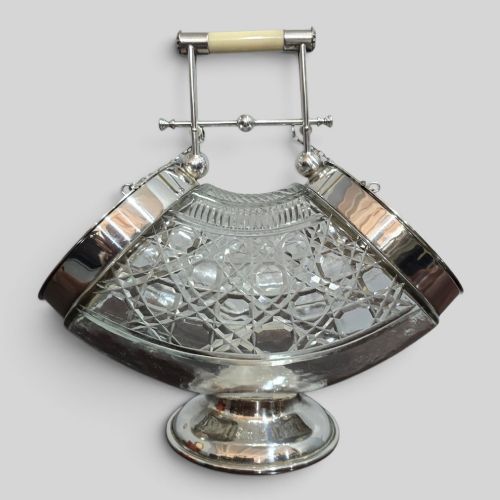
Craftsmen shaped the vessels using heavy lead crystal, cut glass, or cranberry glass, applying deep geometric facets and hobnail patterns directly onto the surface. These heavy glass bodies provide substantial weight and brilliance when catching the light.
Makers paired the glass containers with mounts, rims, and swinging handles formed from silver plate, sterling silver, or specialised metals. These metal components were often hallmarked or stamped by notable silversmiths and manufacturing firms.
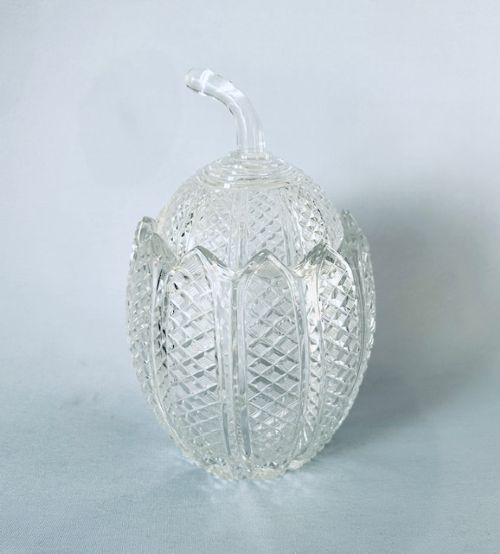
Some Victorian barrels take the delightful shape of a melon, complete with textured panels mimicking the ridged rind of the fruit.
What Varies In Quality
The standard of cutting on the glass vessel dictates much of the visual appeal, with deeper, crisper facets and intricate hobnail motifs setting finer examples apart from simpler moulded pieces. The weight and clarity of the crystal body further distinguish the work.
The refinement of the metalwork, including the balance of the swinging handle and the precision of the hinged silver lid, determines the overall execution. Signed mounts from known makers or solid sterling silver additions elevate the status of the piece.
Elkington·WMF·Walker and Hall·James Dixon and Sons·Grinsell and Sons·William Hutton·Henry Williamson·Waterford
The Cut Glass Biscuit Barrel Glossary
- Hobnail cut
- A raised, sharp-pointed decorative diamond pattern cut into the surface of glassware. This technique creates a textured, light-catching exterior that feels tactile in the hand.
- Silver plate
- A layer of silver bonded to a base metal substrate, commonly utilised for the rims, covers, and handles of these containers. It offered the appearance of solid silver at a more accessible cost.
- Sterling silver
- An alloy consisting of ninety-two point five percent silver by mass and seven point five percent other metals, mostly copper. Pieces bearing this standard carry official assay office hallmarks.
- Cranberry glass
- A rich red glass coloured by the addition of gold oxide during the melting process. It frequently appears in late nineteenth-century vessels.
Cut Glass Biscuit Barrel: Frequently Asked Questions
What is a cut glass biscuit barrel?
A cut glass biscuit barrel is a covered decorative container created to store dry biscuits and dry sweets on the dining or tea table.
These vessels combine thick, faceted glass bodies with metal lids and handles, becoming popular household accessories during the Victorian and Edwardian eras.
How do I date a biscuit barrel?
Dating relies heavily on stylistic clues, the cut of the glass, and any hallmarks stamped onto the silver or silver-plated mounts.
Assay office marks and maker stamps on the metal components provide precise years, while Jugendstil or Art Deco design traits point to early twentieth-century decades.
Were these used only for biscuits?
While primarily intended for dry baked goods and sweet biscuits during afternoon tea, these jars served multiple table functions.
Households occasionally utilised them to hold confectionery, candies, or rusks, depending on the formality of the gathering and the size of the vessel.
What is the difference between crystal and glass?
Lead crystal contains a percentage of lead oxide that increases the weight, refractive index, and clarity of the material compared to standard glass.
This higher density allows artisans to cut deeper, sharper facets that sparkle brightly under candle or gas light.
How should I clean the metal mounts?
Silver-plated and sterling silver mounts require gentle cleaning with a soft cloth and a specialised silver polish formulated for antiques.
Care must be taken to avoid applying harsh liquids directly onto vulnerable glass or the internal hinges where moisture might linger.