


Vintage Glass Biscuit Barrel
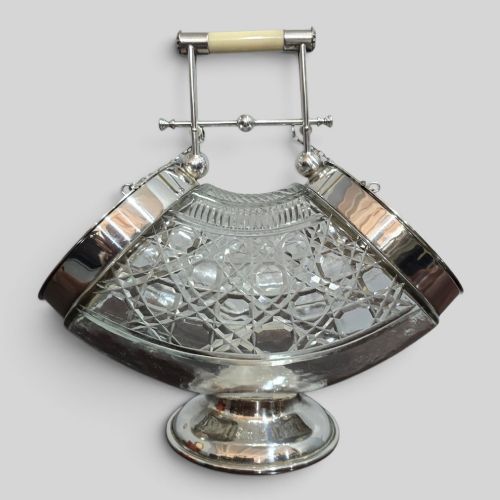
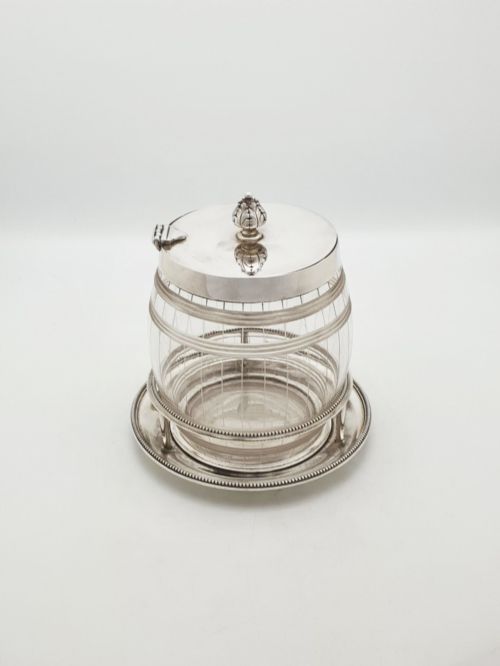
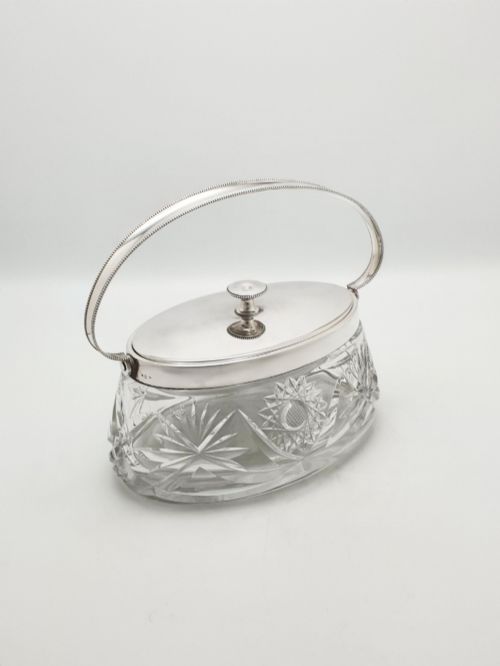
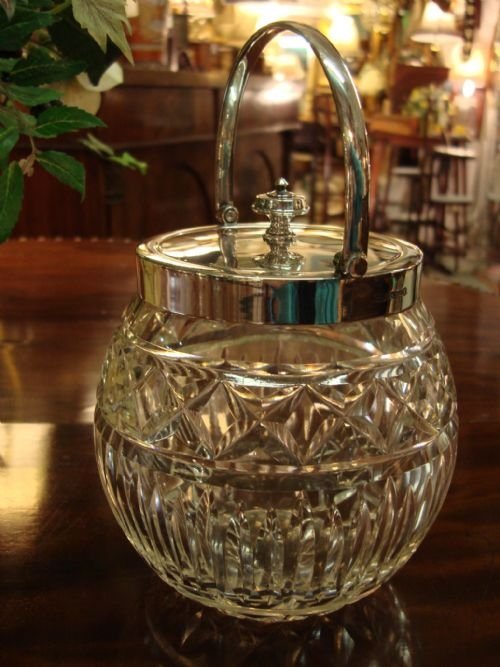
These vintage glass biscuit barrel vessels combine heavy pressed or cut vessels with plated mounts to grace the sideboard.
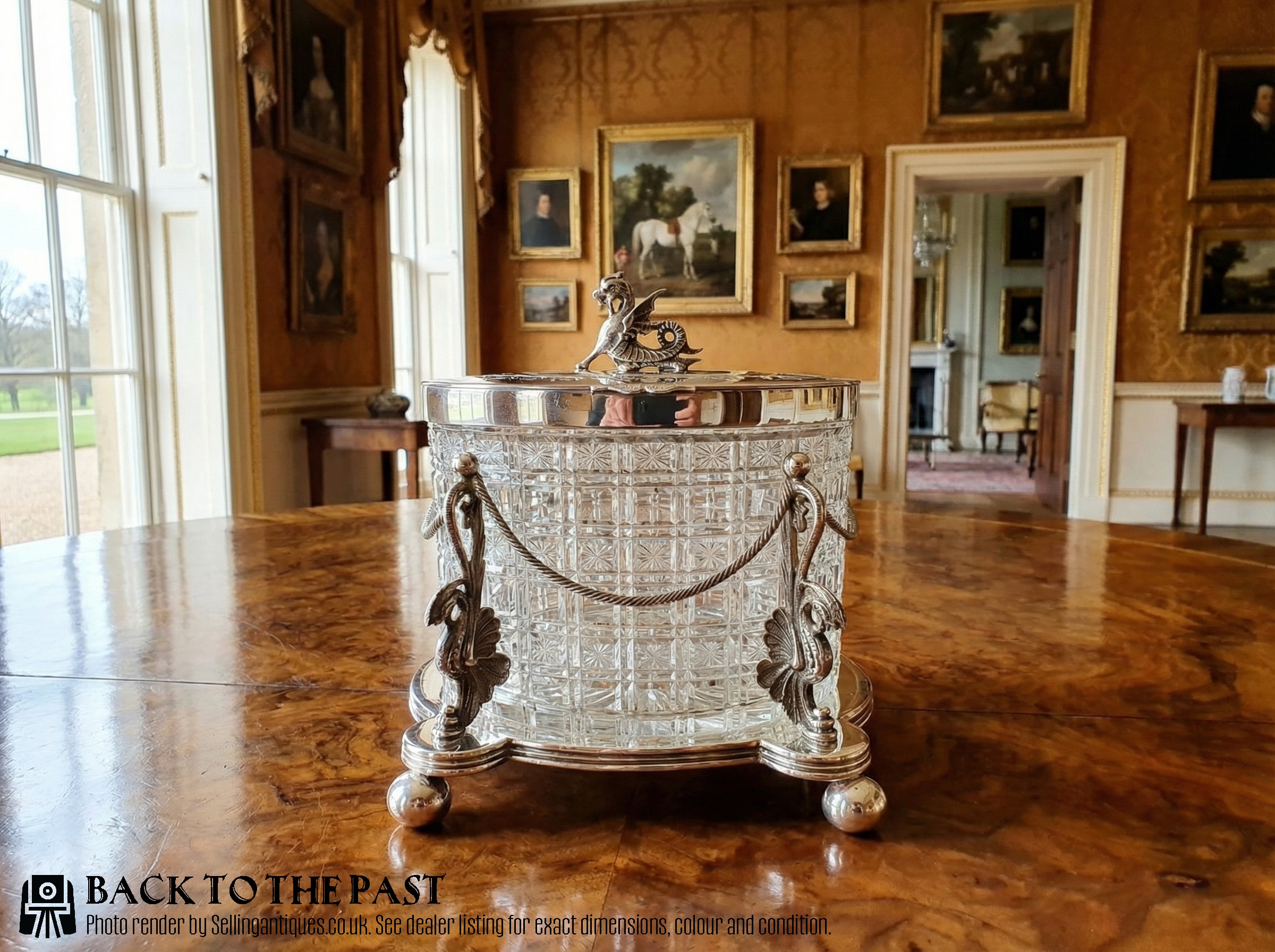
Vintage Glass Biscuit Barrel
A vintage glass biscuit barrel takes the form of a lidded jar designed to hold dry goods on the dining table or sideboard, appearing frequently in Victorian, Edwardian, and later early twentieth-century guises. The core of each piece is a glass vessel, often rendered in clear or cranberry glass, paired with metal components.
The profile typically stands upright with a fitted lid, sometimes featuring a handle for carrying and occasionally resting on a dedicated metal stand. Examples span from the late nineteenth century through to the Art Deco and George V eras, showing varied decorative treatments from enamel motifs to heraldic finials.
Makers utilised both faceted cutting and smooth blown techniques to shape the containers, which serve as functional storage pieces with considerable decorative presence. Collectors encounter these vessels in forms ranging from simple cylindrical jars to more complex three-handled configurations.
Materials and construction methods
The primary material combination involves clear or coloured glass paired with silver plate or sterling silver mounts. Glass bodies received treatment through hobnail cutting, faceting, or enamel decoration applied directly to the surface.
Metalwork components include hinged lids, swing handles, and cast finials such as heraldic dragons, attached securely to the glass collars. Makers such as James Dixon and Sons and Elkington employed traditional plating and smithing techniques to create the structural frames.
Vintage Glass Biscuit Barrel Retail Price Guide 2026
Typical asking prices for vintage glass biscuit barrel among the pieces listed under this phrase on Sellingantiques today, from the lower quarter to the upper quarter. They describe what is for sale here now, not the wider market.
Listings feature glass biscuit barrels spanning the Victorian, Edwardian, and Art Deco periods, utilising cut crystal, cranberry glass, and silver plate.
Quality differences across the range
Distinctions in quality arise from the depth and crispness of the glass cutting, where deeply faceted hobnails or sharp geometric facets demand greater skill than smooth or lightly moulded surfaces. The weight of the glass body and the clarity of the material also dictate the upper tiers of production.
The execution of the metal mounts sets finer examples apart, particularly where cast details like handles, collars, and figural finials display high definition rather than soft casting. Hallmarked sterling silver mounts represent a higher grade of manufacture compared to standard silver plate.
Elkington·WMF·James Dixon and Sons
The Vintage Glass Biscuit Barrel Glossary
- Hobnail cut
- A pattern of sharp, pyramid-shaped facets cut into the glass surface. This technique creates a heavily textured exterior that catches the light.
- Silver plate
- A layer of silver fused to a base metal substrate, commonly used for the rims, lids, and handles of these containers. It provides the appearance of solid silver at a different cost point.
- Cranberry glass
- A rich red glass coloured with gold chloride during production. It is frequently seen in nineteenth-century decorative tableware.
- Finial
- The decorative knob or sculptural element mounted on top of the lid. These can take simple spherical forms or complex shapes like heraldic dragons.
- Jugendstil
- The continental European manifestation of Art Nouveau popular around nineteen hundred. Pieces in this style feature flowing, organic lines.
Vintage Glass Biscuit Barrel: Frequently Asked Questions
How old are these biscuit barrels?
The pieces span from the mid-nineteenth century through to the early twentieth century, encompassing Victorian, Edwardian, and Art Deco periods.
Specific dating relies on registration marks, silver hallmarks, and stylistic indicators such as Jugendstil or George V design elements.
How were these barrels used originally?
These vessels sat on the dining table or sideboard to keep dry biscuits and dry goods fresh during the Victorian and Edwardian eras. The lidded design kept moisture away from the contents.
Servants would bring them out for afternoon tea or formal dining courses, utilising the swing handle to pass the container among guests.
How do I clean silver plate safely?
Cleaning requires a soft cloth and a specialised silver polish formulated to protect plated surfaces from abrasion. Harsh chemical dips can strip the plating entirely.
Keep moisture away from the interior joins where the glass meets the metal collar to prevent corrosion of the underlying base metal.
Are the lids and jars original to each other?
Most surviving examples retain their matched components, as the metal collar is often permanently fitted to the specific dimensions of the glass body. Replacement lids can sometimes be identified by mismatched plating wear or an improper fit against the rim.
Examining the wear patterns on both the glass lip and the metal interior helps confirm original assembly.