


Silver Glass Biscuit Barrel
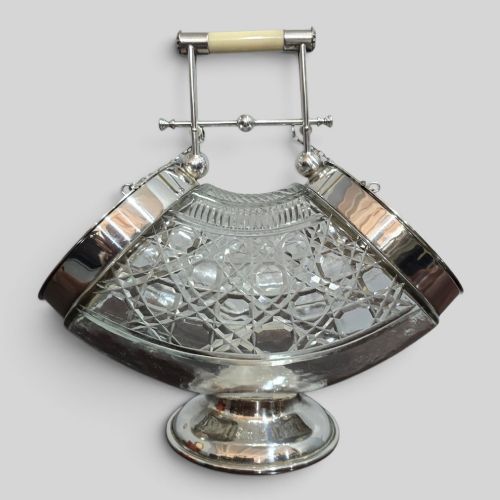
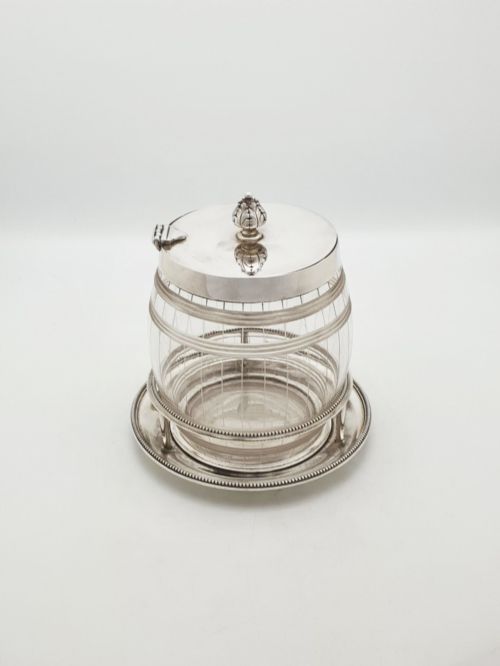
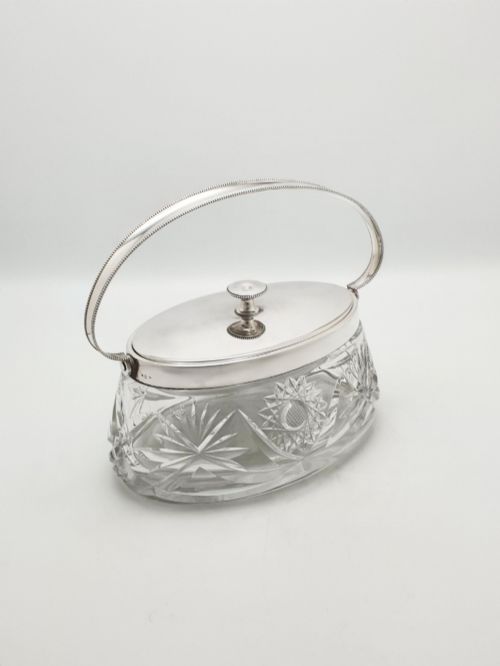
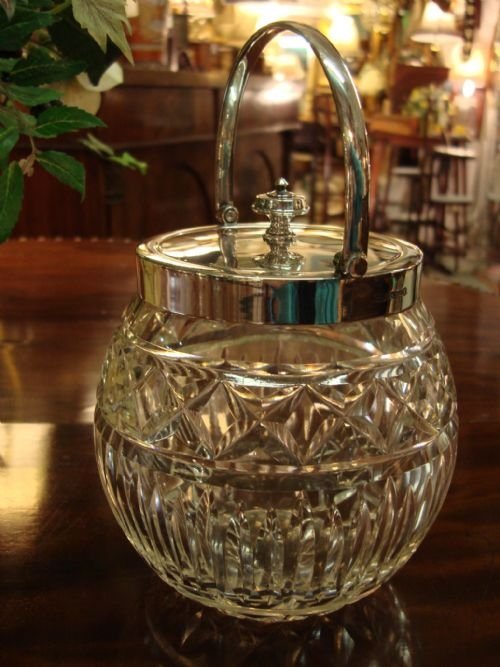
A silver glass biscuit barrel sits on the table as a heavy, gleaming container for dry sweets, combining glass bodies with metal mounts from the Victorian, Edwardian and later periods.
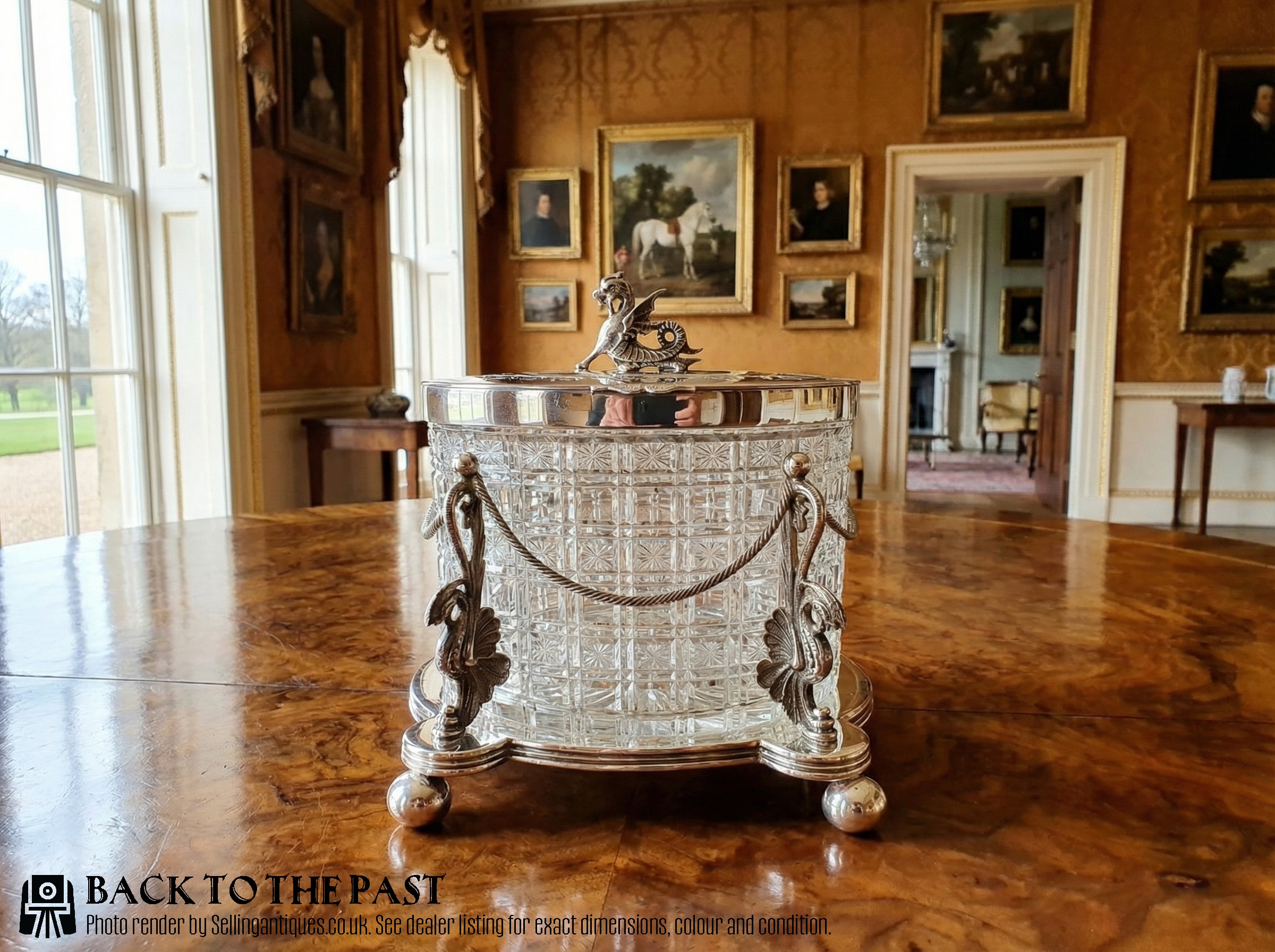
Silver Glass Biscuit Barrel
A silver glass biscuit barrel is a covered vessel designed to hold biscuits on the parlour table, featuring combinations of glass bodies and metallic mounts. When searching for a silver glass biscuit barrel, buyers encounter forms spanning the Victorian, Edwardian, George V and Art Deco eras, alongside Jugendstil and Arts and Crafts designs.
The body takes the form of cut glass, cut crystal, faceted glass or coloured glass such as cranberry glass and cranberry overlay. These containers are fitted with silver plate or solid sterling silver mounts, handles, lids and sometimes stands.
Most examples date from the later nineteenth century through to the early decades of the twentieth century. The domestic role of these containers changed little over these decades, remaining centre stage during afternoon tea and formal gatherings.
Materials and Construction
Makers combined heavy glass bodies with metalwork, utilising silver plate or hallmarked sterling silver for the rims, hinged lids, swing handles and mounts. The glass vessels were formed through blowing and subsequent cutting, creating hobnail, faceted or engraved decorative patterns across the surface.
Metal mounts were cast, pierced or engraved, sometimes incorporating detailed elements such as heraldic dragon finials or twisted three-handled arrangements. The glass liners or bodies were secured within these plated or solid silver frameworks, often accompanied by matching stands.
A heraldic dragon watches over the biscuits from atop its Victorian lid.
Assessing Quality
Quality rests in the depth and crispness of the glass cutting and the weight of the metal mounts. Heavy crystal or richly coloured cranberry glass paired with substantial silver plating or solid sterling silver represents the upper tier of production.
Refined execution appears in balanced proportions, secure hinge mechanisms, and distinctive elements such as pierced metalwork, engraved fern patterns or specialised handles. Lesser examples feature simpler pressed glass bodies and lighter plating with minimal ornamentation.
Elkington·WMF·Walker & Hall·James Dixon and Sons·Grinsell & Sons·William Hutton·Henry Williamson
The Silver Glass Biscuit Barrel Glossary
- Cranberry glass
- A rich red-pink transparent glass coloured with gold chloride during production. It appears frequently in Victorian and Edwardian examples.
- Silver plate
- A base metal layer coated with a thin layer of silver. This technique allowed manufacturers to produce ornamental mounts at a lower cost than solid silver.
- Hobnail cut
- A raised, faceted pattern cut into the surface of the glass resembling the head of a hobnail boot. This method catches the light and adds tactile texture.
- Sterling silver
- An alloy of silver containing ninety-two point five percent silver by mass and seven point five percent other metals. Pieces made from this material carry official silver hallmarks.
Silver Glass Biscuit Barrel: Frequently Asked Questions
What is a silver glass biscuit barrel used for?
These containers were originally manufactured to store and serve dry biscuits and cookies during Victorian and Edwardian afternoon teas. The fitted lid helped keep baked goods crisp while presenting an ornamental object on the table.
Today, they function well for storing sweets or serving dry goods, or simply as decorative display pieces on a sideboard.
How do I tell Victorian from Edwardian barrels?
Victorian examples often display heavy, deeply cut glass, engraved fern motifs, or ornate elements like heraldic finials and cranberry colourways. Edwardian pieces tend to show lighter handling, cleaner lines, and distinct geometric or simpler floral surface cuts.
Looking at the registration numbers, hallmarks, or the specific style of the metal mounts helps narrow down the exact decade of manufacture.
Can I use cranberry glass barrels every day?
Cranberry glass and delicate cut crystal containers benefit from careful hand washing rather than machine dishwashing to protect the coloured glass and silver mounts. Regular gentle cleaning maintains the appearance of the metal and glass.
With sensible handling, these sturdy nineteenth and twentieth-century vessels remain entirely suitable for domestic use.