


Antique Glass Biscuit Jar
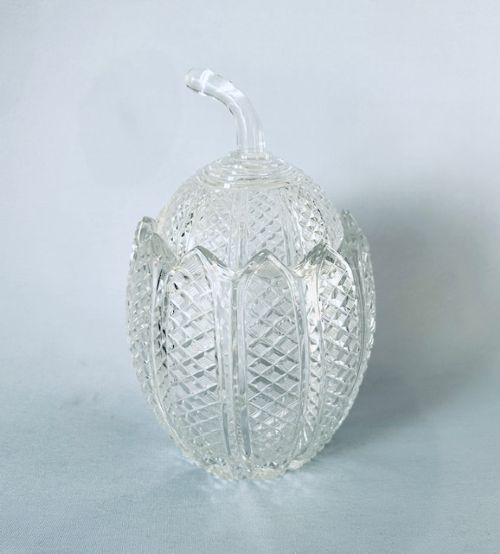
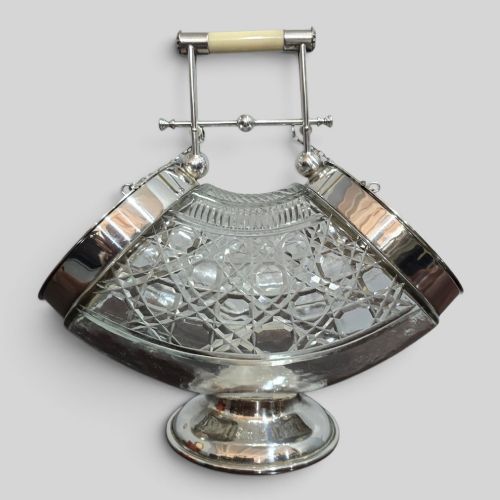
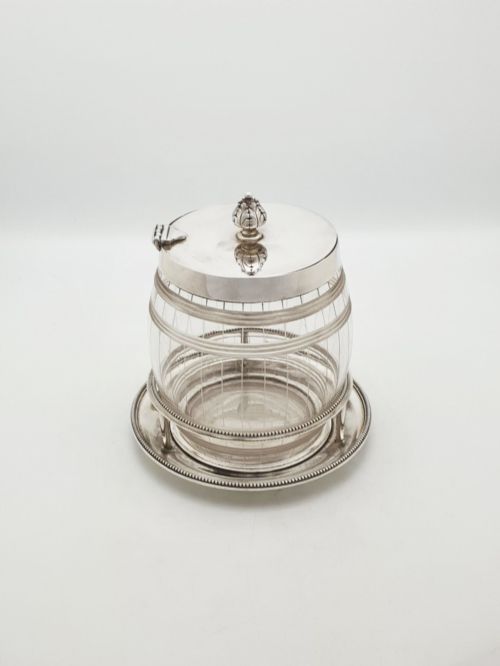
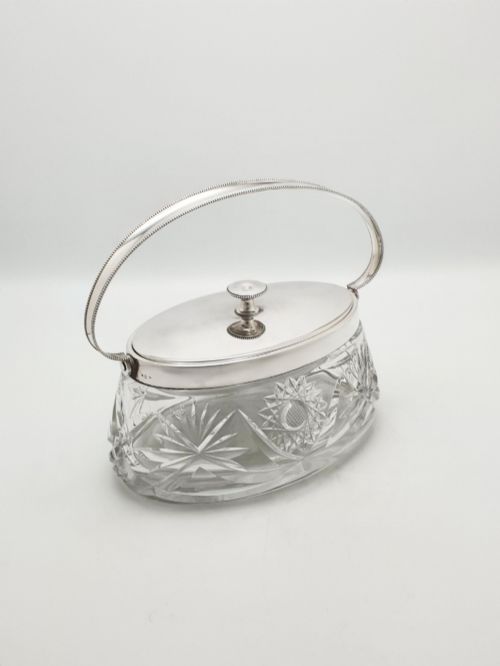
An antique glass biscuit jar combines heavy cut crystal or rich cranberry glass with gleaming silver-plated mounts.
Antique Glass Biscuit Jar
An antique glass biscuit jar is a covered container designed for the Victorian and Edwardian drawing room to keep dry biscuits crisp and presentable. The form typically pairs a blown or moulded glass body with a fitted metal lid, a swing handle, and often a matching stand.
The versions most frequently met on this page date from the Victorian and Edwardian eras, spanning the late nineteenth and early twentieth centuries. These range from heavy hobnail-cut vessels to richly coloured cranberry glass barrels.
Makers utilised various decorative techniques including enamel painting, gold leaf detailing, and heraldic dragon finials. Alongside clear lead crystal and cranberry glass, pieces frequently incorporate silver plate or sterling silver mounts.
How they were made
Glass bodies were produced through blowing and moulding, then finished with deep cutting, facet cutting, or hobnail patterns that catch the light. Coloured glass varieties, particularly cranberry glass, required specific metallic oxides added to the molten batch.
Metal mounts, covers, and swing handles were fashioned from silver plate or sterling silver, often shaped with pierced galleries or twisted handles. Metal components were attached securely to the glass containers using collars or internal liners.
Antique Glass Biscuit Jar Retail Price Guide 2026
Typical asking prices for glass biscuit jar among the pieces listed under this phrase on Sellingantiques today, from the lower quarter to the upper quarter. They describe what is for sale here now, not the wider market.
Materials recorded on this page combine clear cut glass, lead crystal, and cranberry glass with silver plate, sterling silver, gold leaf, and enamel.
What varies in quality
The distinction between tiers rests upon the crispness of the glass cutting, the depth of the lead crystal, and the weight of the silver-plated or sterling silver mounts. Superior examples display precise facet work and substantial metalwork without thinning.
Decorative embellishments also dictate rank, separating plain pressed vessels from those adorned with hand-painted enamel, gold leaf, or cast figural finials like heraldic dragons. Maker attribution to known firms adds further distinction.
Elkington·WMF·Walker and Hall·James Dixon and Sons
The Antique Glass Biscuit Jar Glossary
- Cranberry glass
- A rich red-pink transparent glass coloured with gold chloride during production, widely favoured for Victorian tableware and biscuit barrels. It provides a striking contrast against polished silver-plated mounts.
- Hobnail cut
- A decorative glass-cutting pattern featuring raised, faceted pyramidal points resembling hobnails on boots. This technique maximises light refraction across the body of the jar.
- Silver plate
- A layer of silver fused to a base metal substrate, commonly utilised for the rims, covers, and swing handles of nineteenth-century containers. It offered the appearance of solid silver at a lower cost.
- Jugendstil
- The continental European manifestation of Art Nouveau, characterised by flowing organic lines and natural motifs. Pieces bearing this style appear occasionally among British and continental listings.
Antique Glass Biscuit Jar: Frequently Asked Questions
How were glass biscuit jars used?
These jars sat on parlour tables and sideboards during afternoon tea to hold dry biscuits and sweet treats. The fitted lid kept the contents fresh while the swing handle allowed easy service.
Hostesses presented them as part of formal hospitality rituals in Victorian and Edwardian households. They bridged practical pantry storage and decorative table presentation.
How do I clean an antique glass biscuit jar?
Wash the glass body gently in lukewarm water using mild dish soap and a soft cloth. Avoid harsh scrubbing brushes that might scratch the surface or damage delicate enamel work.
Polish the silver-plated or sterling silver mounts separately with an appropriate metal cream, taking care not to let polish residue gather in the cut glass crevices.
How do I tell Victorian from Edwardian jars?
Victorian examples tend to feature heavier, deep hand-cutting, ornate motifs, and dramatic additions like heraldic finials or rich cranberry glass. The forms often emphasise elaboration and substantial presence.
Edwardian pieces generally lean towards lighter proportions, refined silver mounts, and crisp geometric cutting influenced by changing tastes at the turn of the twentieth century.
Can I use my jar for biscuits today?
Yes, these jars function well for holding sweets, biscuits, or dry goods on a modern kitchen counter or dining table. Ensure the interior glass liner or vessel is thoroughly washed before food contact.
Keep in mind that antique lids rarely create an airtight seal, so biscuits will not stay crisp indefinitely inside them.