



Lidded Glass Biscuit Barrel
A lidded glass biscuit barrel is a table container for dry goods that brings pressed or cut transparency to the Edwardian and Victorian tea service.
Lidded Glass Biscuit Barrel
A lidded glass biscuit barrel sits on the parlour table to hold dry sweet provisions, combining a clear or coloured vessel with a fitted cover. These pieces are primarily found from the late nineteenth century and the Edwardian period, often taking the form of rounded jars or cylindrical containers.
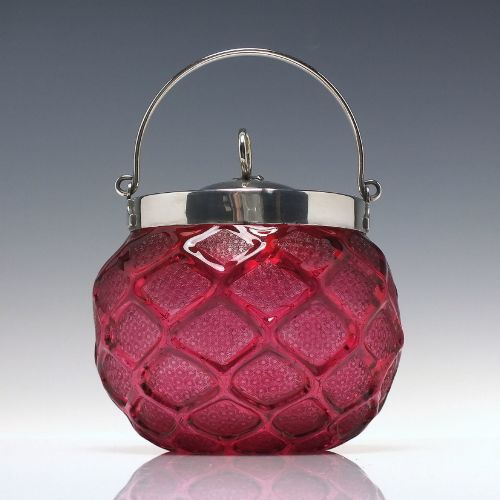
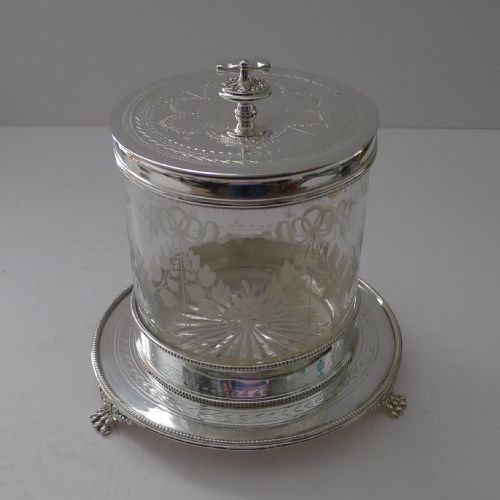
The versions most commonly met on this page belong to the Victorian and Edwardian eras, spanning from eighteen ninety through to nineteen twenty. They arrive as straightforward cut glass cylinders or rich cranberry glass jars, frequently fitted with metallic rims and swing handles.
Makers and manufacturers utilised specific forms to store baked goods securely while displaying the contents through decorative glass panels. The combination of glass bodies and metallic mounts defines the standard appearance of these domestic containers.
How they were made
Makers fashioned the vessels from heavy lead crystal and clear or cranberry glass, shaping the material by blowing or pressing into moulds. Skilled hands then cut geometric patterns into the cooled surface or applied enamel decoration directly onto the exterior.
Metal mounts in silver plate were fitted to the rim and base, securing a swing handle above the lidded opening. These metallic elements were combined with gold leaf highlights on select decorated examples to enhance the visual weight of the container.
Lidded Glass Biscuit Barrel Retail Price Guide 2026
Typical asking prices for lidded glass biscuit barrel among the pieces listed under this phrase on Sellingantiques today, from the lower quarter to the upper quarter. They describe what is for sale here now, not the wider market.
Materials recorded across the available selection include clear glass, cranberry glass, cut glass, lead crystal, silver plate, enamel, and gold leaf.
What varies in quality
The depth and precision of the cut glass pattern separate standard production jars from finer examples. Crisp facets catch the light sharply, whereas lesser pieces show softer, shallower grinding.
The thickness of the silver-plated mounts and the sturdiness of the fitted swing handle indicate the original grade of the container. Substantial metalwork preserves the alignment of the lid and secures the glass body more effectively over decades of use.
The Lidded Glass Biscuit Barrel Glossary
- Cranberry glass
- A rich red glass coloured by the addition of gold chloride during the melting process. It is frequently seen in Victorian and Edwardian tablewares.
- Silver plate
- A thin layer of silver applied to a base metal such as brass or copper. This technique provided the appearance of solid silver for domestic mounts and handles at a lower cost.
- Cut glass
- Glass decorated by grinding facets and patterns into the surface using rotating wheels. Deeper cuts require greater skill and produce sharper light refraction.
- Lead crystal
- Glass containing a proportion of lead oxide, which increases the weight, clarity and brilliance of the material. It was widely used for fine nineteenth-century containers.
- Gold leaf
- Extremely thin sheets of beaten gold applied to the surface of glass or ceramic items for decoration. It provides a bright metallic contrast to coloured glass bodies.
Lidded Glass Biscuit Barrel: Frequently Asked Questions
What is a glass biscuit barrel?
A glass biscuit barrel is a covered container designed to keep dry baked goods fresh on the dining or tea table. These vessels combine a glass body with a lid to protect the contents from moisture.
Most surviving examples date from the late Victorian and Edwardian periods. They often feature decorative cutting, enamel painting, and metal mountings.
How do I date a biscuit barrel?
Dating relies on observing the stylistic details of the glass cutting, the enamel motifs, and the metal mounts. Victorian pieces often display heavier proportions and ornate enamel work, while Edwardian versions frequently utilise clean cut glass designs.
Reference points include the specific manufacturing decades recorded between eighteen ninety and nineteen twenty. Hallmarks on silver-plated mounts can also offer a reliable guide to the date of production.
Can I use it for biscuits today?
These containers are fully functional for storing dry goods on a modern table. The fitted lid helps maintain freshness while displaying the biscuits within the clear or coloured glass.
Care should be taken with older silver-plated mounts and delicate enamel decoration during cleaning. Hand washing is recommended to preserve the original finish.
What is cranberry glass?
Cranberry glass is a distinctively coloured red transparent material created by adding gold to the molten glass mixture. It became popular during the Victorian era for decorative tableware and luxury containers.
On this page, cranberry glass biscuit barrels frequently appear with silver-plated mounts and Edwardian styling. The rich hue creates a striking contrast against polished metal handles.