
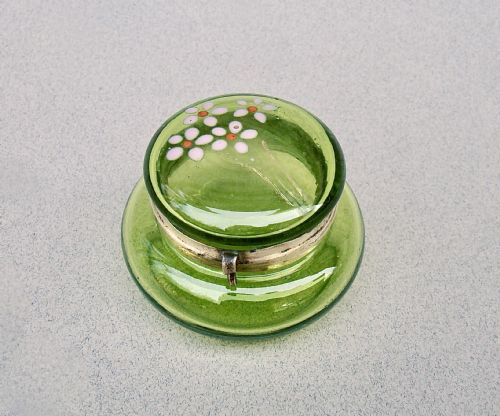


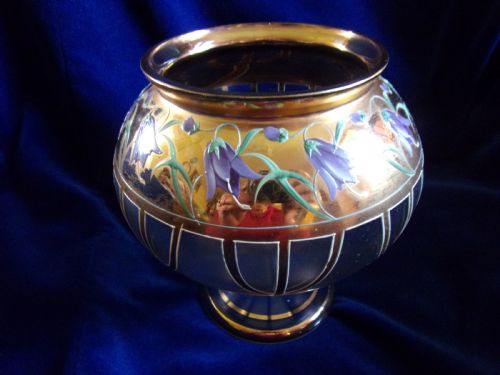


Painted Enamel Glass Jar
A painted enamel glass jar brings vibrant colour and meticulous detail to a dressing table or shelf, capturing centuries of decorative craft.
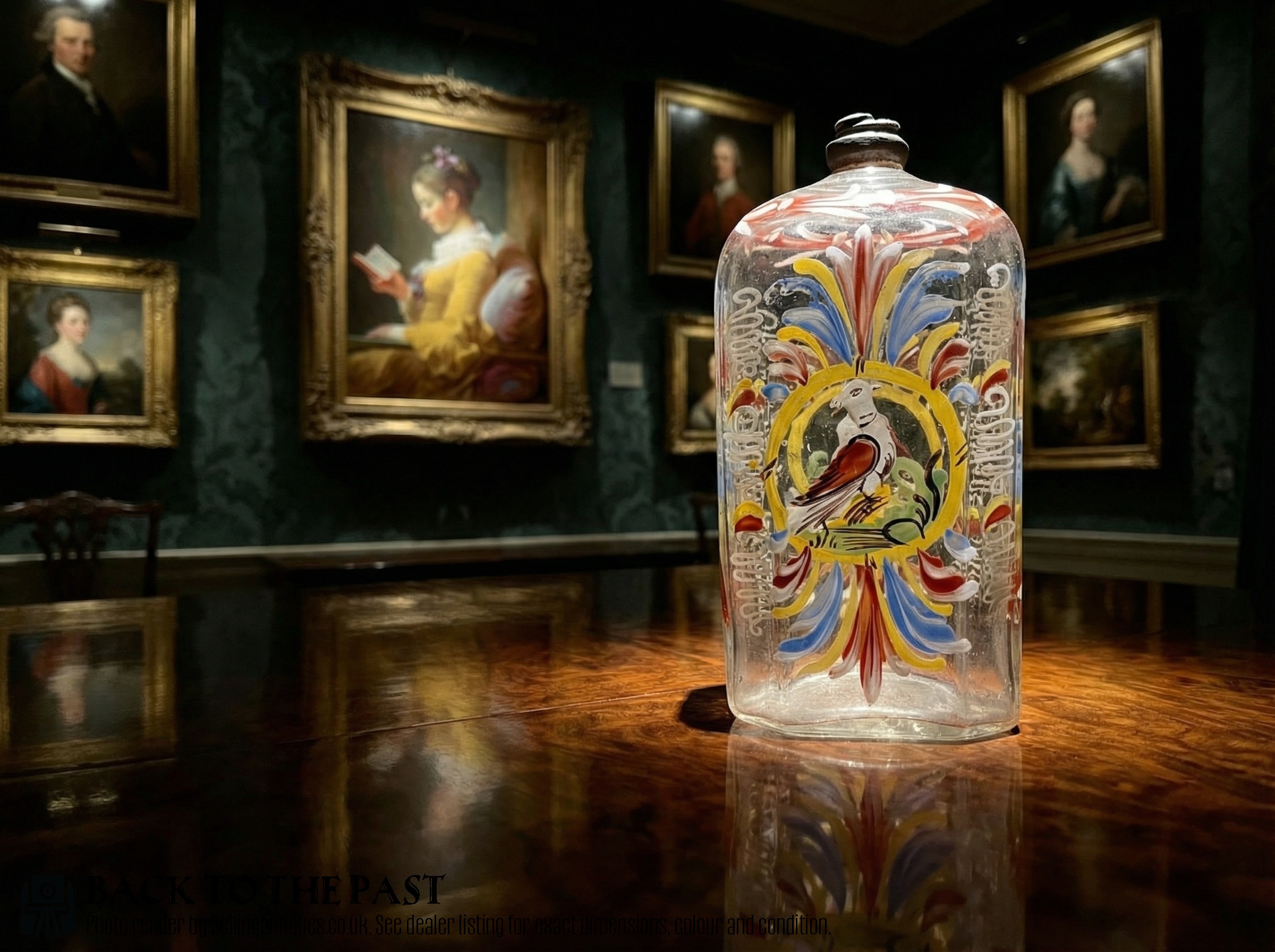
Painted Enamel Glass Jar
A painted enamel glass jar offers a blend of glass body and pigmented surface decoration, frequently found in forms such as trinket boxes, dressing table jars and biscuit barrels. These containers span several eras, with 19th-century Victorian and Edwardian examples appearing regularly alongside earlier 18th-century pieces and later Art Nouveau designs.
The objects listed on this page showcase various shades of glass, including green, Bristol blue, pale blue, cranberry, opaline, clear and black. Collectors encounter diverse vessel types ranging from lidded jars to decorated bottles and vases.
Origin and style vary from English domestic production to French 19th-century workshops and German folk art. Buyers search for these pieces to add period character and colour to interiors.
How they were made
Maker's workshops formed the vessels from glass, utilising techniques that shaped clear or coloured materials into jars, vases and barrels. Artisans then applied enamel pigments directly to the hardened glass surface.
Many examples incorporate supplementary ornamentation such as gold leaf and metal mounts, enhancing the visual richness of the finished piece. Enamel flowers and figurative scenes required steady brushwork and careful firing to bond the coloured glass paste to the vessel.
Biscuit barrels once held the household treats safely away from damp air and sticky fingers.
What varies in quality
Quality in a painted enamel glass jar rests upon the precision of the brushwork and the depth of the enamel application. Finer pieces display crisp, detailed enamel flowers and figures without blurring or pooling.
The choice of base glass and complementary materials also dictates the standard of the piece. Richly coloured glass bodies paired with intact gold leaf elevate the visual appeal far above plain utilitarian vessels.
George Tye·Mary Gregory
The Painted Enamel Glass Jar Glossary
- Enamel
- A decorative glass-like substance fused to the surface of a vessel through heat. It provides bright, lasting colour on glass and metal objects.
- Biscuit barrel
- A lidded container traditionally used for storing dry biscuits or confectionery at the dining table. These often feature metal hardware and decorative painted surfaces.
- Bristol blue
- A deep, vibrant cobalt blue glass produced historically in the English city of Bristol. It serves as a striking dark backdrop for white or polychrome enamel painting.
- Opaline
- An opaque or translucent pale glass developed in France and popular during the 19th century. Its milky surface accepts enamel colours with high contrast.
- Gold leaf
- Extremely thin sheets of beaten gold applied to the surface of glassware for ornamentation. It frequently frames or highlights the primary enamel decoration.
Painted Enamel Glass Jar: Frequently Asked Questions
What is a painted enamel glass jar used for?
These jars served various domestic functions historically, ranging from holding small trinkets on a dressing table to storing biscuits in the parlour. Today, collectors utilise them primarily for display and decorative storage.
The lidded designs make them practical for keeping small items secure while adding a splash of period colour to a room.
How do I identify a Victorian glass jar?
Victorian pieces often feature specific stylistic traits such as floral enamel motifs, Mary Gregory style silhouettes, or rich coloured grounds like Bristol blue and cranberry. Examining the hardware and the weight of the glass helps establish the era.
Consulting the listed period and stylistic markers aids in separating 19th-century production from later 20th-century creations.
Are all these jars English?
The pieces span multiple origins, including English workshops, French 19th-century manufacturing centres and German folk art traditions. Each region imparted distinct characteristics to the glass and enamel work.
French pieces frequently lean towards elegant dressing table accessories, while German items often showcase traditional folk motifs.
How do I care for antique enamel glass?
Antique enamel glass requires gentle handling to protect the applied surface decoration and any delicate gold leaf accents. Dusting with a soft, dry cloth is usually sufficient for routine maintenance.
Harsh cleaning chemicals and immersion in water should be avoided to prevent damage to the enamel and metal mounts.