
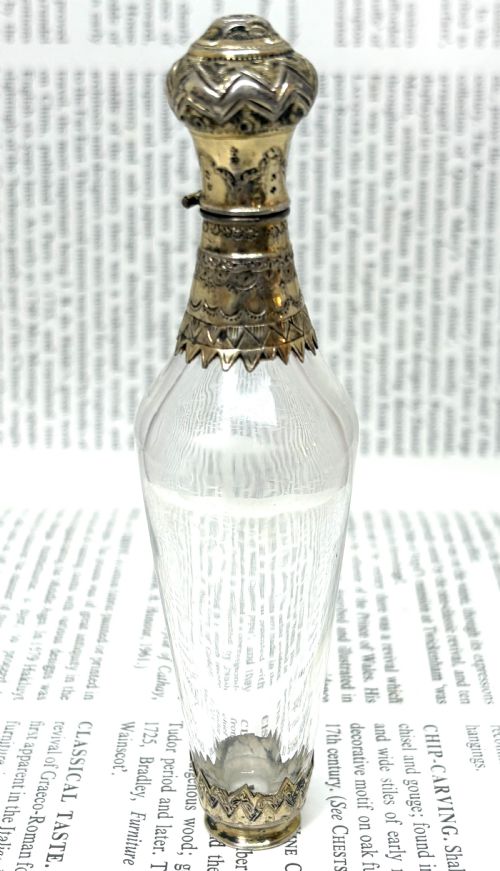


Clear Glass Flask
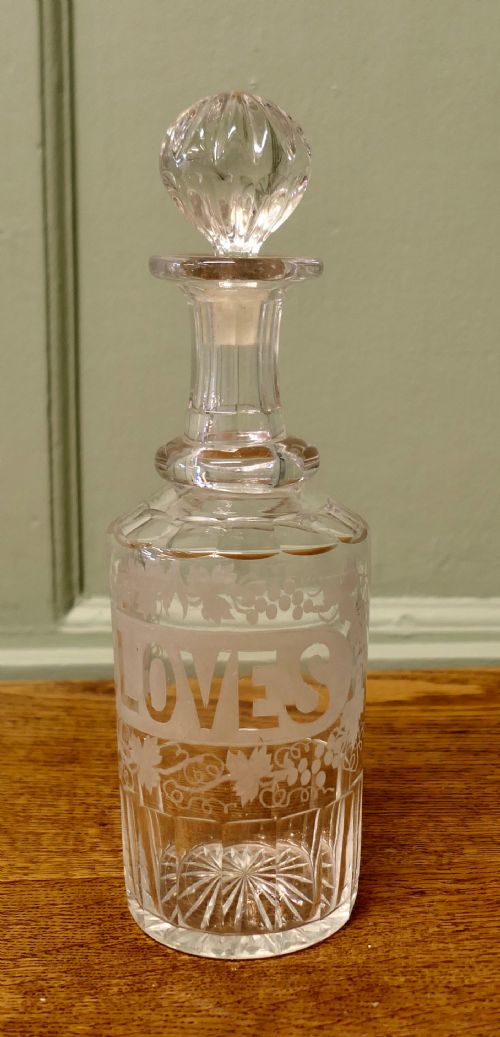
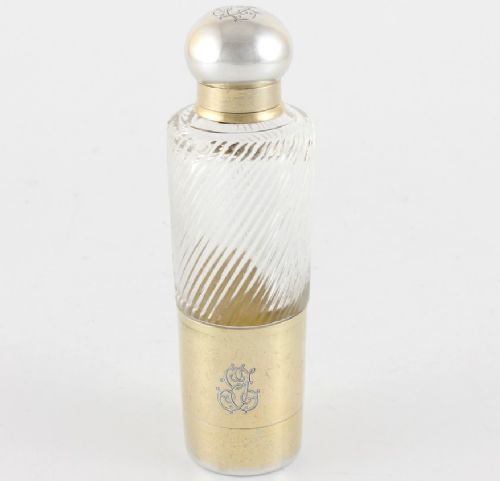
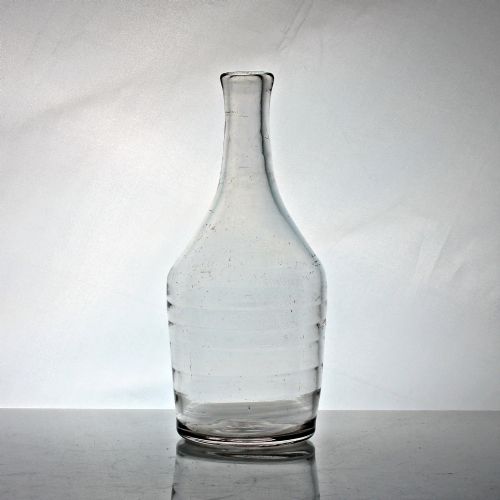
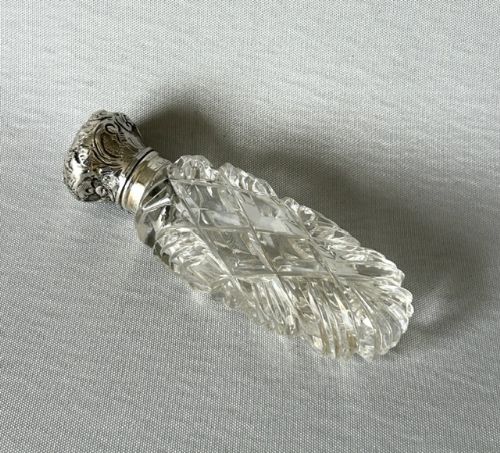
Clear glass flask pieces range from Georgian spirit decanters to Victorian scent bottles and Art Deco atomisers.
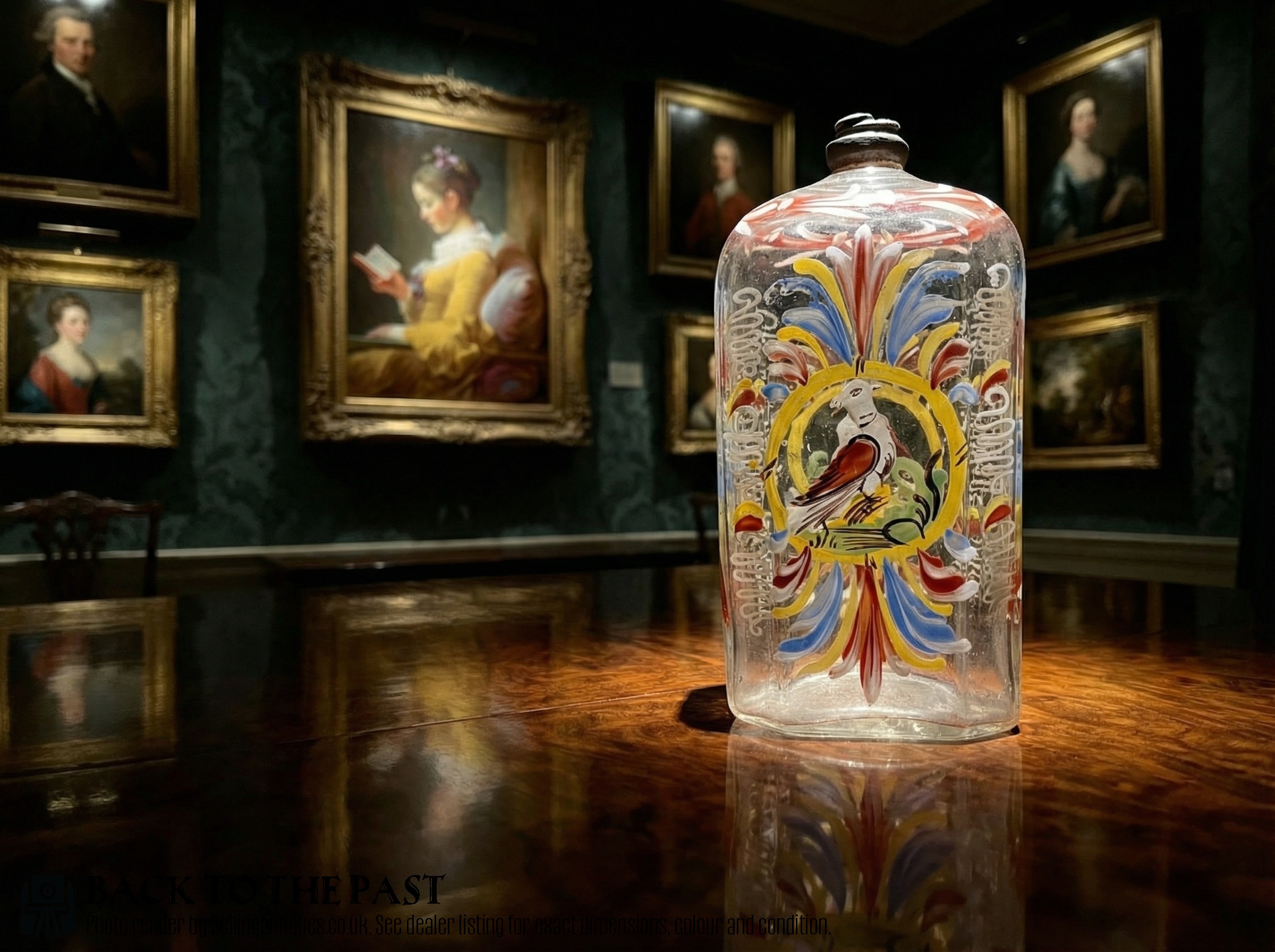
Clear Glass Flask
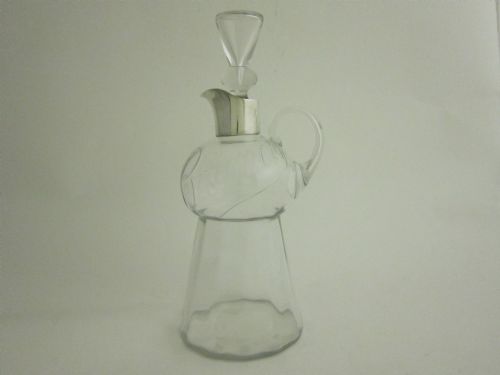
A clear glass flask encompasses vessels intended for carrying spirits, storing perfumes, or dispensing medicine, appearing in forms such as pocket hip flasks, heavy table decanters, and miniature scent bottles. The examples gathered under this heading span from the eighteenth century through the Georgian, Victorian, Edwardian, and Art Deco periods, originating from British, French, Bohemian, and Asian workshops.
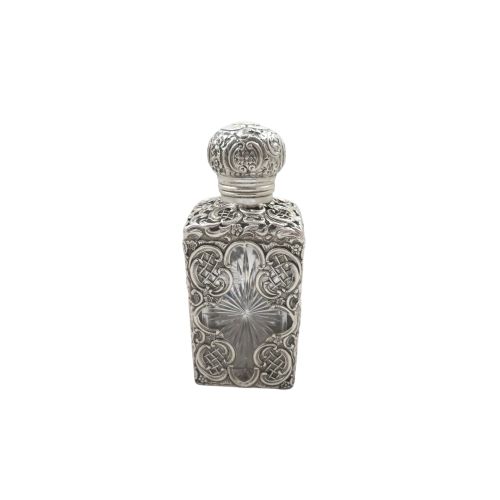
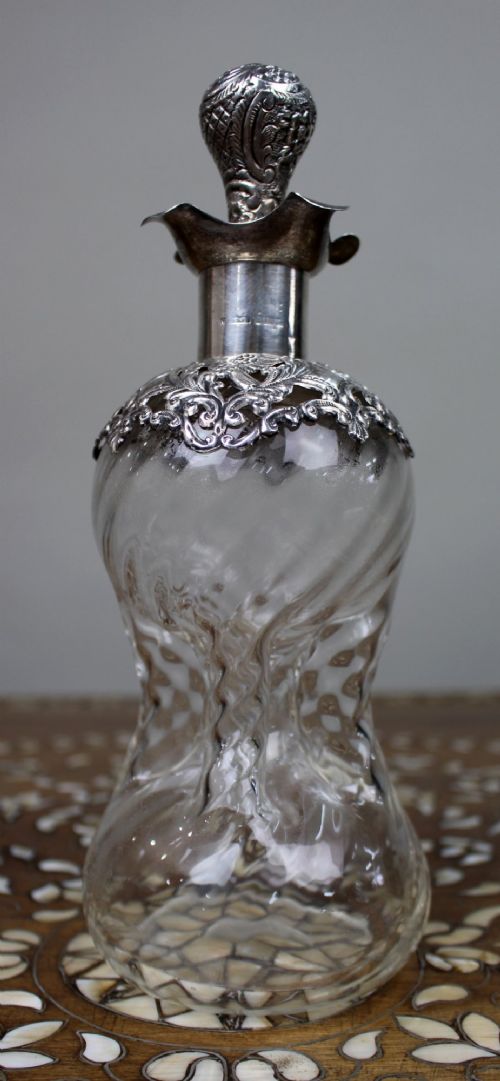
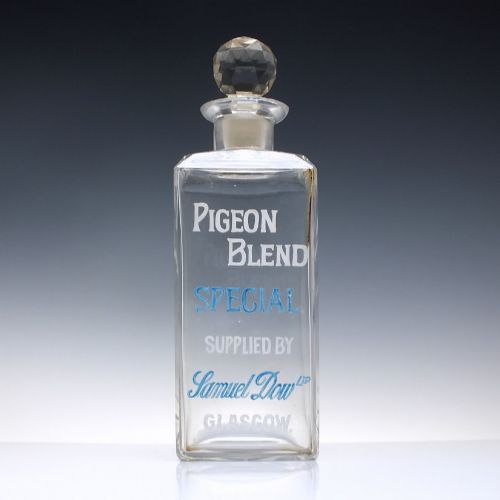
The most common versions encountered on this page are Victorian and Edwardian scent bottles and decanters, frequently mounted with sterling silver tops, hinged caps, or cut glass stoppers. Pocket hip flasks complete with removable silver cups also feature regularly among the nineteenth and early twentieth-century selections.
How they were made
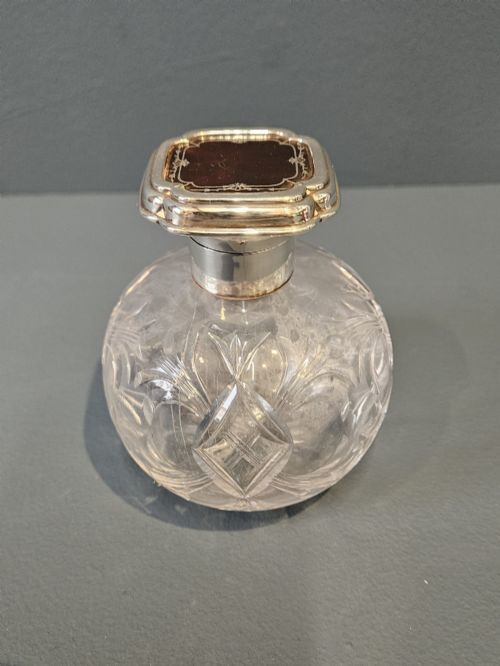
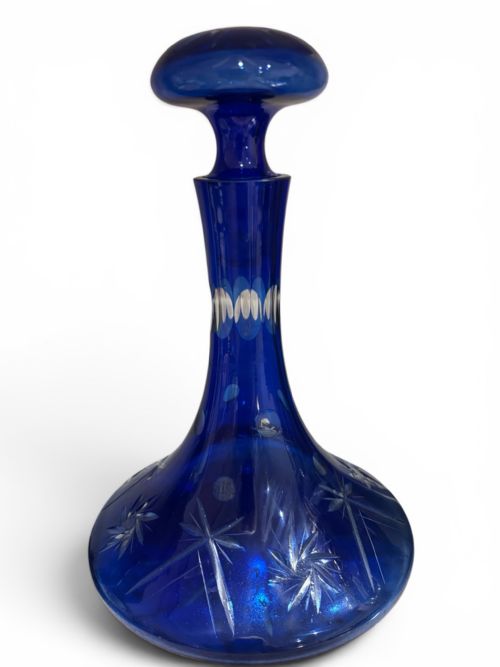
Makers utilised lead glass and clear blown crystal, often shaping the vessels by blowing them into moulds or free-blowing them before applying wheel-cutting, etching, or engraving to the exterior surface. Heavy decanters and perfume bottles frequently received deep geometric cuts to catch the light, while lighter scent phials relied on delicate etched floral patterns.
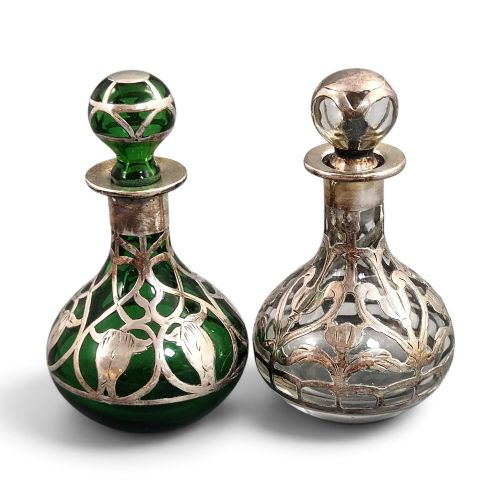
Metal mounts in sterling silver, silver gilt, and silver plate were fashioned to secure the necks and mouths, sometimes incorporating hinged lids, inner glass stoppers, or screw caps. Specialised pieces integrated tortoiseshell, enamel work, or intricate silver overlay welded directly onto the glass body.
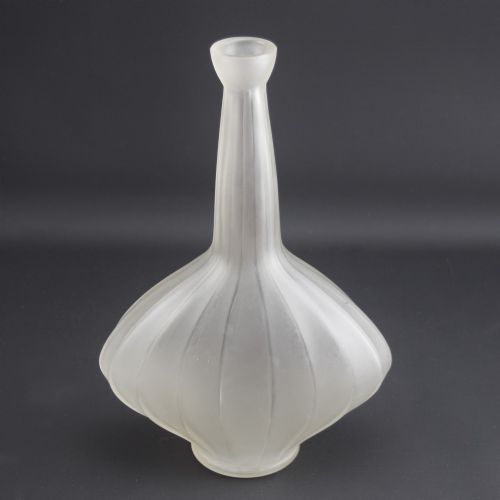
Listings feature clear glass flasks spanning from the 18th century to the 1930s, incorporating sterling silver, enamel, and frosted glass.
What varies in quality
The distinction between ordinary utility containers and finer pieces rests in the weight and clarity of the glass, the crispness of the cutting, and the substance of the metal mounts. Superior vessels exhibit heavy, clear lead glass with sharp, deep facets that align precisely with hallmarked silver closures or hand-carved openwork details.
Design complexity and named authorship separate standard production from exceptional examples, particularly where renowned glass houses or silversmiths applied specialised moulding, staining, or enamel techniques. Intricate double-ended formats, fully integrated silver cups, and master-carved rock crystal bodies elevate the workmanship significantly.
Gorham·Asprey London·Karl Palda·Barnsley and Co·Rene Lalique
The Clear Glass Flask Glossary
- Lead glass
- Glass containing lead oxide to increase brilliance, weight, and clarity, allowing for deeper and sharper facet cutting. It forms the heavy body of many fine decanters.
- Cut glass
- Glass decorated by holding it against rotating abrasive wheels to cut geometric or linear patterns into the surface. This technique creates facets that reflect light.
- Silver overlay
- A decorative technique where molten or sheet silver is applied directly onto the exterior of a glass vessel in ornate patterns. It is frequently seen on Art Nouveau pieces.
- Double ended scent bottle
- A Victorian container featuring two separate compartments accessed from opposite ends, typically used for two different perfumes or salts. Both ends usually retain their original metal caps.
- Guilloche enamel
- Decorative metalwork covered in translucent enamel over an engine-turned geometric background. It appears on the lids of upscale perfume bottles and powder containers.
Clear Glass Flask: Frequently Asked Questions
What is a clear glass flask used for?
These vessels served diverse domestic and personal functions, ranging from holding potable spirits like whiskey and brandy to containing scented perfumes, smelling salts, or medicinal draughts. Pocket-sized variations were carried by travellers and sportsmen.
Larger table versions sat on sideboards or within tantalus sets for serving drinks after dinner. Miniature scent bottles were designed to be tucked into small evening purses or dressing cases.
How do I date a silver mounted flask?
Dating relies primarily on the assay office hallmarks stamped onto the silver collars, caps, or removable cups. These marks provide exact year letters alongside maker's stamps and standard touchmarks.
Stylistic cues such as faceted cutting, monogramming, and the shape of the glass body also help confirm the manufacturing era when silver mounts are absent.
Are stoppers usually original to the bottle?
Original stoppers fit snugly, match the glass colour and weight, and often bear a corresponding assembly number ground into the base of the neck. Replacement stoppers are common due to breakage over centuries of use.
Collectors look for matching wear patterns and identical glass tint between the stopper and the main body to verify originality.