




Antique Whisky Flask
An antique whisky flask is a portable pocket companion built for carrying spirits, valued for its fine silver, glass, and leather craftsmanship.
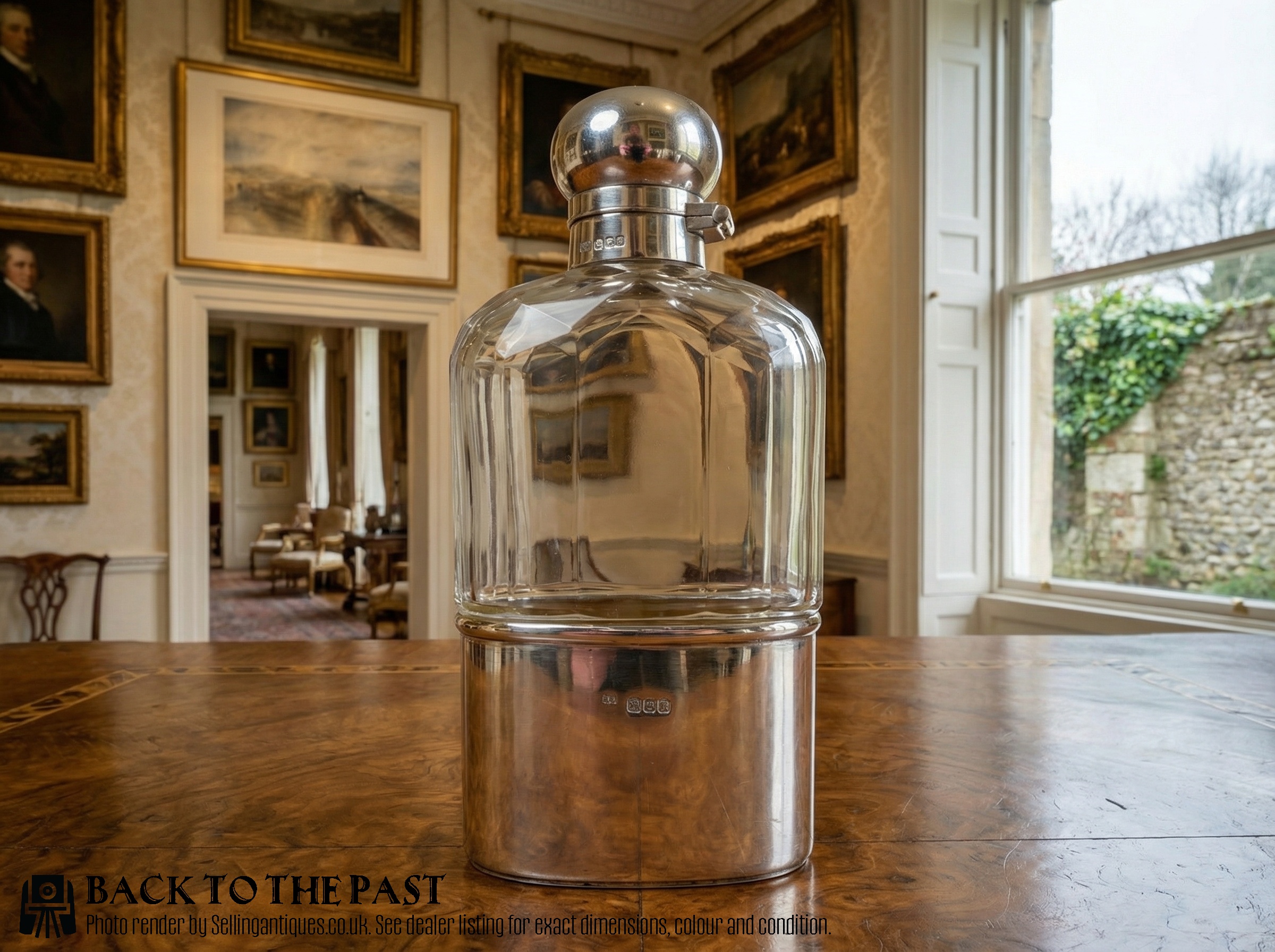
What these antique whisky flasks are
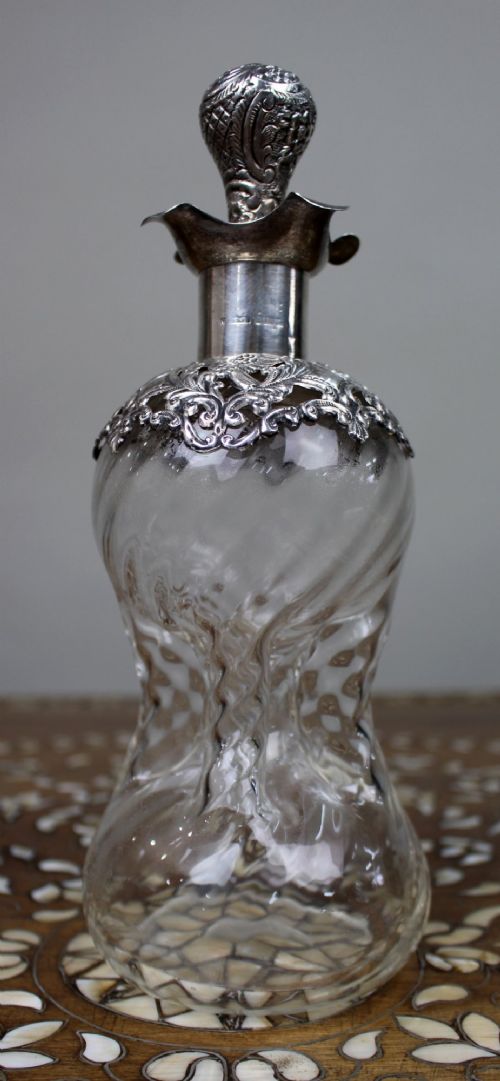
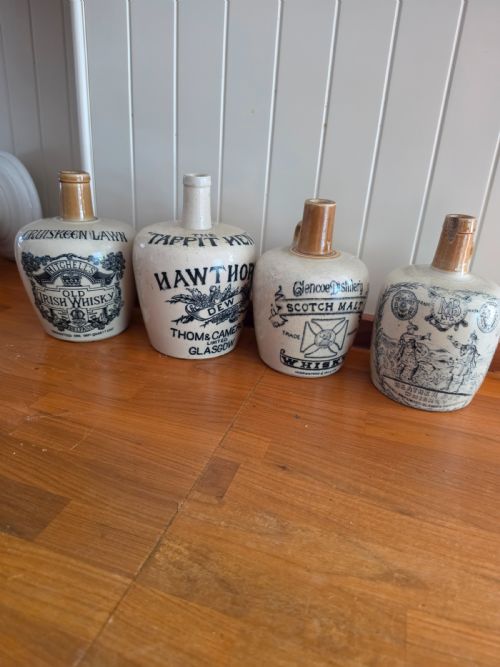
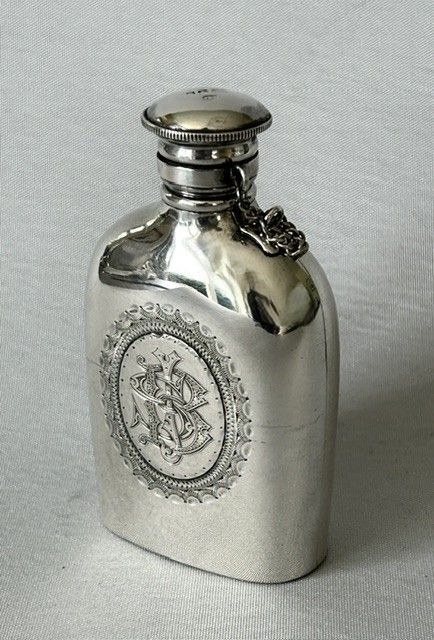
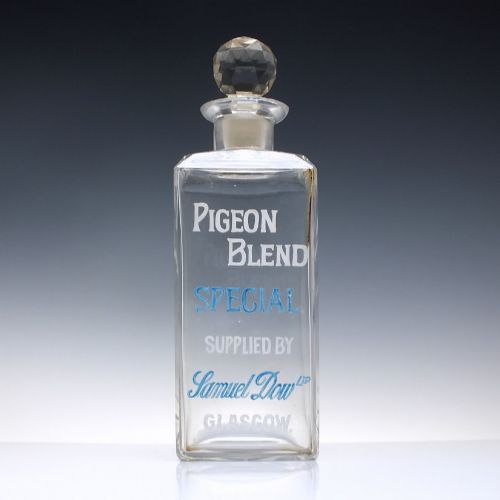
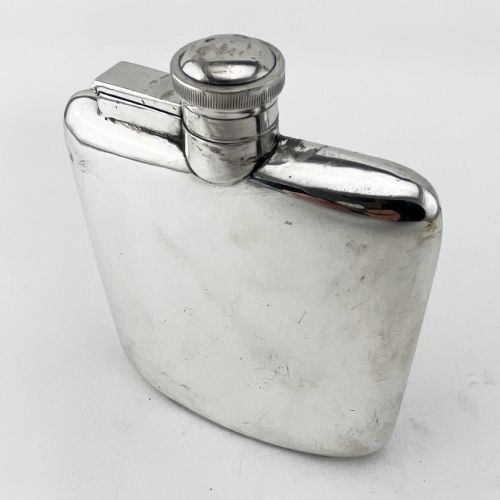
An antique whisky flask takes the form of a pocket-sized vessel designed for carrying spirits on the move. The pieces appearing here span the Victorian, Edwardian, and Art Deco eras, showing how portable drinking gear evolved across decades. Buyers encounter both all-metal pocket vessels and combination designs pairing glass bodies with protective metal hardware.
How they were made
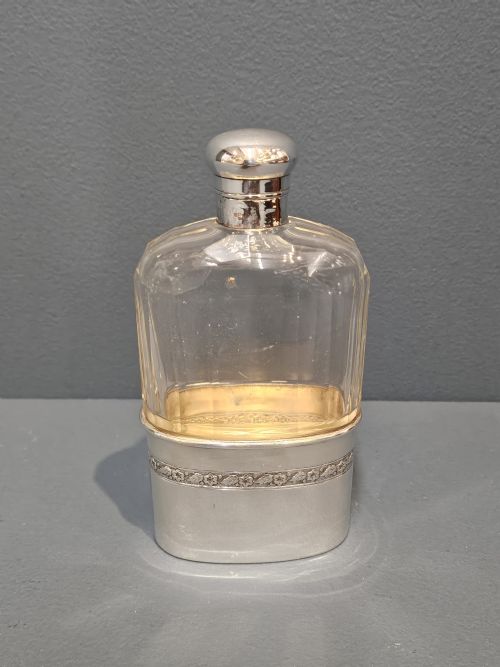
Maker workshops constructed these vessels using sterling silver, silver plate, and heavy cut glass, often combining multiple materials in a single piece. Glass bodies provide visibility of the contents while metal mounts protect the vulnerable corners and necks from damage during travel. Cork stoppers secure the liquid inside, working in tandem with screw caps or hinged lids to prevent spills.
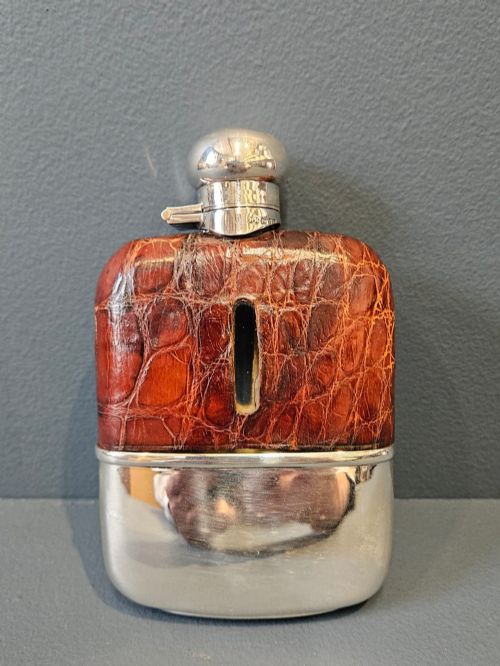
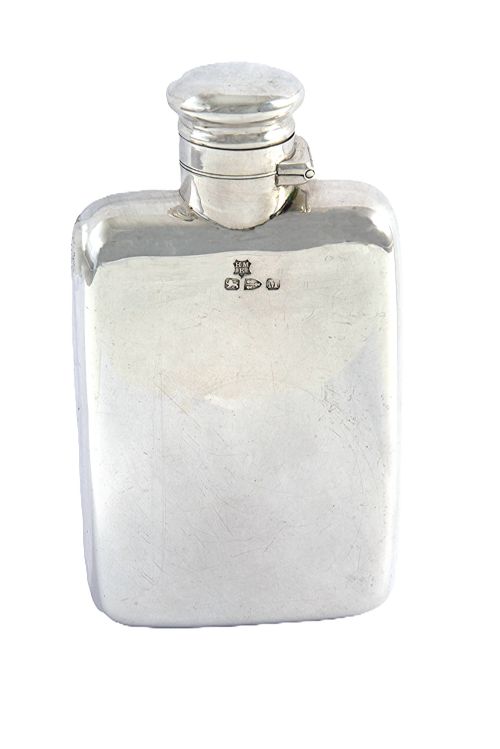
Some examples feature leather or crocodile leather coverings wrapped tightly around the lower body to improve grip in cold weather. Silversmiths hammered, cast, and engraved the metal components by hand, adding removable base cups that slide off the bottom for use as drinking vessels. Maker marks and date letters stamped into the silver confirm the exact period of manufacture.
Retail Price Guide 2026
Typical UK retail prices for whisky flask, calculated from the Sellingantiques database of over a million retail prices indexed since 2003. This retail price guide relies exclusively on Sellingantiques data; no external sources or auction records are used, so the figures do not describe the wider market.
Some flasks wear crocodile leather jackets that survived a century of pockets.
What varies in quality
Quality rests upon the weight of the metal and the precision of the fit between the removable cup and the glass body. Superior specimens display crisp hallmark stamps, substantial silver gauges, and tightly stitched leather bindings that show no looseness around the corners. The clarity of the cut glass and the smooth action of the hinged cap separate standard production items from workshop pieces.
Makers such as Hukin & Heath and James Dixon & Sons contributed a high level of finish that elevates certain examples above unmarked alternatives. The presence of a fully intact, original cork and a matching silver-gilt interior inside the removable cup marks the distinction between ordinary survival and fine preservation.
Hukin & Heath·James Dixon & Sons·Taylor & Tunnicliffe
The Antique Whisky Flask Glossary
- Hip flask
- A pocket-sized container specifically curved to fit against the hip or in a jacket pocket for carrying spirits. These vessels became essential accessories for hunting, travel, and outdoor pursuits.
- Removable cup
- A metal drinking vessel fitted to the lower portion of a flask that slides off for use. It allows the owner to pour a measure without needing a separate glass.
- Sterling silver
- A silver alloy containing ninety-two point five percent pure silver by mass, with the remainder consisting of other metals. This standard material is common in high-grade Victorian and Edwardian pocket pieces.
- Silver plate
- A layer of silver applied to a base metal core such as brass or copper. This technique offered a bright metallic finish at a lower cost than solid silver.
- Cut glass
- Glass decorated by cutting facets or patterns into the surface using a rotating wheel. This technique adds weight, sparkle, and a secure texture to the body of the flask.
Frequently Asked Questions
What is an antique whisky flask?
An antique whisky flask is a portable pocket vessel created to carry spirits during travel, sports, or outdoor excursions.
These containers date from the nineteenth and twentieth centuries, combining materials like silver, glass, leather, and cork into durable designs.
How were these flasks used?
Owners filled them with whisky, brandy, or other spirits to carry in a pocket or hunting bag for refreshment on the move.
The inclusion of a removable bottom cup allowed the user to pour a drink away from home without extra equipment.
How do I identify the period?
Makers stamped hallmarks, date letters, and town marks directly onto the silver mounts of the flask.
Comparing these punches against historical records reveals the exact year of manufacture and the workshop responsible for the piece.
Are the leather coverings original?
Many flasks feature tight leather or crocodile leather wraps stitched securely around the glass or metal body.
These coverings protected the vessel from knocks and provided a firm grip for cold hands during outdoor activities.