




Silver Glass Hip Flask
When you handle a silver glass hip flask, you hold a robust Victorian or Edwardian field companion built for spirits on the move.
Silver Glass Hip Flask
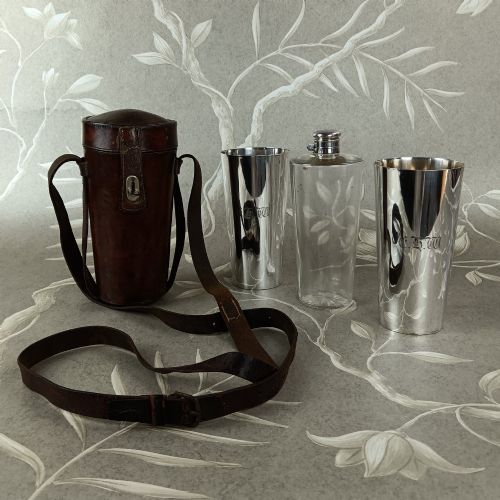
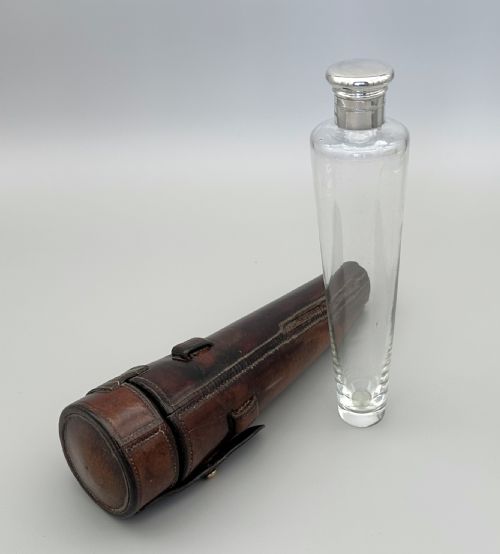
A silver glass hip flask is a portable spirit container combining a glass body with silver mounts, most commonly found in Victorian, Edwardian, and George V styles. These pieces range from simple glass bottles with silver caps to elaborate designs featuring removable cups and leather or crocodile skin casings.
The versions most frequently met on this page span the late nineteenth century through to the interwar period. Makers produced these flasks for field sports, hunting, and travel, resulting in curved bodies designed to fit comfortably in a pocket or saddlebag.
Materials and Construction
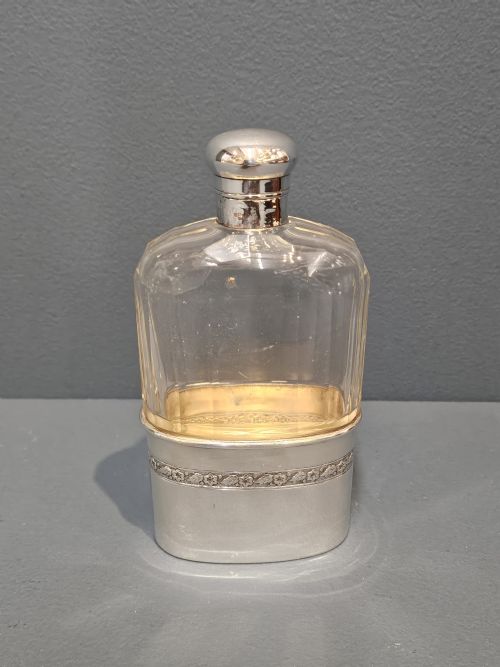
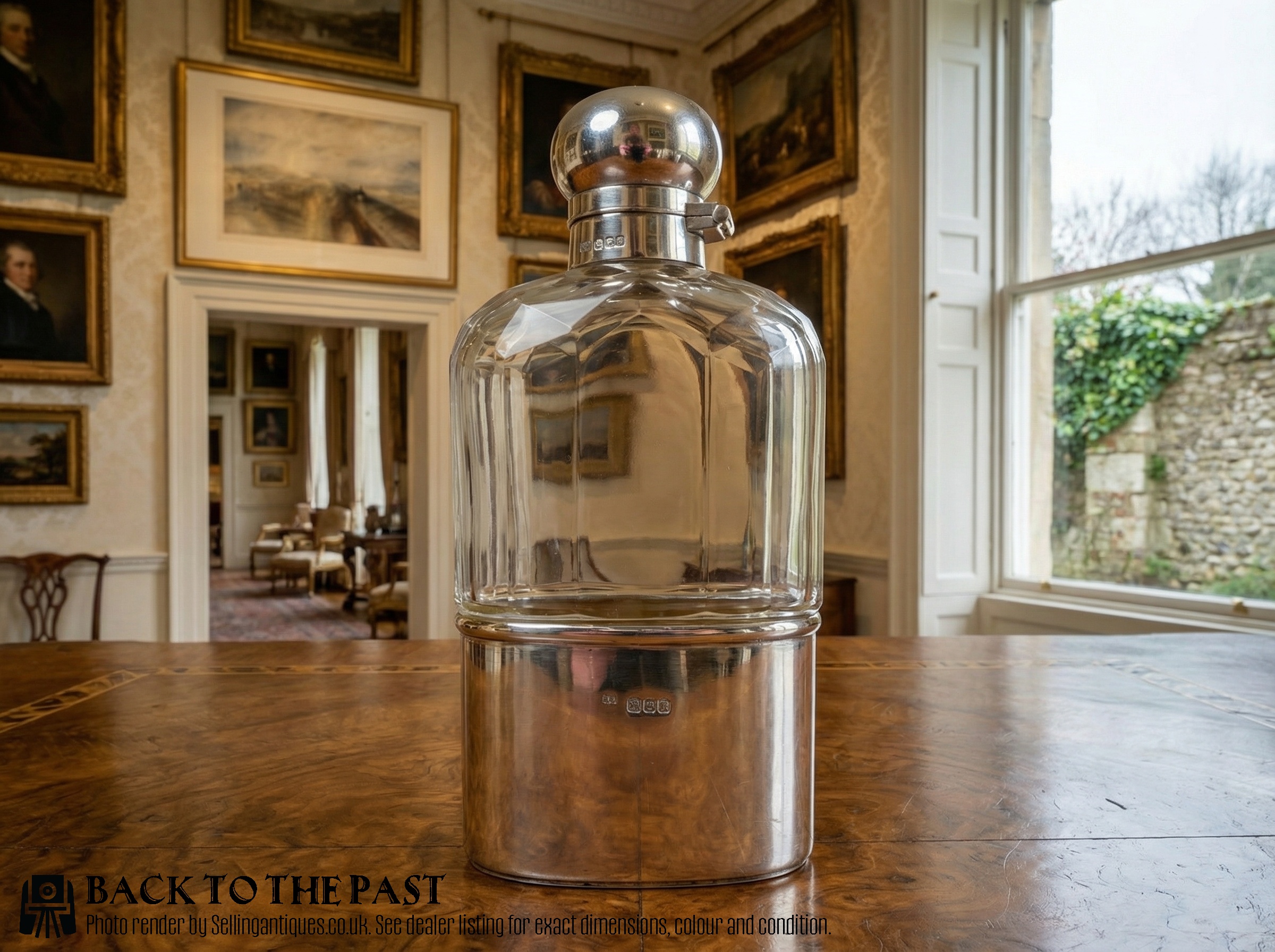
The primary bodies utilise heavy cut glass or crystal, often faceted or textured to provide a secure grip and catch the light. Silversmiths mounted these glass reservoirs with sterling silver or silver plate, frequently incorporating hinged lids with cork or rubber seals to prevent leaks.
Many examples feature removable bottom cups in plain or gilt silver, designed to unscrew for drinking. Premium iterations add stitched leather or crocodile skin sleeves, sometimes partial to reveal the glass beneath.
Silver Glass Hip Flask Retail Price Guide 2026
Typical asking prices for silver glass hip flask among the pieces listed under this phrase on Sellingantiques today, from the lower quarter to the upper quarter. They describe what is for sale here now, not the wider market.
Materials recorded across the archive include clear crystal, sterling silver, silver plate, and exotic skins such as crocodile leather fitted to campaign spirit sets.
Distinctions in Quality
Quality rests in the weight and clarity of the glass, the thickness of the silver mounts, and the precision of the mechanical fit. Superior examples exhibit crisply cut facets on the crystal and heavy-gauge silver that resists denting during daily use.
Finer specimens display complete hallmarks on every silver component, including the cap and removable cup. The integration of inner gold wash, known as silver gilt, on the drinking cup marks a higher standard of manufacture.
James Dixon & Sons·Asprey London·W A Ellwick Ltd·Sampson Mordan·Mosley, Flowers & Co
The Silver Glass Hip Flask Glossary
- Sterling silver
- A silver alloy containing 92.5 percent pure silver and 7.5 percent other metals, typically copper. This standard alloy provides the durability needed for functional pocket items.
- Silver gilt
- Sterling silver that has been coated with a thin layer of gold on the surface. This technique protected the interior of drinking cups from the corrosive effects of alcohol.
- Hallmark
- An official mark stamped onto precious metals to indicate the standard of purity, the assay office, and the year of manufacture. These stamps allow precise dating of the silver mounts.
- Removable cup
- A metal drinking vessel fitted to the base of the flask secured by a bayonet mount or screw thread. It slides off independently while the flask remains sealed.
- Cut glass
- Glass shaped and patterned by grinding and polishing wheels rather than mould-blowing. This process creates deep, sharp geometric patterns across the body.
Silver Glass Hip Flask: Frequently Asked Questions
What were silver glass hip flasks used for?
These flasks served travellers, hunters, and sportsmen carrying personal rations of whisky or brandy on long excursions. The glass body allowed the owner to see the remaining volume of spirit while the metal mounts protected vulnerable edges.
The removable bottom cup provided an immediate vessel for drinking without needing a separate glass. Their curved shape ensured they sat flush against a rider's hip or inside a heavy tweed coat pocket.
How do I date a silver glass hip flask?
Dating relies primarily on the assay office marks and date letters stamped into the silver mounts. Comparing the maker's mark against historical records reveals the exact workshop and production year.
Stylistic shifts in the glass cutting and the shape of the silver bayonet cap also help narrow the period when hallmarks are rubbed or missing.
Why do some flasks have leather cases?
Leather and crocodile skin coverings provided extra grip in wet weather and added a layer of shock absorption during rough field sports. Partial leather wraps allowed the owner to check the liquid level through an exposed glass window.
These skins were typically stitched tightly around the centre of the glass body and integrated smoothly with the top and bottom silver collars.
Are these flasks still watertight?
Many retain their original cork or rubber seals inside the silver cap and can hold liquid if the seal remains pliable. Over decades, however, organic sealing materials dry out and shrink.
Replacing an aged internal cork allows modern use, though many collectors prefer to display them as decorative objects of historical barware.