




Silver Cup Hip Flask
A silver cup hip flask combines a portable spirit container with a detachable drinking vessel for outdoor refreshment.
Silver Cup Hip Flask
When you search for a silver cup hip flask, you encounter pocket-sized spirit containers paired with fitted drinking cups that slide onto the base or body. These dual-purpose items appear frequently in Victorian, Edwardian, and Art Deco designs from makers such as James Dixon & Sons and Asprey.
The pieces on this page span the late nineteenth century through the 1940s, encompassing styles from Late Victorian to George V. Most examples integrate glass, sterling silver, silver plate, and leather or crocodile skin into compact forms designed for field sports and travel.
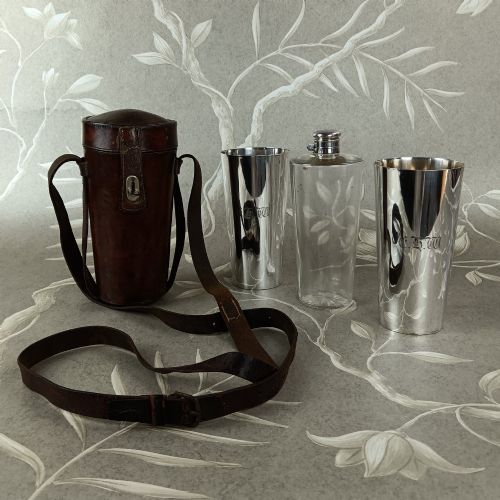
You will find variations ranging from small pocket versions to large field campaign sets equipped with removable gilt or silver-lined cups. These objects reflect the social habits of earlier eras, where carrying spirits discretely remained a common gentlemanly pursuit.
Materials and construction methods
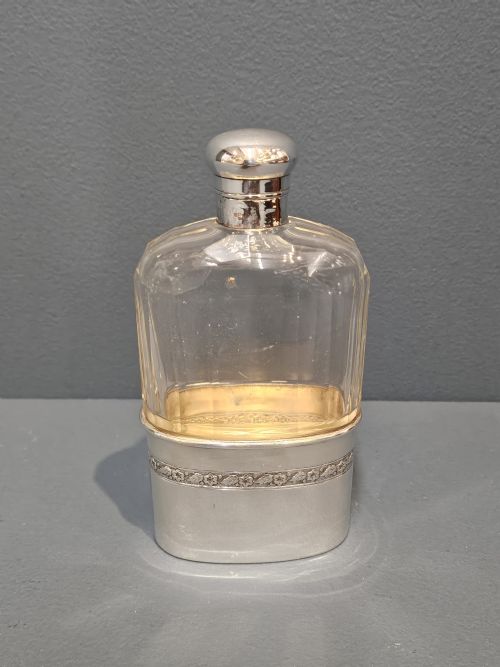
Silversmiths constructed the primary bodies from sterling silver or silver plate, frequently hammering the metal or adding hinged caps with secure bayonet fittings to prevent leaks. Many containers combine cut glass with solid silver mounts, allowing the contents to remain visible.
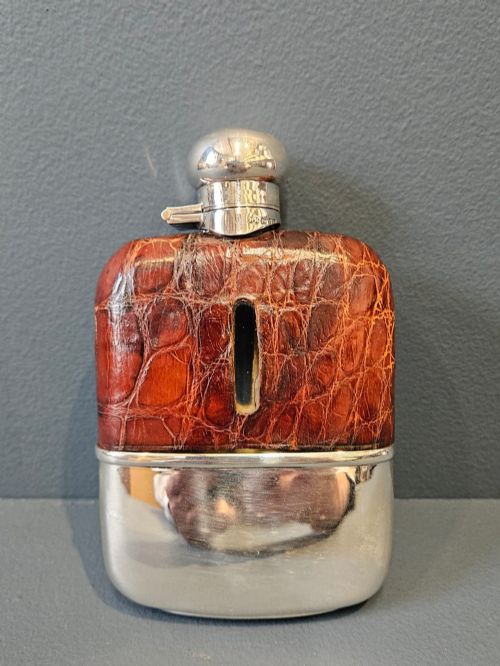
Makers wrapped sections of the flask bodies in leather, crocodile skin, or crocodile leather to improve grip during field sports. The detachable cups often feature interior gilt wash linings and chains to secure them to the main flask assembly.
Silver Cup Hip Flask Retail Price Guide 2026
Typical asking prices for silver cup hip flask among the pieces listed under this phrase on Sellingantiques today, from the lower quarter to the upper quarter. They describe what is for sale here now, not the wider market.
Listings feature pieces spanning the Victorian, Edwardian, and Art Deco periods, utilising sterling silver, silver plate, glass, and crocodile leather.
Evaluating craftsmanship and condition
Quality separates simple utility items from pieces produced by premier silversmiths through the weight of the metal and the precision of the cup fit. Superior examples exhibit crisp hallmarks, robust hinges, and securely fitted removable cups that slide smoothly without binding.
The integration of materials dictates the overall standard of manufacture, where finely cut glass and well-preserved exotic skins denote higher production values. Maker attribution to notable silversmiths further elevates the desirability of surviving items.
James Dixon & Sons·Hukin & Heath·Asprey London·Alfred Taylor·W A Ellwick Ltd·Walker & Hall
The Silver Cup Hip Flask Glossary
- Sterling Silver
- An alloy containing 92.5 percent silver by mass, widely utilised for the bodies and cups of high-grade flasks.
- Silver Plate
- A base metal coated with a thin layer of silver, common in larger field flasks and campaign sets.
- Gilt
- A gold wash applied to the interior of silver drinking cups to protect the metal from acidic spirits.
- Bayonet Fitting
- A cap mechanism requiring a push and twist motion to seal the flask securely against leaks.
- Campaign Set
- A comprehensive travelling kit containing a spirit flask and drinking vessels housed together for outdoor use.
Silver Cup Hip Flask: Frequently Asked Questions
What is a silver cup hip flask?
A silver cup hip flask is a portable container designed for carrying spirits, featuring a detachable drinking cup that doubles as the base cap. These items combine metal bodies with glass or leather components for outdoor use.
Historically utilised during hunting and field sports, they allowed individuals to carry a personal supply of alcohol conveniently. The integrated cup provides an immediate vessel for consumption.
How do I date a silver hip flask?
Dating relies heavily upon the official hallmarks stamped into the silver components, which indicate the assay office and year of manufacture. Stylistic markers such as Victorian ornamentation or later Art Deco geometric lines also help determine the period.
Makers' marks stamped alongside the assay office symbols provide further evidence of production dates. Comparing the overall form against known manufacturing eras narrows the timeframe accurately.
Were these flasks used for hunting?
Many surviving examples were explicitly produced for field sports, hunting parties, and outdoor travel. Their robust construction and secure caps prevented spills during active movement.
Leather and crocodile skin coverings provided a secure grip in cold or wet weather conditions. The inclusion of detachable cups made sharing or drinking in the field straightforward.
Why do some flasks have glass bodies?
Glass bodies allowed the user to monitor the remaining volume of spirits inside the container at a glance. Cut glass added decorative brilliance while maintaining structural durability.
Metal mounts and protective leather sleeves safeguarded the fragile glass centre from impacts during travel. Silver or plated cups fitted securely over the lower portion of the glass.