






Victorian Hip Flask
A victorian hip flask is a portable metal or glass vessel designed to carry spirits discreetly during travel, field sports or military campaigns.
Victorian Hip Flask
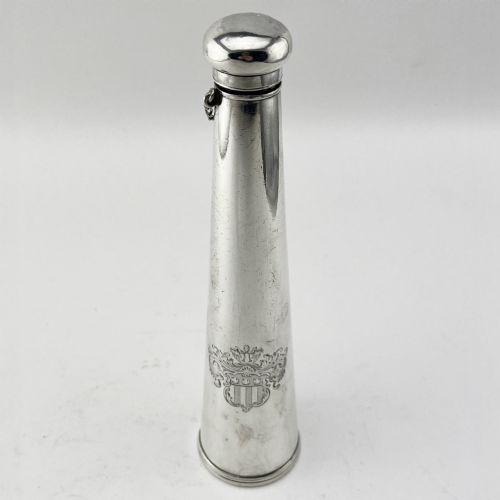
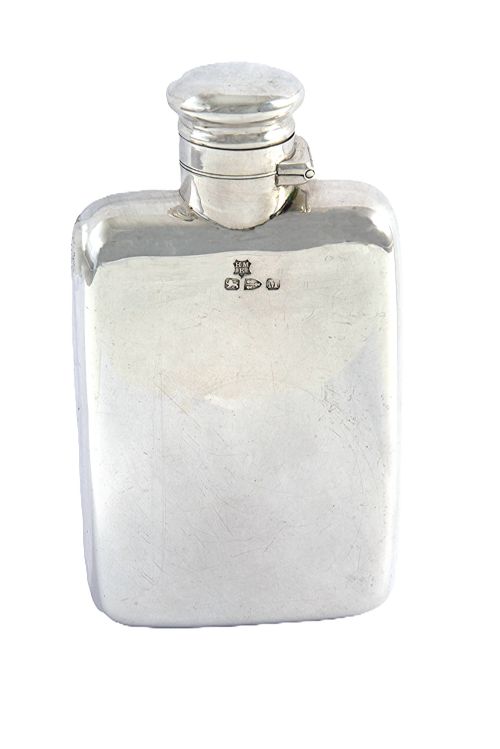
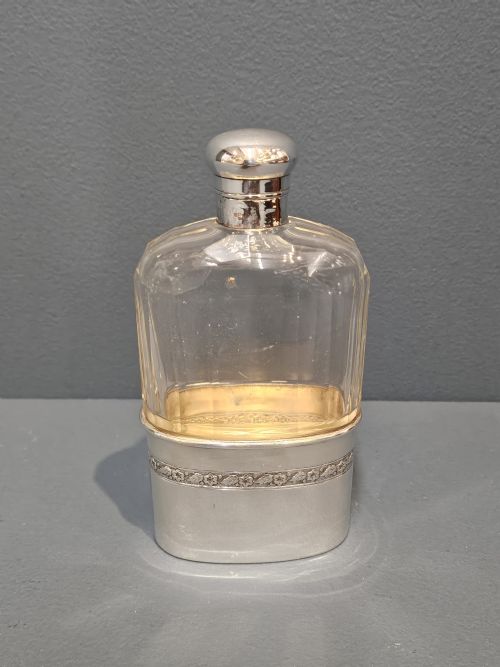
A victorian hip flask is a pocket-sized container intended for carrying spirits during outdoor pursuits, hunts or military campaigns. The forms seen most often on this page combine sterling silver mounts with curved glass bodies, alongside all-metal silver or silver-plated variants.
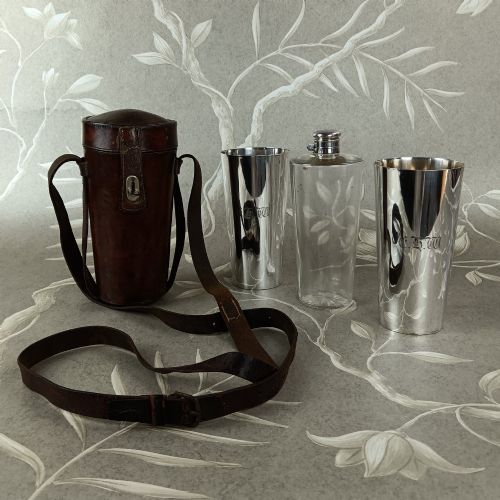
Makers produced these flasks in various formats, ranging from simple pocket models to complex field campaign sets complete with detachable drinking cups. Surviving examples reflect the social habits of the nineteenth century, when travellers carried personal spirits for sustenance or medicinal use.
How They Were Made
Silversmiths utilised sterling silver and silver plate for the bodies, caps and removable cups, often shaping the metal to fit the curve of a pocket. Glass bodies were frequently heavy cut crystal or faceted glass, providing durability and visibility of the contents.
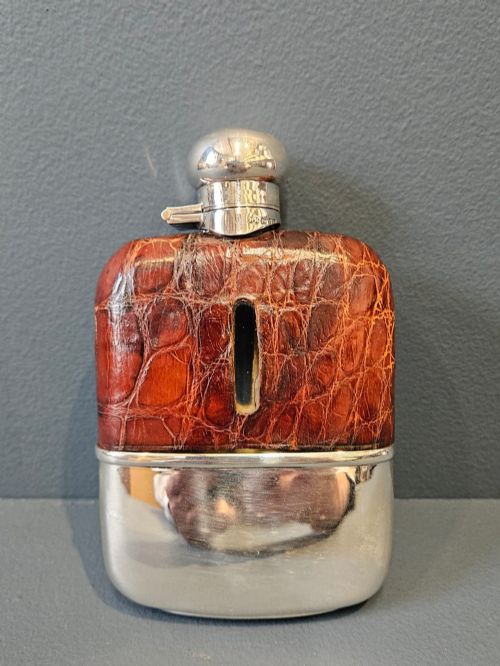
Many examples incorporate tactile coverings such as leather or crocodile leather around the centre section to improve grip during field use. Specialised techniques included hammering the silver finish or applying delicate silver gilt interiors to the drinking cups.
Victorian Hip Flask Retail Price Guide 2026
Typical asking prices for victorian hip flask among the pieces listed under this phrase on Sellingantiques today, from the lower quarter to the upper quarter. They describe what is for sale here now, not the wider market.
Materials recorded in these listings include sterling silver, cut glass, crocodile leather and nickel silver.
What Varies in Quality
Quality rests in the weight of the metal and the precision of the mechanics, particularly how securely the captive or screw cap seals the contents. Thicker gauge silver and well-fitted bayonet or screw mechanisms distinguish sturdier pieces from lighter production.
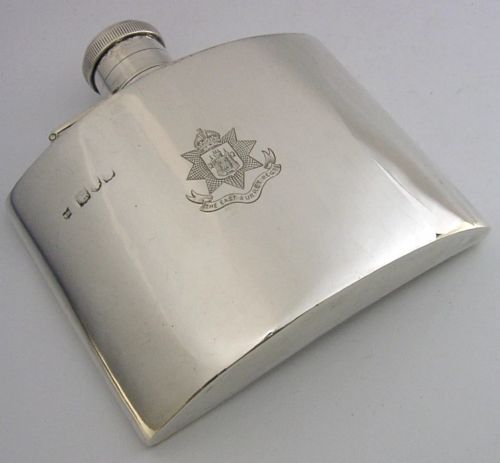
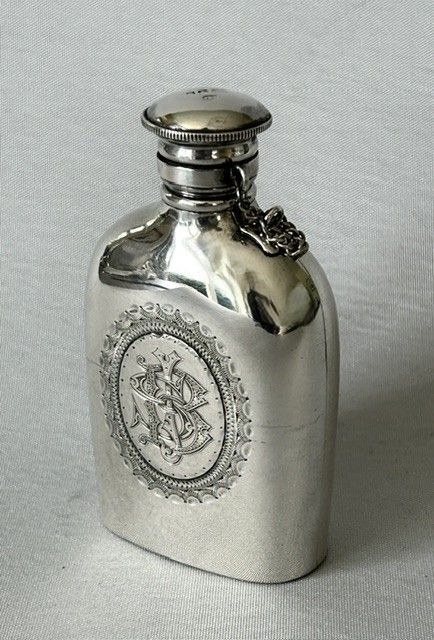
The integration of companion pieces, such as removable base cups and matching glass bodies, separates standard vessels from more elaborate campaign sets. Engraved armorials, family crests or detailed chasing also elevate the visual standard of individual flasks.
James Dixon And Sons·Hukin And Heath·Asprey London·Sampson Mordan·Hilliard And Thomason·Walker And Hall
The Victorian Hip Flask Glossary
- Sterling silver
- A silver alloy containing 92.5 percent pure silver by mass, widely utilised for the mountings and bodies of higher-grade flasks. Assay office hallmarks stamped upon the metal indicate the year of manufacture and town of origin.
- Silver plate
- A base metal, such as nickel silver, coated with a thin layer of pure silver. This technique provided the appearance of solid silver at a more accessible cost for larger production runs.
- Captive cap
- A bottle lid attached to the flask by a hinged arm so the closure cannot be dropped or lost during field use. This mechanical feature is commonly found on military and hunting models.
- Silver gilt
- Sterling silver that has been coated with a thin layer of gold on the interior surfaces. This treatment prevented the spirituous liquor from reacting directly with the silver.
- Cut glass
- Glass decorated by cutting geometric patterns into the surface using rotating wheels. It added weight and visual texture to the bodies of combination silver and glass flasks.
Victorian Hip Flask: Frequently Asked Questions
Were all victorian hip flasks made of silver?
While solid sterling silver and silver plate were dominant, many vessels combined metal mountings with glass bodies or leather wrappings. Makers selected materials based on the intended use, pairing robust metals with glass or protective hides.
Evidence from surviving examples shows frequent use of crocodile leather, plain leather and clear cut crystal alongside standard silver construction.
Why do some flasks have removable cups at the base?
The removable base cup allowed the owner to pour and share spirits while out in the field without needing separate glassware. These cups slid off the lower portion of the flask and were often gilt-lined.
Many pocket and campaign models incorporated this dual-purpose feature for convenience during hunting or military service.
How can I tell the date of a silver flask?
British silver flasks typically carry hallmarks stamped by official assay offices such as London, Birmingham, Chester or Sheffield. These marks include date letters that designate the specific year the piece was tested and marked.
Comparing the stamped lion passant, maker's mark and date letter against official hallmarking records provides an exact year of production.
What is a campaign spirit set?
A campaign set was a portable kit designed for officers or travellers, containing a flask alongside matching beakers or accessories packed within a fitted case. These sets were built for durability during long journeys and military deployments.
The inclusion of multiple drinking vessels distinguishes these complex sets from standard single flasks.