





Silver Hunting Flask
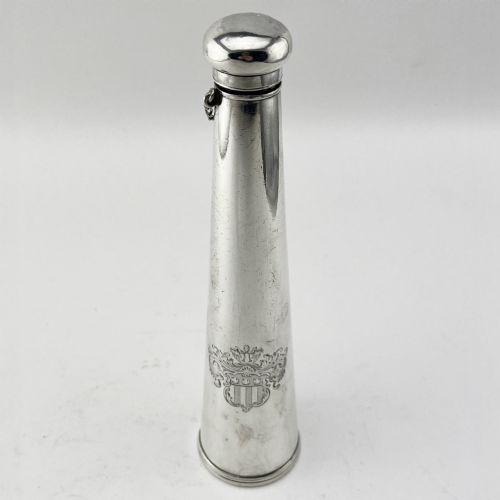
A silver hunting flask is a portable vessel designed for field sports, combining robust metals and glass to carry spirits on the move.
Silver Hunting Flask
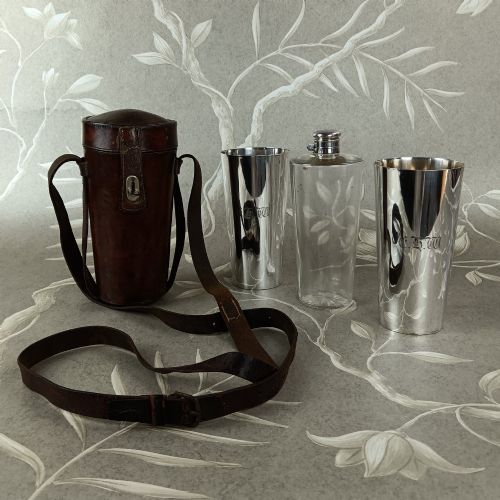
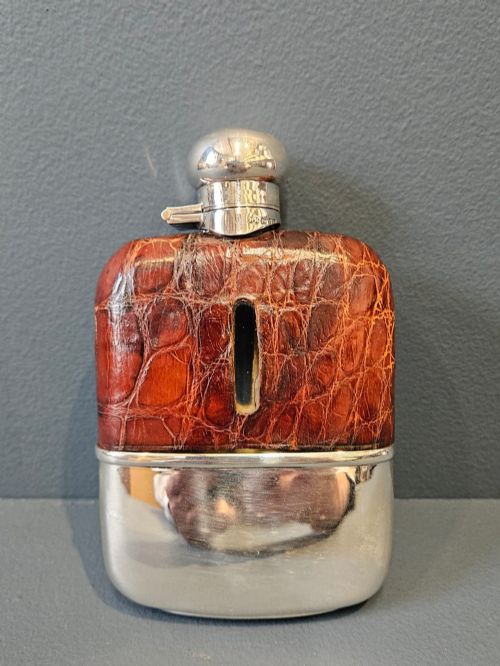
A silver hunting flask represents a specialised category of drinking vessel engineered for riders and field sportsmen across the nineteenth and twentieth centuries. The primary versions met on this page include sterling silver and silver-plated containers, frequently paired with cut crystal bodies or wrapped in leather.
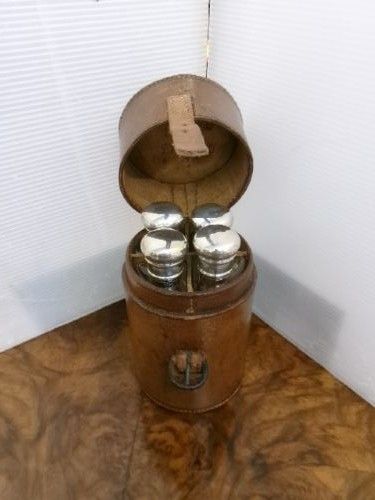
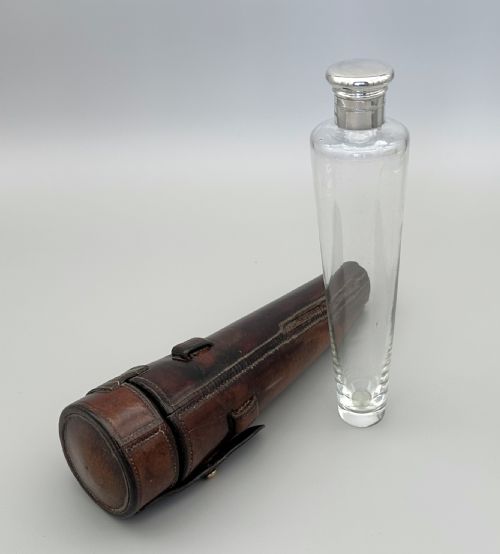
Many examples take curved profiles designed to fit comfortably against the body in a pocket or saddlebag. Others arrive housed in fitted leather cases, sometimes accompanied by matching drinking cups or complete campaign sets for field refreshment.
Origins stretch from the Georgian era through Victorian, Edwardian, and Art Deco periods, encompassing both utilitarian field gear and refined silverwork. These pieces survive in diverse forms, from simple glass inserts with silver bayonet tops to large locking spirit flasks.
How They Were Made
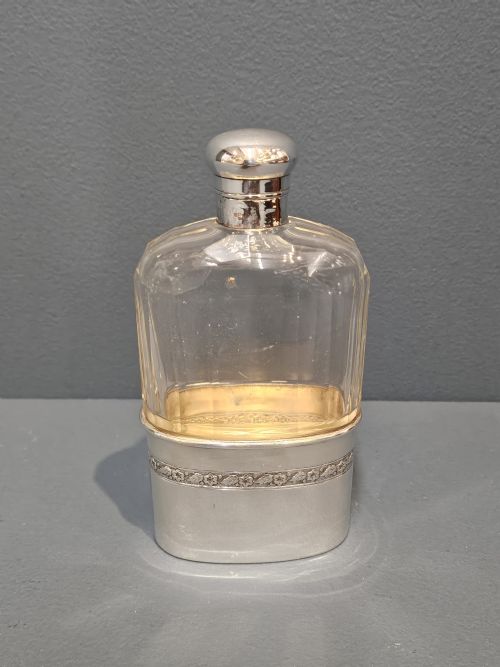
Makers combined sterling silver, silver plate, and nickel silver with heavy-gauge glass and cut crystal to withstand the rigours of outdoor pursuits. Exterior surfaces often received a hammered finish or hand-engraved floral patterns, while premium iterations incorporated genuine crocodile leather sleeves.
Saddlery techniques informed the production of protective leather cases and fitted straps designed to secure the flask during motion. Metal components relied on traditional silversmithing methods, including spinning, soldering, and casting for hinged caps and detachable cups.
Silver Hunting Flask Retail Price Guide 2026
Typical asking prices for silver hunting flask among the pieces listed under this phrase on Sellingantiques today, from the lower quarter to the upper quarter. They describe what is for sale here now, not the wider market.
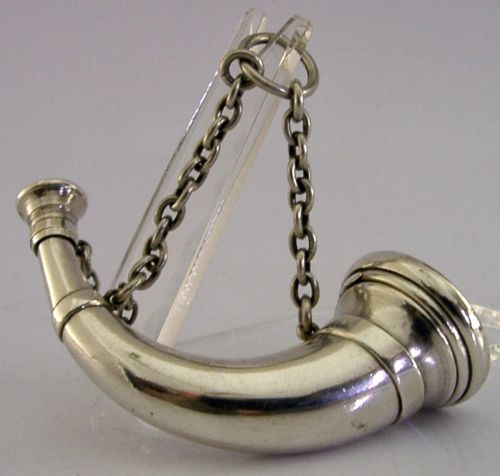
Some sporting flasks doubled as novelty vesta cases, ensuring a gentleman could light his pipe after a hard ride across the fields.
What Varies in Quality
The distinction between standard utility items and high-end examples rests upon the weight of the metal and the precision of the construction. Superior pieces utilise heavier gauges of sterling silver and feature crisp hallmarks alongside complex mechanisms like locking bayonet tops.
The presence of original fitted leather cases, matching detachable cups, or complete multi-vessel campaign sets elevates the standing of an individual piece. Artisanal touches such as hand-hammered texturing or fine chasing differentiate workshop output from mass-produced wares.
James Dixon And Sons·Sampson Mordan·Hukin And Heath·Asprey London·W A Ellwick Ltd·J C Vickery·Creswick And Co
The Silver Hunting Flask Glossary
- Sterling silver
- A silver alloy containing 92.5 percent pure silver and 7.5 percent other metals, usually copper. This standard composition provides the necessary durability for functional items while maintaining a bright metallic lustre.
- Silver plate
- A base metal substrate covered with a thin layer of silver through electroplating or older fusion methods. It offered a more affordable alternative to solid silver during the nineteenth and twentieth centuries.
- Bayonet top
- A secure closure mechanism requiring a push and a twist to lock the cap onto the neck of the flask. This design prevented accidental spills during rough movement in the field.
- Vinaigrette
- A small ornamental box containing a sponge soaked in aromatic vinegar, used during the nineteenth century to mask unpleasant odours. Some specialised hunting accessories combined this function with scent compartments or flask elements.
- Campaign set
- A portable collection of spirit flasks, beakers, and accessories fitted into a dedicated leather or wooden box. These sets were built for travel and outdoor dining during military or sporting expeditions.
Silver Hunting Flask: Frequently Asked Questions
How do I use a hunting flask?
These vessels are designed to carry spirits such as whisky or brandy for consumption during outdoor pursuits and equestrian sports. The secure caps and auxiliary cups allow for measured pours while on the move.
Modern owners frequently utilise them for shooting events, historical reenactments, or as display items in barware collections. Care must be taken to clean the interior thoroughly after holding alcohol to preserve the metal and glass.
Were these flasks made for riding?
The curved contours of many examples were specifically engineered to slide into a rider's pocket or fit snugly inside a saddle holster. The inclusion of leather cases and locking tops helped prevent accidental loss or breakage during a hunt.
Over time, manufacturers adapted these practical field containers into more decorative accessories while retaining the core ergonomic shapes required for equestrian travel.
How do I date a silver flask?
British pieces typically rely on assay office marks, date letters, and maker's stamps punched directly into the silver components. Comparing these hallmarks against official records reveals the exact year and city of manufacture.
Stylistic indicators such as Victorian engraving, Edwardian proportions, or Art Deco geometric patterns also help narrow down the period when hallmarks are rubbed or absent on plated wares.
What is the difference between solid silver and plate?
Solid silver pieces are constructed entirely from sterling silver throughout the body and cap, marked with standard purity guarantees like the lion passant. Silver-plated items use a base metal core, such as nickel or copper, coated with a thin layer of precious metal.
Heavier weight and official silver hallmarks generally distinguish solid metal vessels from plated alternatives, though both shared similar utilitarian roles in the field.