
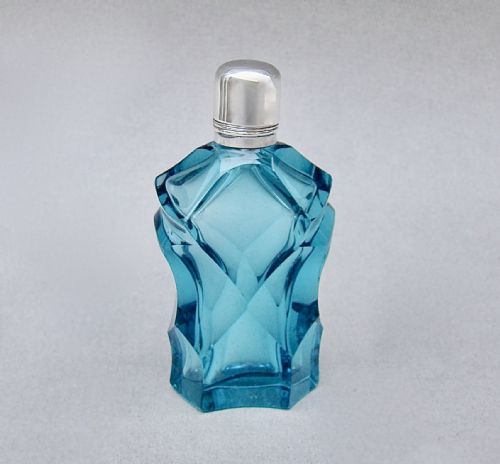
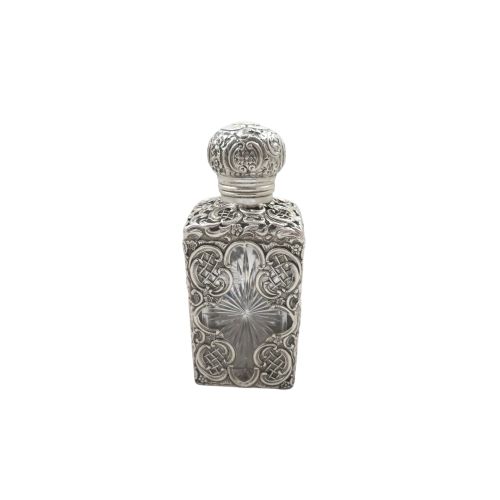
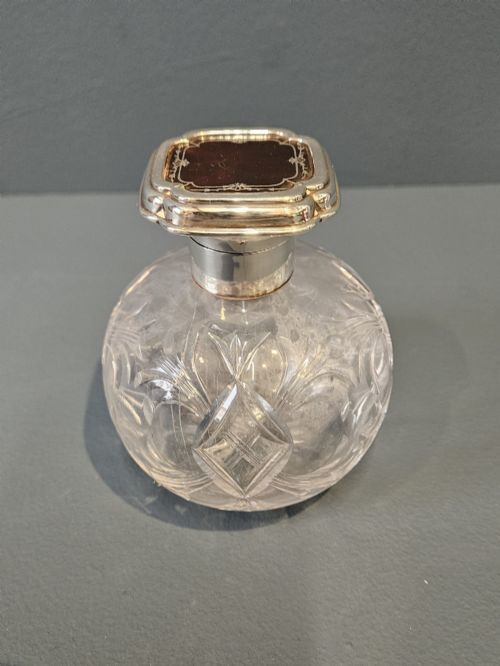
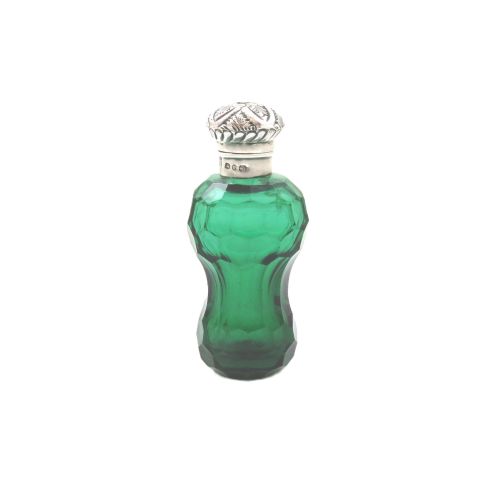



Cut Glass Flask
When you search for a cut glass flask, you seek a tactile container of heavy glass and precious metal designed for scent or spirits.
Cut Glass Flask
A cut glass flask encompasses portable vessels created for holding perfumes, colognes, and spirits during travel or daily toilette. Buyers searching this phrase will find items ranging from small pocket scent bottles to larger gentleman's spirit flasks.
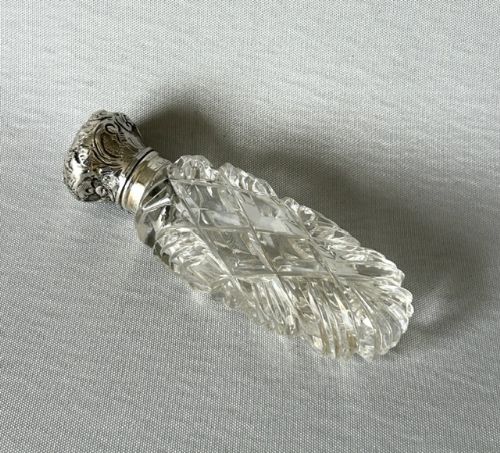
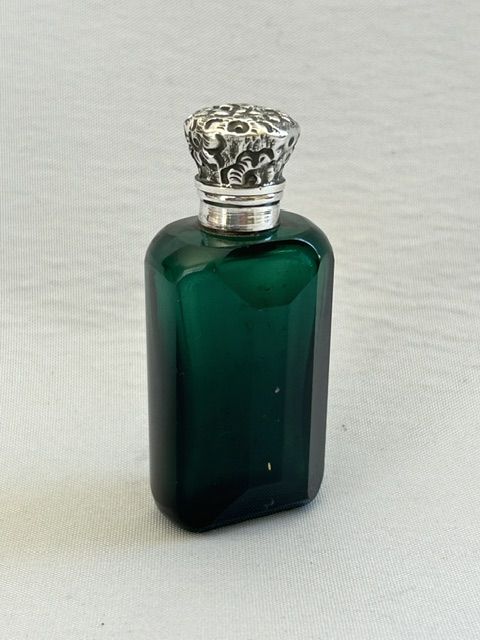
The version most commonly met on this page is the Victorian or Edwardian scent bottle, paired with a sterling silver screw cap or hinged lid. These pieces combine utilitarian function with decorative glasswork.
Alongside scent bottles, the selection includes heavy hip flasks intended for pocket use, often fitted with removable drinking cups in silver or silver plate. Decanters and carafes also appear, bridging the gap between portable containers and table ware.
How They Were Made
The body of each piece relies on heavy-walled glass, frequently shaped by blowing into moulds before receiving deep incisions from a cutting wheel. This cold-working process produces geometric facets, flutes, and star-cut bases that catch the light.
Metal mounts, predominantly sterling silver, frame the necks and form the lids, secured to the glass with cork or modern lining. Enamel, tortoiseshell, and gilt accents frequently complement the silver hardware.
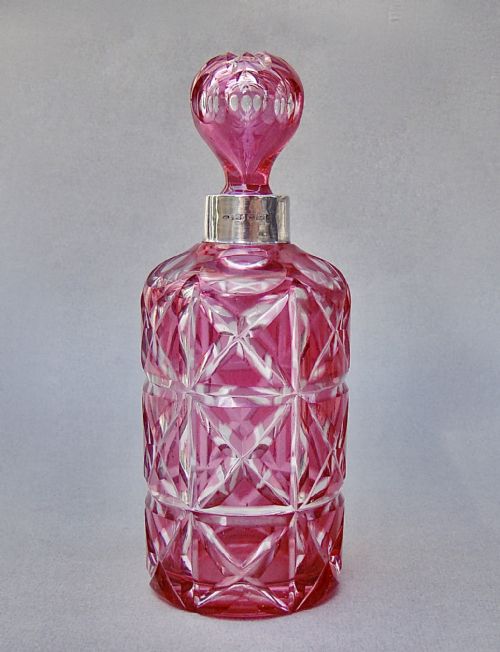
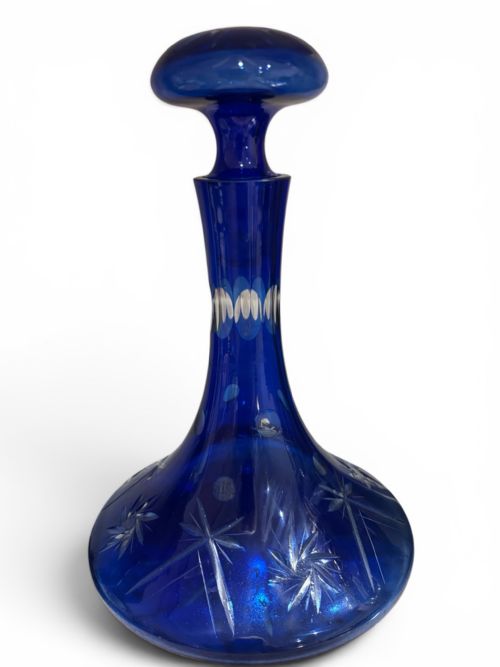
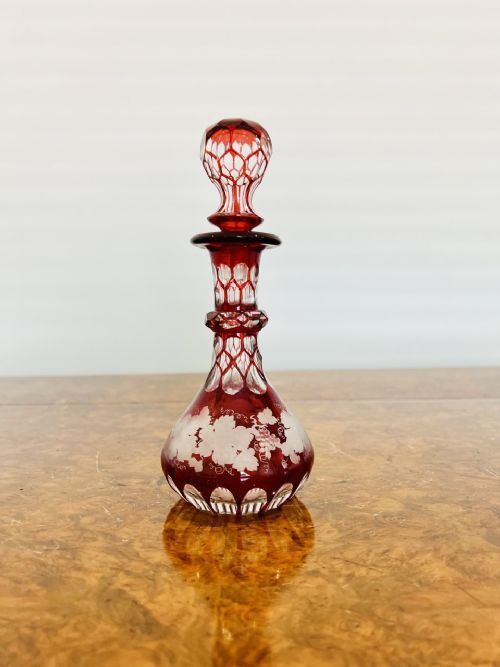
Coloured glass varieties, including cranberry, green, amethyst, and cobalt, undergo layered overlay techniques where clear glass is cased in colour before cutting through to reveal the contrasting tone beneath.
Listings feature Victorian, Edwardian, and Art Deco periods, employing cut crystal, coloured glass, sterling silver, and enamel.
What Varies in Quality
The depth and crispness of the wheel-cut facets dictate the tactile quality of the glass body, with sharper, cleaner edges marking superior output. Heavier glass weights and unblemished clarity further elevate the standard of a vessel.
Metalwork execution shifts between standard stamped collars and complex hinged mounts featuring hand-engraved detail, fitted leather cases, or applied guilloche enamel. Maker marks from established silversmiths elevate the standing of the mounted hardware.
The integration between glass and metal indicates the original tier of production, where flush, secure collars demonstrate careful workshop assembly rather than generic replacement parts.
Harold Bushell and Co·Karl Palda·Henry Perkins·Barnsley and Co·Elkington·Asprey·James Dixon and Sons·Finnigans of Bond Street
The Cut Glass Flask Glossary
- Guilloche enamel
- Enamel decorated with intricate engine-turned geometric patterns beneath a translucent coloured layer. This technique appears frequently on Edwardian and Art Deco perfume caps.
- Vinaigrette
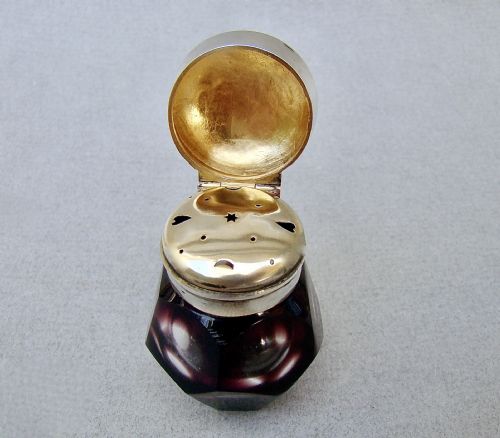
- A small ornamental box or bottle containing a perforated grille, holding a sponge soaked in aromatic vinegar. These pieces were carried for reviving the senses during travel.
- Overlay glass
- Glass composed of two or more distinct layers of different colours, where sections of the outer layer are cut away. This method creates bold contrast and deep relief patterns.
- Spirit flask
- A durable container designed for carrying potable alcohol, commonly featuring a captive cap and a lower cup made of silver. They were built for outdoor pursuits and hunting.
- Sterling silver
- An alloy consisting of ninety-two point five percent silver and seven point five percent other metals, usually copper. Hallmarks stamped into this metal indicate the assay office and year of manufacture.
Cut Glass Flask: Frequently Asked Questions
What is a cut glass flask used for?
These vessels served to transport personal fragrance, smelling salts, or potable spirits during travel and social outings. Their robust construction protected valuable liquids while fitting into pockets, chatelaines, or leather travel cases.
Smaller examples held potent perfumes and volatile colognes for daily freshness, while larger hip flasks accompanied hunters and travellers on outdoor excursions.
How do you date a silver mounted flask?
Dating relies primarily on the assay office hallmarks stamped into the silver mounts, which indicate the exact year of manufacture and the maker. Stylistic cues such as faceted brilliant-cut crystal or Art Deco enamel work also point to specific decades.
Examining the shape of the bottle and the mounting style helps confirm whether the collar and lid are original to the glass body.
How should I clean a vintage glass flask?
Gentle washing with warm water and mild soap preserves both the glass clarity and the delicate silver mounts. Avoid soaking antique metal components, especially those with enamel or tortoiseshell inserts.
Using specialised soft brushes helps clear dust from deep wheel-cut facets without scratching the surface of the crystal.
Are coloured glass flasks rarer than clear ones?
Coloured glass vessels, particularly those utilising cranberry, amethyst, or overlaid cased glass, occur less frequently than standard clear crystal. These vibrant hues required specialised mineral additions during the glass-melting process.
Overlay pieces demanded extra labour from the glass-cutter to expose the contrasting base layer through the coloured exterior.