
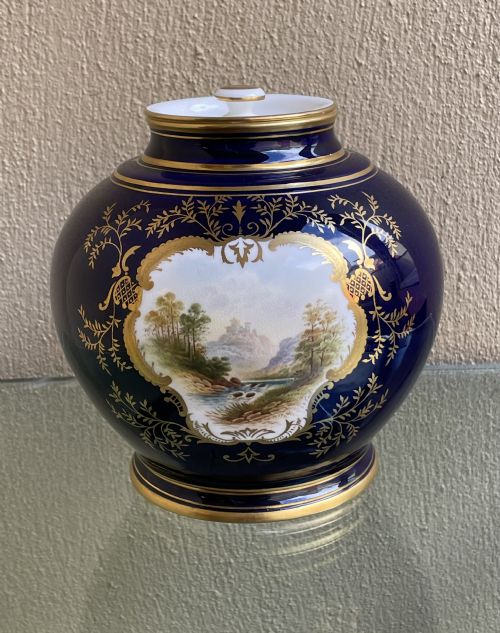


Early 20th Century Jar
An early 20th century jar brings utility and decorative colour from Edwardian and 1920s workshops straight into a modern interior.
Early 20th Century Jar
An early 20th century jar encompasses diverse forms ranging from biscuit barrels and lidded pots to apothecary carboys and porcelain vessels. These pieces emerge from periods spanning the Edwardian era through to the 1920s, reflecting varied domestic and decorative uses.
Vessels span materials from delicate porcelain and earthenware to heavy cut glass and chiselled brass. Each container demonstrates the specific decorative tastes prevalent across the early decades of the twentieth century.
How they were made
Makers utilised traditional forming techniques, throwing earthenware and porcelain before applying detailed enamel, gold leaf, or hand-painted motifs. Glass pieces relied on blowing, cutting, and etching to achieve faceted surfaces and decorative patterns.
Metal components involved chiselled brass, silver plating, and intricate cloisonné wirework soldered to metal bodies. These varied construction methods combined ceramic, glass, and metal elements into robust lidded containers and display vessels.
Listings feature materials spanning enamel, cut glass, brass, porcelain, gold leaf, copper, and earthenware.
What varies in quality
Quality rests in the crispness of surface decoration, from the precision of cloisonné wire boundaries to the depth of cut glass faceting and hand-painted enamel detail. Superior examples display controlled firing in ceramics and clean, unblemished mounting in silver or brass.
The integration of lids and mountings marks the distinction between standard production and finer studio work. Better pieces maintain secure, well-fitted covers and balanced proportions that speak to the maker's technical skill.
Coalport·Meissen·Mintons
The Early 20th Century Jar Glossary
- Cloisonné
- Enamelling technique where thin metal wires form raised barriers on a body to separate distinct coloured pastes before firing. This method creates intricate patterned surfaces across vases and lidded vessels.
- Majolica
- Opaque tin-glazed earthenware decorated with brightly coloured lead glazes. It produces vibrant, glossy surfaces common in decorative Victorian and Edwardian containers.
- Carboy
- Large, heavy glass vessel traditionally used to hold liquids safely. Early twentieth-century examples often served pharmaceutical or apothecary functions.
- Imari
- Japanese decorative style featuring iron red, cobalt blue, and gold motifs. The aesthetic heavily influenced European porcelain and earthenware production.
- Biscuit barrel
- Covered container designed specifically for storing dry baked goods on a dining table or sideboard. They frequently incorporate silver-plated mounts, glass bodies, or ceramic walls.
Early 20th Century Jar: Frequently Asked Questions
What were early 20th century jars used for?
These containers served multiple domestic functions, holding dry foodstuffs like biscuits and tobacco, or acting as decorative vessels and perfume receptacles.
Larger carboys held liquids in apothecary settings, while oriental cloisonné and porcelain pieces functioned purely as decorative ornaments in formal rooms.
How do I identify an Edwardian jar?
Edwardian pieces often combine traditional ceramics with silver-plated mounts, cut glass, or distinctive Kashmiri craftsmanship. Look for hallmarks and stylistic cues pointing to the early 1900s.
The aesthetic frequently draws on Chinoiserie and classical revival motifs popular during the reign of Edward VII.
How should I clean a brass or enamel jar?
Enamelled and cloisonné surfaces require gentle dusting with a soft, dry cloth to protect the delicate coloured pastes. Avoid harsh chemical cleaners that can damage the vitreous finish.
Chiselled brass benefits from occasional light cleaning appropriate for antique metalwork, taking care to avoid any applied gilt or aged patina.
Are these jars suitable for holding food?
While biscuit barrels and lidded pots were originally designed for edible goods, antique glazes and older silver plating may not meet modern food safety standards. It is generally advisable to use them for display or dry storage rather than direct contact with consumables.