


Edwardian Glass Biscuit Barrel
An Edwardian glass biscuit barrel brings heavy, sparkling glass and bright metal mounts to the table, exactly what collectors want for a traditional dining room.
Edwardian Glass Biscuit Barrel
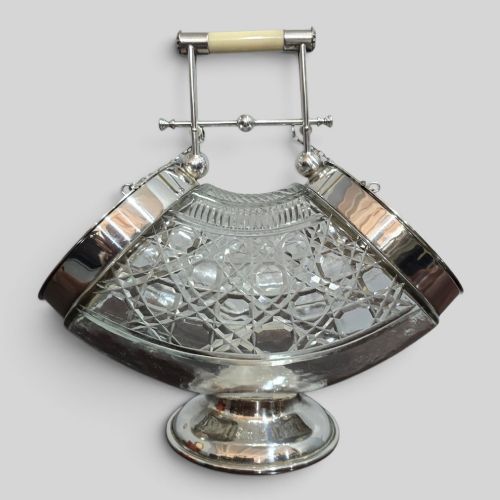
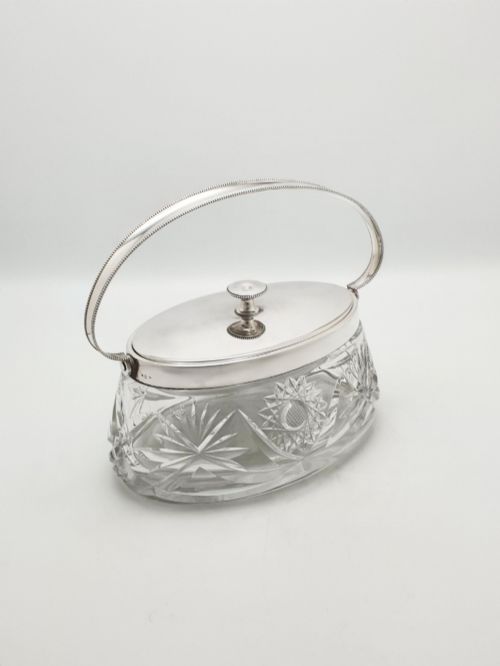
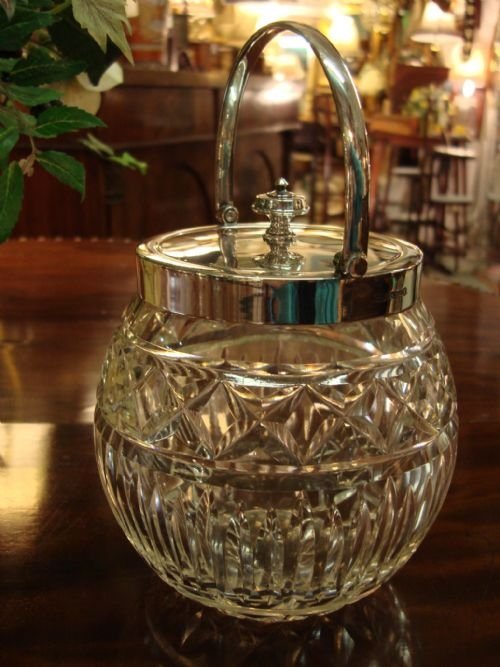
An Edwardian glass biscuit barrel is a covered container designed to keep biscuits crisp and dry on the sideboard or tea table. The forms seen here combine a deep glass body with a metal lid and swing handle, often resting on a matching collar.
Most examples originate from the Edwardian period and the early twentieth century, though variations stretch back into the Victorian era and forward into the Art Deco years. You will frequently encounter clear cut glass and rich cranberry glass paired with silver plate or sterling silver mounts.
Materials and Techniques
The bodies of these barrels utilise heavy glass shaped by cutting, faceting, or hobnail moulding to catch the light, alongside coloured glass types like cranberry and ruby. Metal components consist of silver plate or solid sterling silver, frequently shaped into pierced galleries, hinged lids, and sturdy swing handles.
Makers added further decoration through enamel work and specialised mounts, combining metal and glass securely to create a practical, lidded vessel that could withstand daily use on the dining table.
Some elaborate Edwardian barrels feature automated mechanisms linking the lid to the handle, popping open with a polite mechanical clink when lifted.
Evaluating Quality
Quality rests in the depth and crispness of the glass cutting, where sharp hobnails and clean facets distinguish finer pieces from plain, moulded bodies. The thickness of the silver plating and the substantial weight of the glass body also indicate a higher grade of manufacture.
James Dixon and Sons·Grinsell and Sons·WMF
The Edwardian Glass Biscuit Barrel Glossary
- Hobnail cut
- A sharp, projecting faceted glass pattern resembling the hobnails on sturdy boots. This texture creates deep refraction across the barrel body.
- Cranberry glass
- A rich red-pink transparent glass created by adding gold chloride to the molten batch. It appears frequently in Edwardian tablewares.
- Silver plate
- A layer of pure silver fused to a base metal core such as copper or Britannia metal. It provided a bright finish for mounts at a lower cost than solid silver.
- Swing handle
- An arched metal handle hinged to the collar of the barrel, allowing easy lifting of the lid. It swings down to the sides when not in use.
- Pierced mount
- Metalwork perforated with decorative patterns such as lattices or foliage. This technique lightened the visual weight of the silver-plated collar.
Edwardian Glass Biscuit Barrel: Frequently Asked Questions
How were glass biscuit barrels used?
These containers sat on the dining table or sideboard during the afternoon tea service and after-dinner dessert courses. Guests lifted the hinged lid by the swing handle to serve themselves dry biscuits.
The heavy glass body and tight lid kept biscuits fresh in domestic dining rooms before the advent of modern airtight packaging.
What is cranberry glass?
Cranberry glass is a transparent, pinkish-red material produced by mixing gold into the molten glass batch. It gained immense popularity during the Victorian and Edwardian periods for decorative tablewares.
In biscuit barrels, this coloured glass contrasts sharply with bright silver-plated mounts and cut facets.
How do I date a biscuit barrel?
Dating relies on hallmarks stamped onto the silver mounts, the style of the glass cutting, and manufacturing techniques. Edwardian pieces often display distinctive floral or geometric cutting alongside early twentieth-century silver marks.
Pieces from the Victorian era generally feature heavier proportions and more elaborate, dense cutting styles.
Are the handles always movable?
Most examples feature a swing handle attached to collars on either side of the rim, designed to drop down out of the way. Some variations include fixed handles or multiple side handles instead.
The presence of a swing handle allowed servants or hosts to carry the heavy container securely to the table.