


Cut Crystal Biscuit Jar
These cut crystal biscuit jars are handsome table vessels that keep biscuits fresh while catching the dining room light.
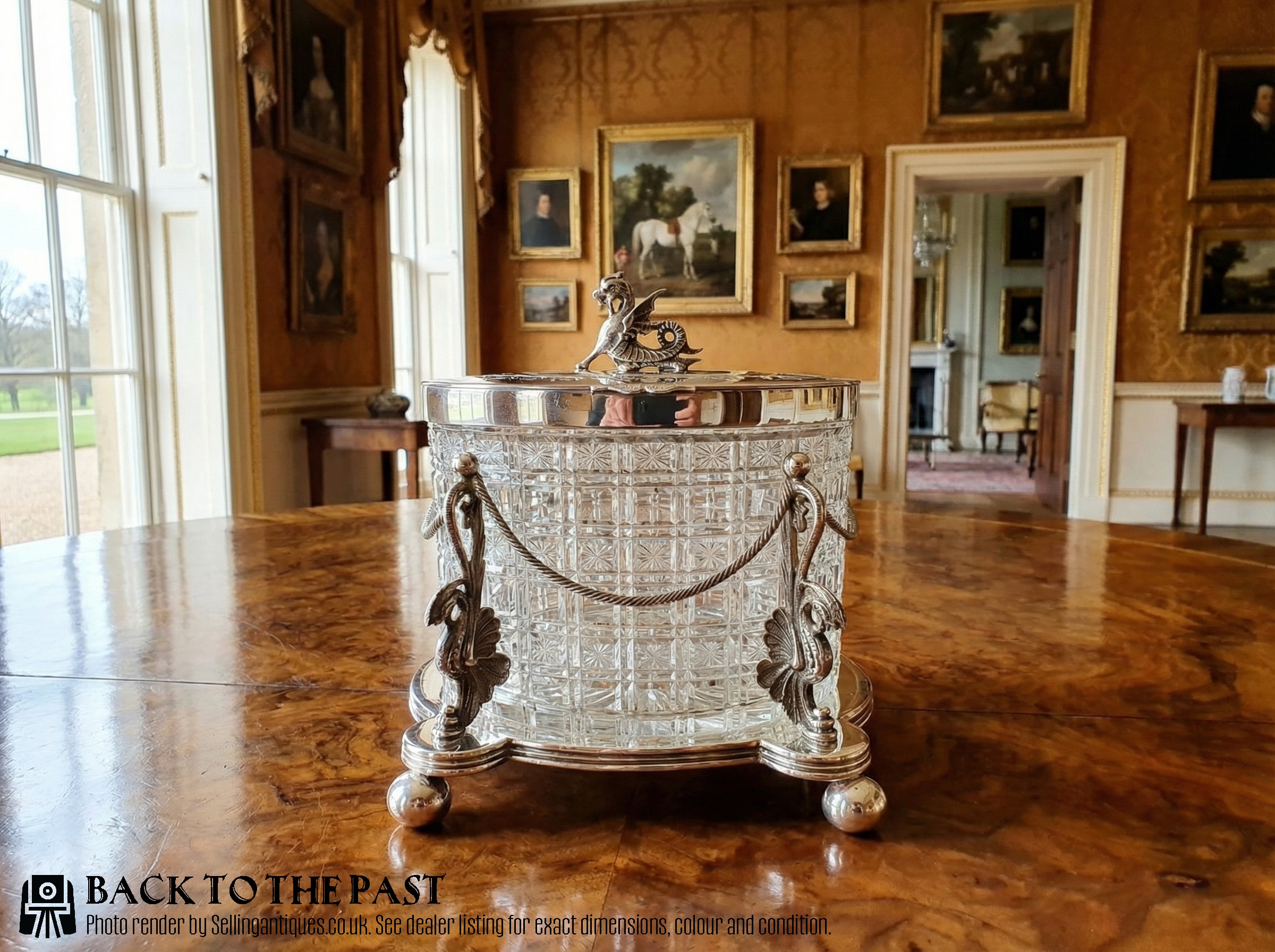
Cut Crystal Biscuit Jar
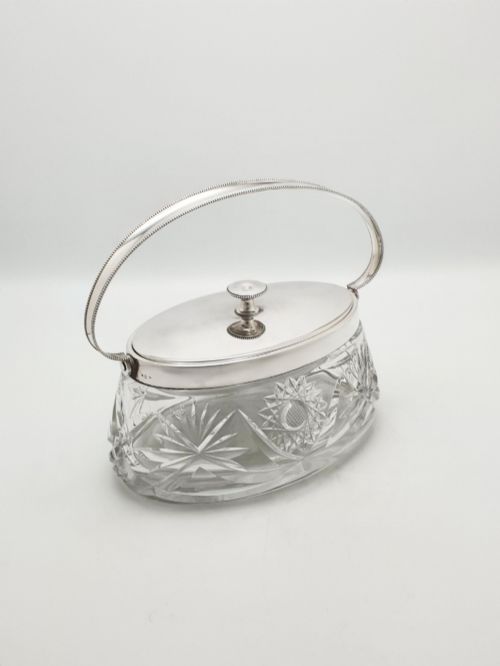
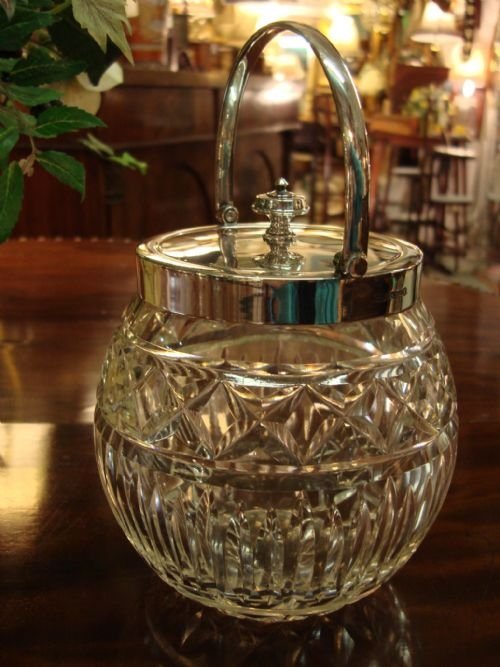
A cut crystal biscuit jar is a lidded container designed to hold dry baked goods for the formal table or sideboard. These pieces combine heavy cut glass bodies with metal fittings, often featuring hinged lids and swing handles for carrying.
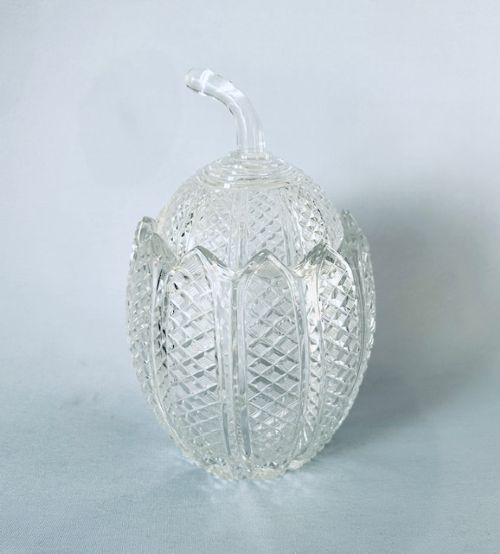
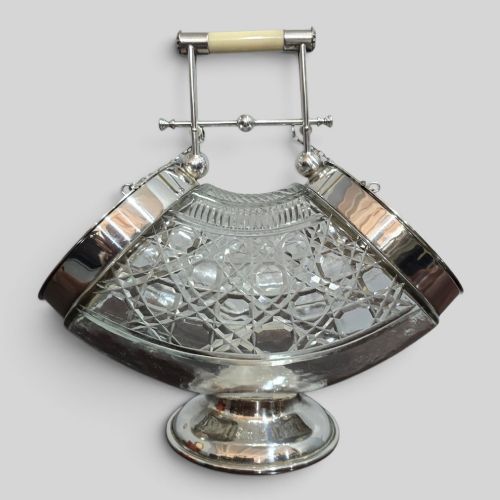
The versions met on this page span the Georgian, Victorian, and Edwardian periods up to the nineteen-thirties. Forms range from straightforward cylindrical jars to novelty melon shapes and mounted boxes with elaborate finials.
Makers utilised various glass bodies and metal mounts, producing vessels that served as practical dining room accessories. Each specimen reflects the design sensibilities of its era, from ornate Victorian engraving to simpler George V silver mounts.
Materials and construction
The construction of these jars relies on heavy lead crystal or cut glass blown and shaped into deep bodies. Artisans then wheel-cut geometric or hobnail patterns into the glass surface to catch the light.
Metalwork forms an integral part of the piece, utilising silver plate, sterling silver, or German silver plated metal supplied by firms such as Walker & Hall and James Dixon and Sons. Mounts secure the rim, while hinged lids often feature decorative finials like heraldic dragons.
Assessing quality and execution
Quality in these vessels rests upon the crispness of the glass cutting and the weight of the crystal body. Deeper, sharper facets demonstrate superior workmanship by the glasscutter.
The standard of the metal mounts and plating also distinguishes finer pieces from ordinary examples. Substantial silver work, secure hinges, and hallmarked sterling silver components indicate higher production values.
WMF·Walker & Hall·James Dixon and Sons
The Cut Crystal Biscuit Jar Glossary
- Hobnail cut
- A raised, multi-faceted glass-cutting pattern resembling the hobnails on heavy boots. This technique creates a textured surface that refracts light intensely.
- Silver plate
- A layer of silver applied to a base metal core such as brass or nickel silver. This method provided the appearance of solid silver at a lower cost.
- Finial
- A decorative knob or ornament fixed to the top of a lid. On these jars, finials sometimes take the form of heraldic figures or fruit.
- Sterling silver
- An alloy of silver containing ninety-two point five percent silver and seven point five percent other metals, usually copper. Hallmarks stamped into the metal verify this standard.
Cut Crystal Biscuit Jar: Frequently Asked Questions
What were cut crystal biscuit jars used for?
These vessels stood on dining tables or sideboards to hold dry biscuits and sweet treats during tea or after dinner. The fitted lids kept the baked goods dry and fresh.
They also served a decorative function, displaying the homeowner's taste through sparkling cut glass and polished silver mounts.
How do I date a biscuit jar?
Dating relies on the style of the glass cutting, the form of the metal mounts, and any accompanying hallmarks. Victorian pieces often feature ornate plating and figural finials, whereas Edwardian and George V examples tend toward cleaner lines or specific silver marks.
Comparing the manufacturing techniques and maker marks against known production periods helps narrow down the decade of creation.
Are the metal mounts always solid silver?
Many mounts consist of silver plate over a base metal, a common manufacturing method for household wares of the nineteenth and early twentieth centuries. Makers also utilised sterling silver, which is indicated by official town and maker hallmarks stamped onto the metal.
Examining the metal closely for stamps or signs of wear reveals whether the piece is solid silver or plated.
How do I clean a cut crystal biscuit jar?
Wash the glass body gently in warm, soapy water using a soft cloth to protect the surface from scratches. Avoid abrasive scrubbers that can dull the sharp edges of the cut crystal facets.
Polish the metal mounts separately with a suitable silver cloth, taking care not to let harsh polishes stain the glass.