


Victorian Glass Cookie Jar
A victorian glass cookie jar brings sparkle and refinement to any table, combining heavy cut or cranberry glass with gleaming silver plate.
Victorian Glass Cookie Jar
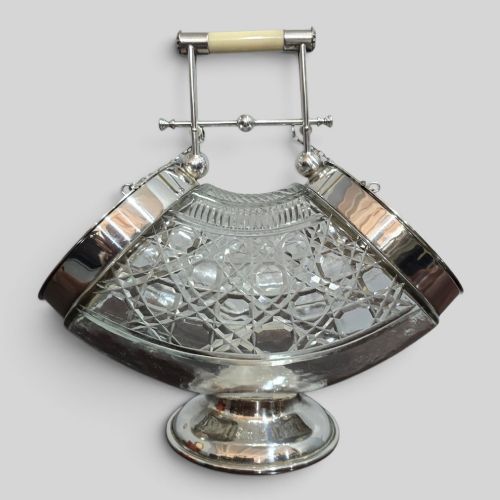
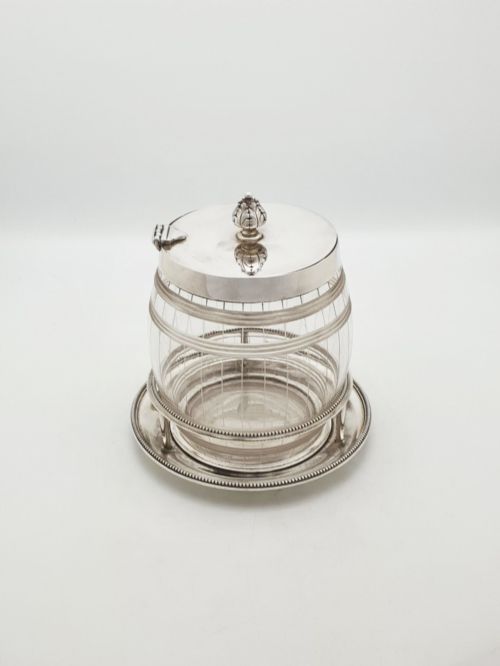
A victorian glass cookie jar, also known historically as a biscuit barrel or box, is a decorative container designed for storing dry baked goods. These pieces typically sit upon a dining table or sideboard, serving both a functional and a decorative purpose in the home.
On this page, you are most likely to meet examples produced during the Victorian and Edwardian periods, stretching from the mid-nineteenth century into the early twentieth century. The forms range from simple cylindrical glass bodies to elaborately faceted vessels with custom stands.
The objects frequently appear under alternative names such as biscuit barrels or biscuit boxes, though the function remains identical. Makers combined utilitarian storage with the decorative arts of the period, resulting in vessels that demand attention in a room.
Materials and construction
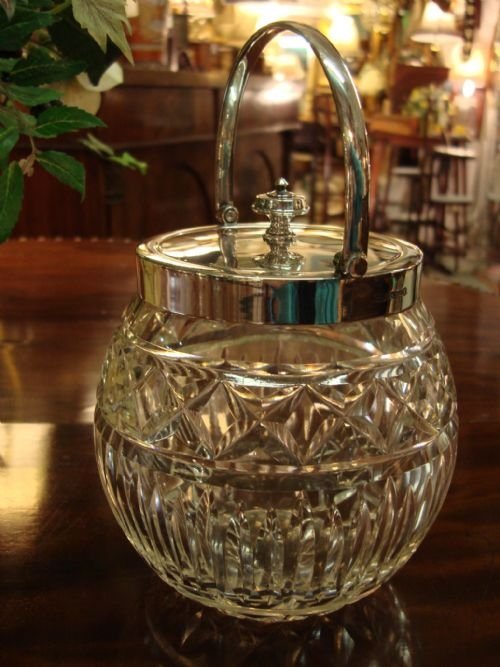
Makers utilised heavy glass bodies, often shaped through intensive cutting, pressing or blowing techniques. Coloured varieties, particularly cranberry glass, required skilled manipulation of mineral oxides during the melting process to achieve their rich tone.
Metal mounts, lids and swing handles were predominantly formed from silver plate over a base metal, though sterling silver and gold leaf details appear on select pieces. These metal components required precise fitting to the glass rims, often incorporating hinged mechanisms or elaborate finials.
Decoration extended beyond the glass cutting to include hand-painted enamel details and heraldic motifs. Artisans assembled these mixed-media objects by securing the metal collars firmly to the glass containers, ensuring durability alongside visual contrast.
Materials documented across these items range from simple cut glass and silver plate to cranberry glass, enamel, and sterling silver.
Evaluating quality
Quality reveals itself in the depth and precision of the glass cutting, where sharp, clean facets catch the light differently than soft, pressed moulds. The weight of the vessel and the clarity of the metal or crystal indicate the maker's original investment in materials.
The execution of the metal mounts and the substance of the silver plating separate standard utility wares from the finest workshop productions. Well-preserved plating that covers robust mounts without wearing through to the base metal demonstrates superior preservation and manufacturing.
Artistic details such as hand-painted enamel work, complex three-handled configurations, or integrated stands elevate certain examples. The integration between the glass body and its hardware must feel cohesive and intentional rather than purely assembly-line driven.
Elkington·Walker & Hall·James Dixon and Sons
The Victorian Glass Cookie Jar Glossary
- Biscuit barrel
- A covered container used for serving dry biscuits or cookies at the table. This term is frequently interchanged with biscuit box.
- Cranberry glass
- A rich red-pink transparent glass created by adding gold to the molten batch. It gained immense popularity during the Victorian era for decorative tableware.
- Silver plate
- A layer of silver fused to a base metal such as copper or Britannia metal. This technique allowed makers to produce affordable luxury goods with the appearance of solid silver.
- Hobnail cut
- A raised, faceted pattern cut into the surface of glassware, resembling the head of a traditional hobnail boot. It creates a tactile texture that maximises light refraction.
- Finial
- The decorative knob or ornament attached to the top of a lid. On these jars, finials sometimes take figurative forms like heraldic dragons.
Victorian Glass Cookie Jar: Frequently Asked Questions
What were these jars originally used for?
These containers served to hold dry biscuits, cookies or rusks during formal afternoon tea and after-dinner gatherings in wealthy households. The fitted lid kept the baked goods dry while resting on the sideboard.
Hostesses presented them to guests as part of the dining ritual, combining practical food storage with an impressive display of cut glass and silver.
How do I care for my glass cookie jar?
Wash the glass and metal components gently in warm water using a mild, non-abrasive detergent. Avoid submerging antique silver plate for extended periods to protect the plated surface.
Dry thoroughly with a soft cloth to prevent water spots on the glass and to maintain the lustre of the silver mounts and handles.
How can I tell Victorian pieces from Edwardian ones?
Victorian examples often lean towards heavier, more ornate decoration, including deep hobnail cutting and elaborate figural finials. They date from the mid to late nineteenth century.
Edwardian pieces, made after nineteen hundred, frequently exhibit slightly lighter proportions while retaining the cranberry glass and silver-plated mounts characteristic of the earlier era.
Are all biscuit barrels made of cranberry glass?
No, cranberry glass is only one of several styles available. Many examples utilise clear cut glass or crystal that showcases the precision of the facets and allows light to pass directly through.
Other variations feature enamel painting or standard clear glass paired with heavy silver-plated stands and mounts.