


Green Glass Jar
These green glass jar examples range from simple apothecary vessels to silver-mounted trinket boxes, offering both utility and colour.
Green Glass Jar
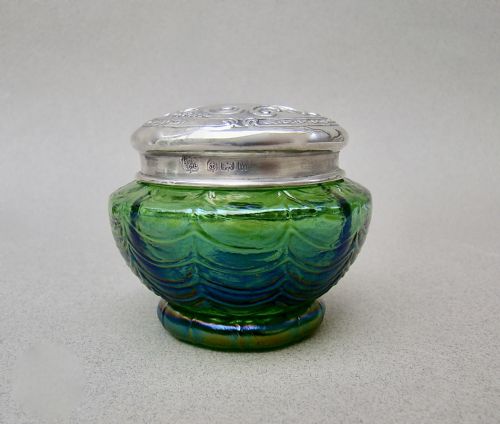
A green glass jar covers a diverse group of functional and decorative vessels, spanning everyday storage containers and sophisticated dressing table accessories. Buyers searching for a green glass jar will encounter forms that range from utilitarian French pickling jars and large chemist carboys to delicate trinket boxes mounted in sterling silver.
The pieces present on this page originate from periods including the eighteenth, nineteenth, and early twentieth centuries. Victorian and Art Deco examples appear frequently, alongside French country and provincial storage pieces designed for domestic or apothecary use.
Methods and materials
Production methods rely on traditional glassblowing and moulding techniques, often combining glass with metal components such as sterling silver, gold leaf, and ormolu. Artisans shaped the vessels by hand or in moulds, producing varying wall thicknesses and distinctive pontil marks on older examples.
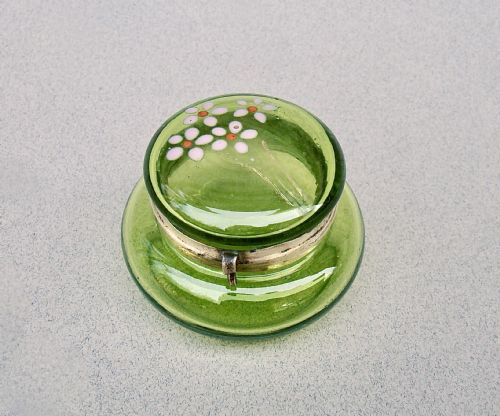
Decoration on these jars frequently incorporates enamel painting, floral etchings, and guilloché work on silver lids. Some pieces utilise contrasting materials, pairing the coloured glass bodies with wooden bases, fabric linings, or fitted metal collars.
Nineteenth-century fruits preserved permanently under glass domes brought the harvest indoors without attracting fruit flies.
Assessing quality and craftsmanship
Quality in these vessels rests upon the clarity and depth of the glass colour, the precision of any applied silver or enamel work, and the integrity of the form. Hand-blown pieces with uniform bubble distribution and crisp etchings stand apart from simpler utilitarian containers.
The presence of hallmarked precious metals, intricate guilloché enamel, or maker-stamped silver mounts elevates a piece from a standard storage vessel to a refined dressing table accessory. Preservation of delicate enamel decoration and original lids also determines the standing of an individual item.
A J Pepper And Co·Henry Perkins
The Green Glass Jar Glossary
- Carboy
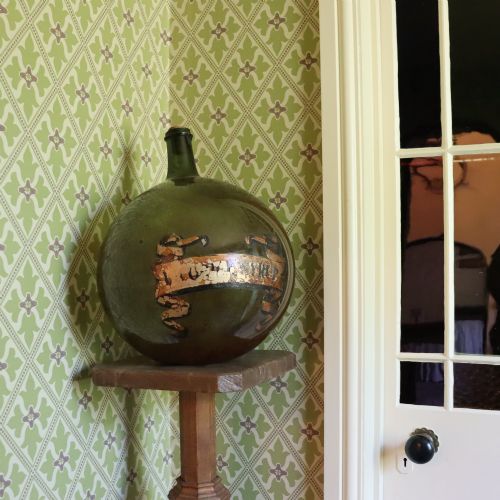
- A large rounded glass bottle or jar with a narrow neck, traditionally used for holding liquids or chemicals in bulk. These vessels often feature heavy, bubbled glass walls produced by early manufacturing methods.
- Guilloché
- A decorative engraving technique in which a precise, intricate pattern is mechanically etched into a metal surface under translucent enamel. This finish frequently appears on the silver lids of Art Deco dressing table jars.
- Bocal
- A traditional French term for a glass storage or pickling jar, usually featuring a wide mouth and a heavy lid. These practical containers were utilised in French provincial kitchens and pantries.
- Bristol green
- A deep, rich shade of dark green glass traditionally produced in the English city of Bristol during the eighteenth and nineteenth centuries. The colour is often found on the glass liners of Victorian dressing table sets.
- Mary Gregory
- A style of Victorian glassware decorated with white enamel silhouettes, typically depicting children in pastoral settings. This distinctive painting technique appears on green glass dressing table pieces and decorative objects.
Green Glass Jar: Frequently Asked Questions
How were apothecary jars used?
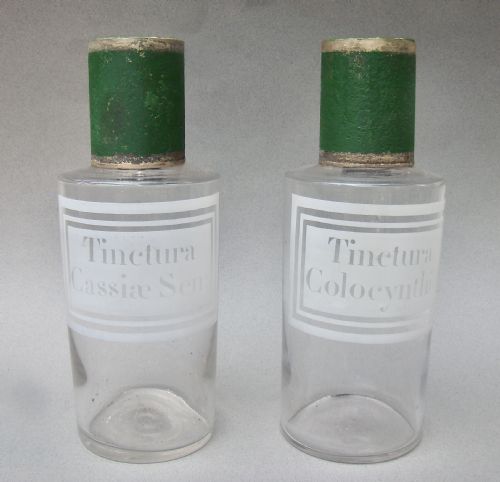
Chemists and apothecaries used these heavy glass vessels to store dry drugs, herbs, and liquid tinctures safely away from light and moisture.
The wide mouths and tight-fitting lids ensured the contents remained uncontaminated in a working dispensary.
What is an opaline glass jar?
Opaline glass is a semi-opaque material popular during the nineteenth century, known for its pale pastel shades and satin-like texture.
These jars often featured gilt ormolu mounts and served as decorative vanity items in bourgeois French interiors.
How do I care for antique glass?
Wash these pieces gently by hand using lukewarm water and a mild soap, avoiding abrasive sponges that might scratch the surface.
Take particular care around painted enamel decorations and silver mounts, keeping moisture away from glued or fitted elements.
Can I use old pickling jars for food?
Many antique pickling jars and storage vessels remain robust enough for kitchen use, provided the interior glass shows no heavy chemical staining.
Inspect the rim and interior closely to ensure the glass surface is smooth and free from deep pitting before storing dry foodstuffs.