


French Glass Vessel
A French glass vessel brings tactile weight and layered historic craft to a room, ranging from delicate Art Nouveau cameo motifs to bold Art Deco moulded forms.
French Glass Vessel
A search for a French glass vessel introduces buyers to a broad selection of decorative objects, utilitarian containers, and display pieces originating from France. The inventory spans functional items such as decanters and apothecary jars alongside purely decorative vases and centrepieces.
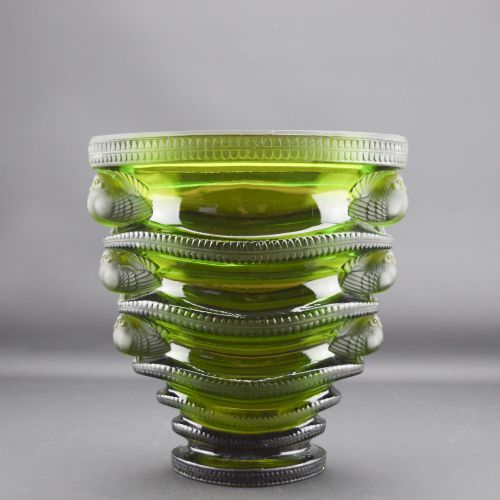
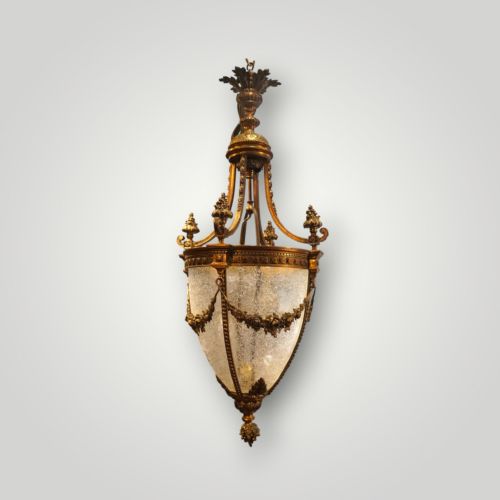
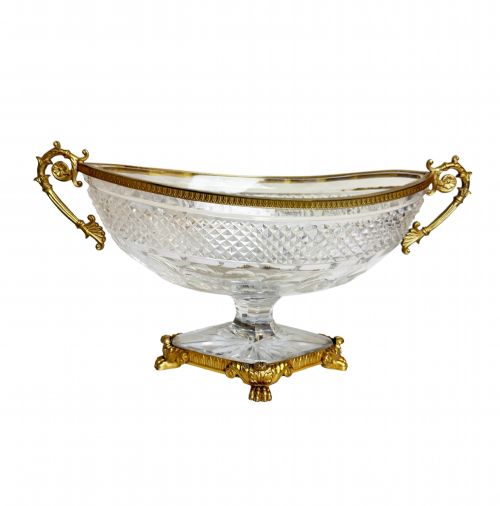
Vessels on this page most commonly date from the nineteenth and twentieth centuries, incorporating periods from the Belle Epoque through to Art Deco and the Edwardian era. Forms range from organic botanical profiles to symmetrical geometric vessels mounted in gilt bronze or ormolu.
Buyers encounter distinct stylistic movements that define these objects, including French Neoclassical, Louis XVI, and Art Nouveau designs. Each piece reflects the dominant manufacturing techniques and aesthetic priorities of its specific decade.
Materials and Techniques
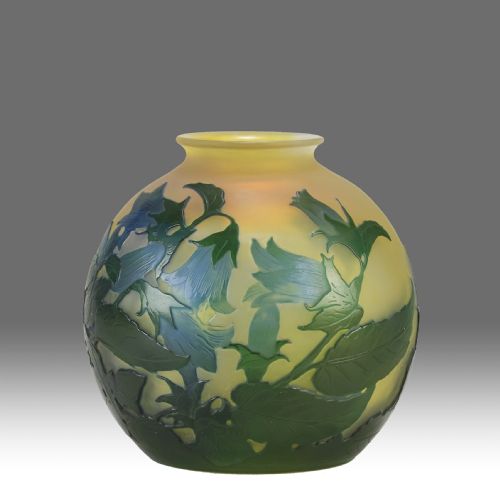
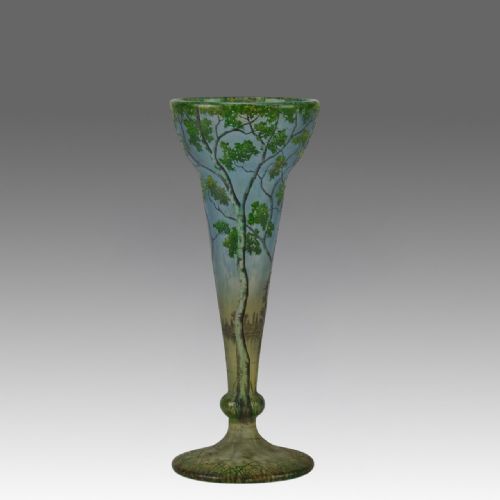
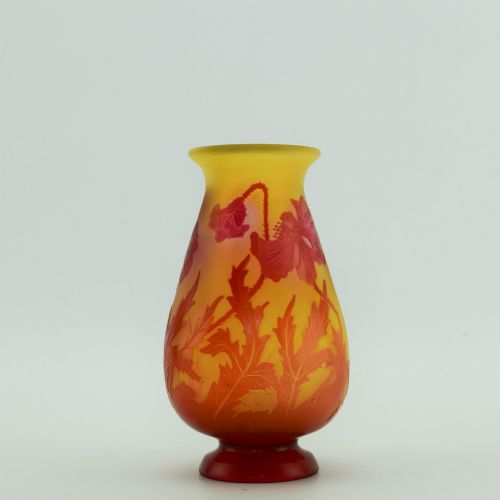
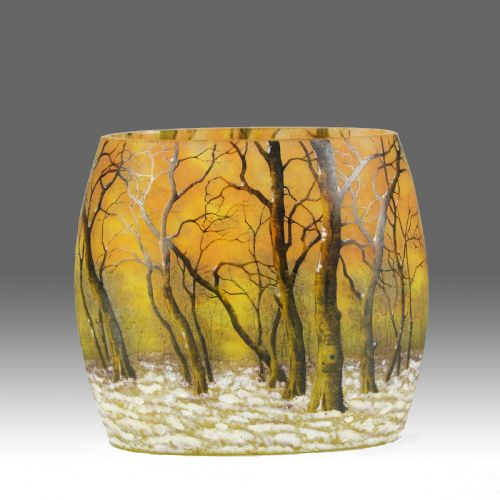
Maker workshops utilised glassmaking methods including blown glass, moulded glass, and acid-etched cameo techniques. Multi-layered cameo glass allowed artisans to carve away exterior colours to reveal contrasting designs beneath.
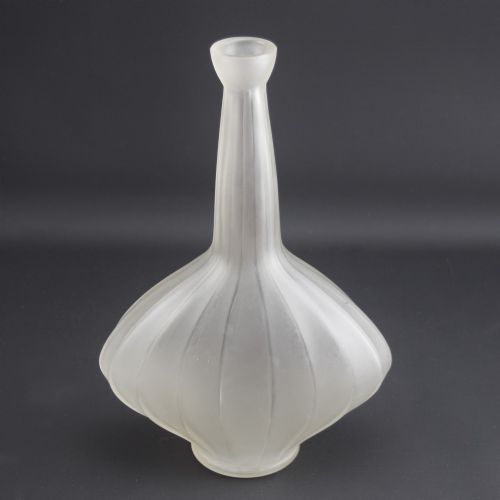
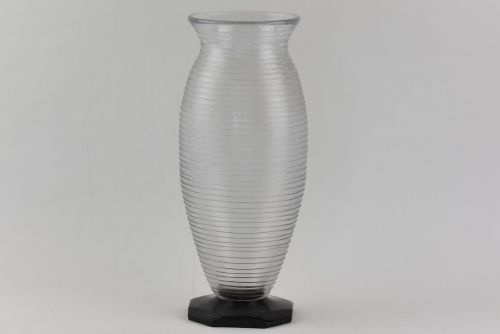
Surface decoration frequently involved enamel work, gilding, and frosted finishes to create textural depth and contrast. Clear and opalescent glass bodies were often paired with metal mounts in gilt bronze, crystal, and ormolu.
Several pieces preserve winter landscapes and running water permanently frozen inside frosted and enamelled glass.
Distinctions in Execution
Quality in these vessels rests on the precision of the glass cutting, the depth of the acid etching, and the crispness of the moulded relief. Finer examples display meticulous control over layered colour transitions and complex chemical reactions within the molten material.
The integration of secondary materials, such as finely chased gilt bronze mounts or hand-applied enamel detailing, separates standard production items from masterworks of the period. The sharpness of signatures and foundry marks further distinguishes pieces produced by leading artist-potters and glasshouses.
Emile Gallé·Rene Lalique·Daum·Amalric Walter·Jean Luce·Schneider
The French Glass Vessel Glossary
- Cameo glass
- Glassware formed with multiple layers of different coloured glass fused together, then carved or acid-etched to create a raised design in relief. This demanding technique requires immense skill to avoid cutting through the thin exterior layer.
- Opalescent glass
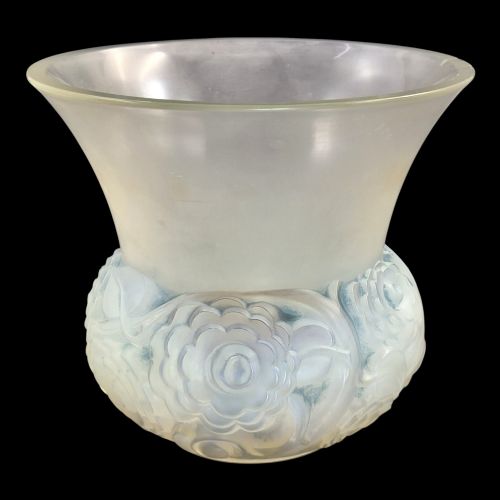
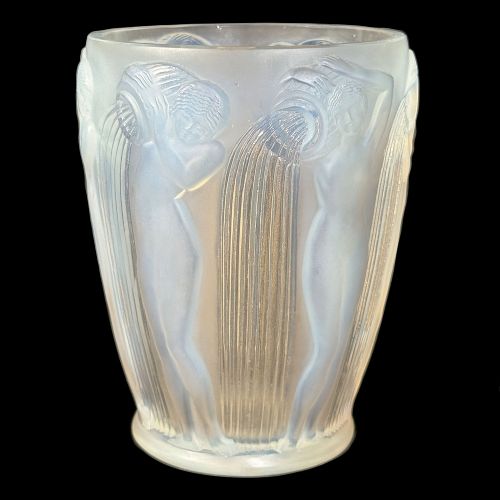
- A milky, translucent glass that displays a pearlescent quality, often shifting in colour tone when exposed to changing light. It became a hallmark of twentieth-century French decorative design.
- Pate de verre
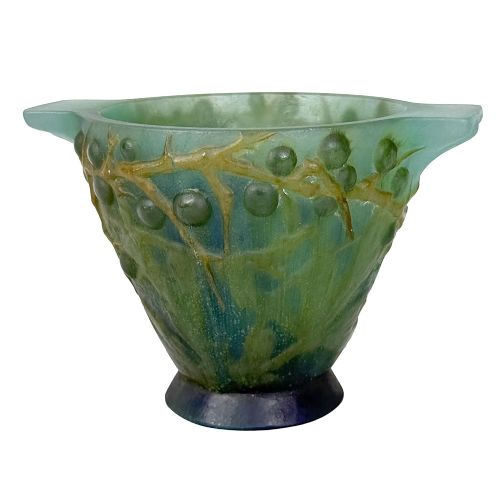
- A form of kiln-cast glass created by packing finely crushed glass paste into a mould and firing it until fused. The resulting objects possess a dense, sugary texture and rich, mottled colour distribution.
- Ormolu
- Finely ground high-carat gold applied to a bronze base object through a mercury-gilding process or electroplating. It provides a bright, durable metallic finish frequently used for mounts on nineteenth-century vessels.
- Acid-etched glass
- Glass decorated by applying hydrofluoric acid to eat away exposed surfaces, creating frosted patterns or recessed designs. This method replaced slower hand-engraving techniques for many industrial and artistic workshops.
French Glass Vessel: Frequently Asked Questions
What is the difference between cameo and moulded glass?
Cameo glass involves hand-carving or acid-etching through superimposed layers of coloured glass to create a contrasting, raised design. Each piece requires individual artisanal work to achieve the final depth and tonal variation.
Moulded glass, by contrast, is formed by pressing molten material into a prepared metal or wooden mould. This technique allowed workshops to produce intricate three-dimensional reliefs consistently across multiple editions.
How were apothecary jars and decanters used?
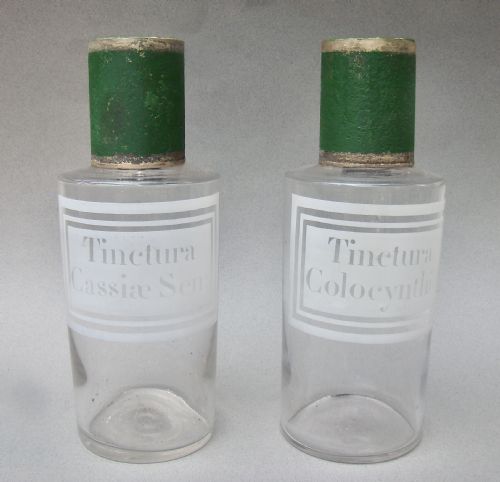
Nineteenth-century French apothecary jars served practical roles in storing medicinal herbs, chemicals, and liquids within pharmacy settings. Their heavy glass walls and etched labels kept contents secure and identifiable.
Decanters functioned as table vessels for serving wine and cider during meals. Their tight stoppers preserved the contents while their decorative etched or cut surfaces added visual interest to the dining room.
Where should I display opalescent glass?
Opalescent glass performs best when positioned near natural light sources such as windowsills or illuminated display cabinets. The translucent material catches daylight, causing the milky body to shift tones.
Placing these vessels away from heavy foot traffic protects their delicate surfaces. Direct backlighting highlights the moulded relief details and subtle colour tints within the glass.