
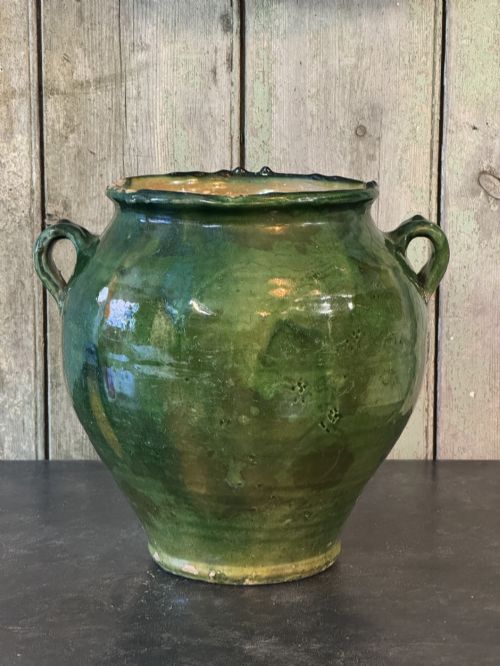


Vintage Preserving Jar
These vintage preserving jar options range from green confit pots to silver-mounted cut glass vessels designed for table service.
Vintage Preserving Jar
A vintage preserving jar covers practical storage vessels and dining table accessories, drawing on centuries of domestic and social traditions. When you search for a vintage preserving jar, you encounter forms ranging from rustic earthenware confit pots to silver-mounted cut glass jam dishes.
The material palette spans simple terracotta and glazed earthenware through to heavy lead crystal and sterling silver mountings. Pieces often reflect specific regional origins such as French provincial workshops or traditional British pottery traditions.
Tableware examples include lidded butter dishes, honey jars on stands, and condiment containers intended for formal dining. Storage pieces encompass pickling jars and large confit pots once utilised for kitchen stores.
Materials and construction
Makers shaped glass through blowing and cutting techniques, producing clear vessels alongside coloured glass pieces in cranberry tones. Cut glass designs feature deep facets that catch the light, paired with cast silver plate or sterling silver lids and mounts.
Terracotta and earthenware vessels rely on throwing and hand-shaping methods, finished with glazes in green and other earthy shades. Silversmiths constructed bespoke stands, spoons, and hinged mounts to complement crystal and ceramic bodies.
The selection includes 19th-century French green confit pots alongside Edwardian cut glass preserve jars mounted in sterling silver.
Judging quality and character
Quality rests on the clarity of the glass, the weight of the metal mounts, and the purity of the ceramic glaze. Superior examples display crisp hallmarks, balanced proportions, and careful integration between glass bodies and metal hardware.
Artisanal pottery and hand-blown glass show individual character through slight surface irregularities and variation in glaze application. Maker marks from established firms add documentary value to silver and ceramic pieces alike.
Hukin and Heath·Asprey and Co·Plichta Pottery·Richard Ginori·Walker and Hall·Wedgwood
The Vintage Preserving Jar Glossary
- Confit pot
- A traditional French earthenware or terracotta storage vessel, usually glazed at the upper portion, originally designed for preserving and storing meats or fruits. These pots show notable variation in green and earth-toned glazes.
- Cut glass
- Glass decorated by grinding facets or patterns into the surface using a rotating wheel. This technique creates reflective edges and weight characteristic of finer tableware.
- Silver plate
- A base metal such as copper or Britannia metal coated with a thin layer of silver. This process offered the appearance of solid silver for domestic items at a lower cost.
- Jasper ware
- A fine stoneware developed by Wedgwood, noted for its matte finish and raised white classical reliefs against a coloured ground. It remains distinct for its tactile surface.
- Lead crystal
- Glass containing metal oxide that increases weight, brilliance, and the ability to hold sharp decorative cuts. It produces a clear ring when struck gently.
Vintage Preserving Jar: Frequently Asked Questions
How were these jars originally used?
These jars served both practical storage roles in the kitchen and decorative functions on the dining table. Confit pots held preserved provisions, while silver and glass vessels dispensed jams, honey, and condiments.
Dining pieces often included custom spoons and stands for formal tea and breakfast services. Storage jars accommodated bulk goods like pickles and dry stores.
How do I date a glass preserve jar?
Dating relies on stylistic clues, glass manufacturing marks, and accompanying metal mounts or hallmarks. Georgian and Victorian pieces often feature heavy hand-cut crystal and hallmarked silver.
Twentieth-century examples transition toward cleaner Art Deco lines or mid-century ceramic styles. Maker stamps on the base provide definitive production dates.
Can I use these for modern food storage?
Most antique jars function well for serving dry foods, condiments, or preserves during meals. Consider the interior condition of older glazes and lead crystal before storing wet or acidic foods.
Many collectors prefer to display these pieces or use them for table service rather than heavy daily food preparation. Ensure any vintage glass or pottery is free from interior hairline cracks.