


Green Storage Jar
These green storage jars bring practical craft and rich colour into a room, offering genuine period utility.
Green Storage Jar
A green storage jar is a utilitarian vessel designed for holding preserves, dry goods, or liquids, shaped by centuries of domestic and commercial tradition. When you search for a green storage jar, you encounter pieces intended for holding food, pickles, biscuits, or apothecary contents.
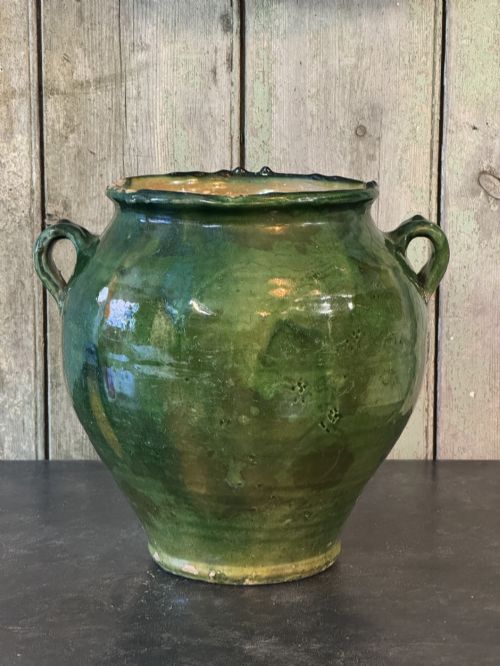
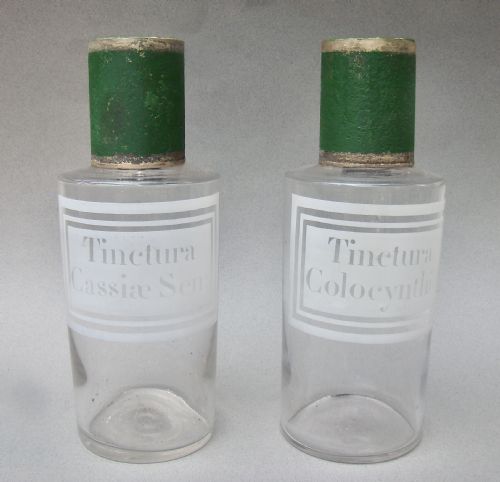
The versions most commonly met on this page span the eighteenth and nineteenth centuries, originating from French provincial workshops or English potteries. They take forms such as confit pots, pickling jars, biscuit barrels, and apothecary vessels.
Makers fashioned these containers from heavy earthenware, terracotta, and blown or etched glass. Their green surfaces range from rich lead glazes to painted enamel and natural glass hues.
How they were made
Potters shaped terracotta and earthenware by hand, applying thick green glazes inside and out to ensure the walls remained non-porous for food storage. Tin glazes provided opaque white or tinted surfaces on apothecary vessels, while other pieces relied on natural green glass blown into heavy moulds.
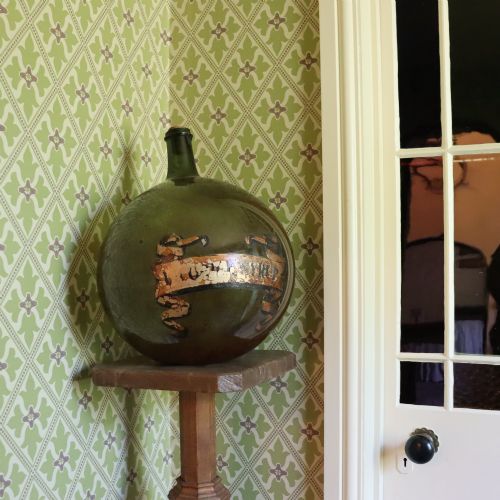
Glassmakers created pickling jars and carboys using traditional glassblowing techniques, sometimes adding etched decoration or gold leaf accents. Artisans also applied enamel paint by hand to decorate Victorian glass surfaces.
Some nineteenth-century French pickling jars retain their original heavy glass lids designed to keep insects away from preserved gherkins.
What varies in quality
Quality rests in the depth of the glaze and the weight of the material, distinguishing simple utility wares from finer decorative pieces. A deeply saturated green glaze with natural pooling shows superior kiln work.
Handmade glass vessels demonstrate quality through bubbles and irregularities in the blown metal, paired with crisp etching or careful enamel painting. Early earthenware pots show pleasing asymmetry from the wheel rather than careless production.
Samuel Alcock and Co
The Green Storage Jar Glossary
- Confit pot
- A French earthenware jar with handles, traditionally used for preserving duck or pork confit in fat. These vessels feature thick green glazes over terracotta.
- Carboy
- A large glass or earthenware bottle used for holding liquids safely. Apothecaries and merchants utilised them for storing chemicals or spirits.
- Biscuit barrel
- A covered container designed to keep dry biscuits crisp on the dining table. Victorian examples often incorporate glass bodies with metal fittings.
- Tin glaze
- An opaque white or coloured ceramic glaze containing tin oxide. It provides a smooth surface suitable for painted decoration on apothecary jars.
- Pickling jar
- A heavy glass vessel with a wide mouth designed for preserving vegetables in brine or vinegar. French examples are often known as bocal.
Green Storage Jar: Frequently Asked Questions
What were green storage jars used for?
These vessels held dry goods, preserves, pickles, and medicinal ingredients in domestic kitchens and apothecary shops. Their robust construction protected contents from moisture and pests.
Potters and glassmakers designed them for heavy daily use rather than display, which explains their thick walls and durable green glazes.
How do I date an old green jar?
Dating relies on observing material characteristics, tool marks, and glaze composition. Eighteenth-century pieces show heavy hand-thrown potting or free-blown glass traits.
Nineteenth-century examples often feature machine-moulded glass or more refined factory earthenware bodies stamped with maker details.
Are these jars safe for food?
Most antique earthenware jars have porous bodies or historic glazes that may not meet modern food safety standards. They serve best as decorative objects or for dry storage.
Glass pickling jars and carboys offer cleaner interior surfaces, though thorough washing is necessary before any modern domestic use.
How do I style a storage jar at home?
Group jars of varying heights on open kitchen shelving or use them as vases for heavy foliage. Their deep green tones complement wooden surfaces and neutral stone.
Pairing glass pickling jars with opaque terracotta confit pots creates a balance of textures in a room.