




Edwardian Cut Glass Jar
When you handle an edwardian cut glass jar, you touch the heavy sparkle and silver mounts of a period that kept dressing tables and sideboards in order.
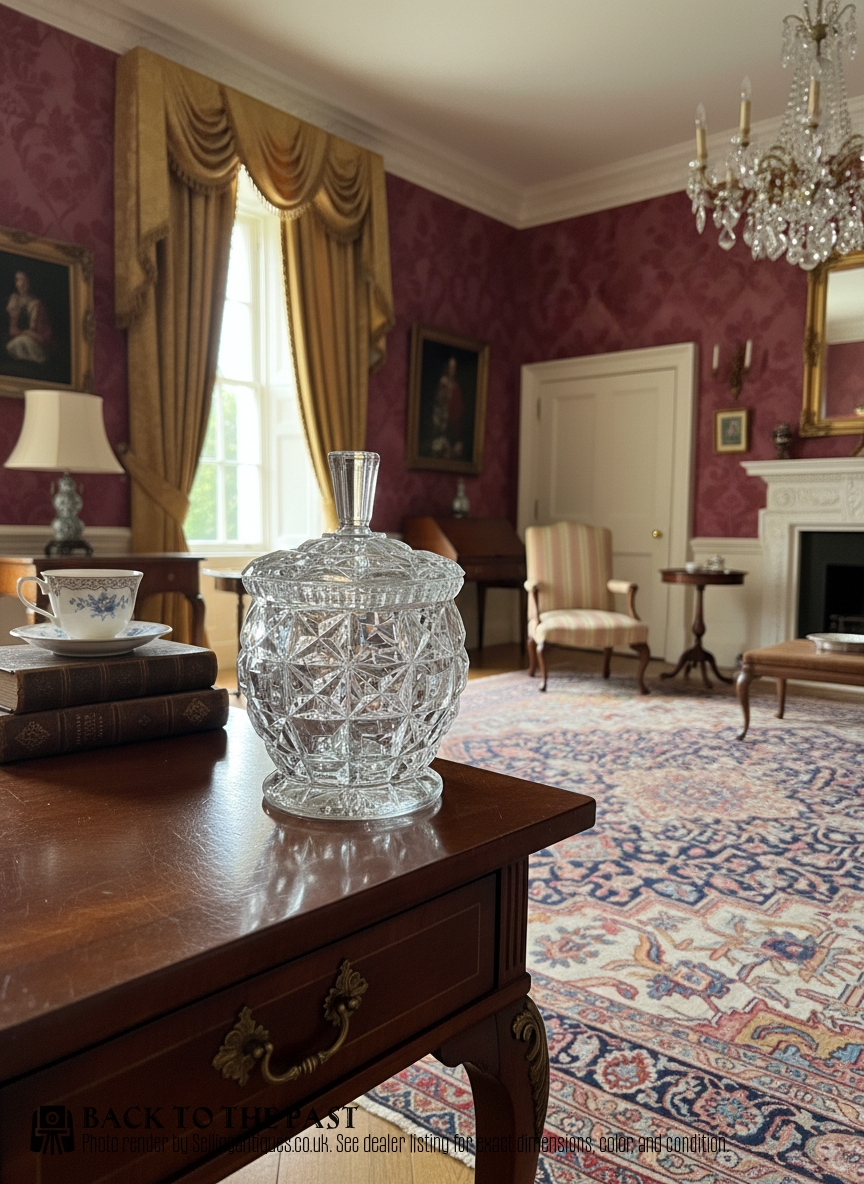
Edwardian Cut Glass Jar
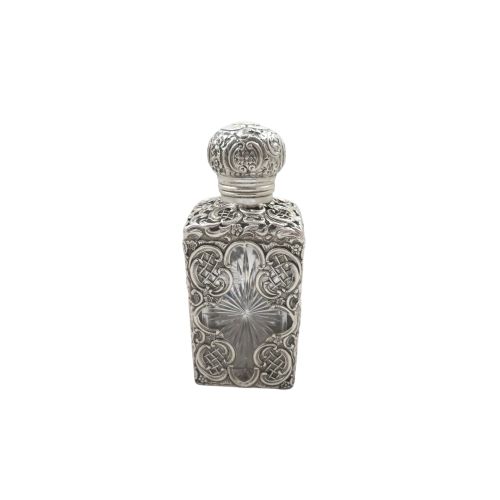
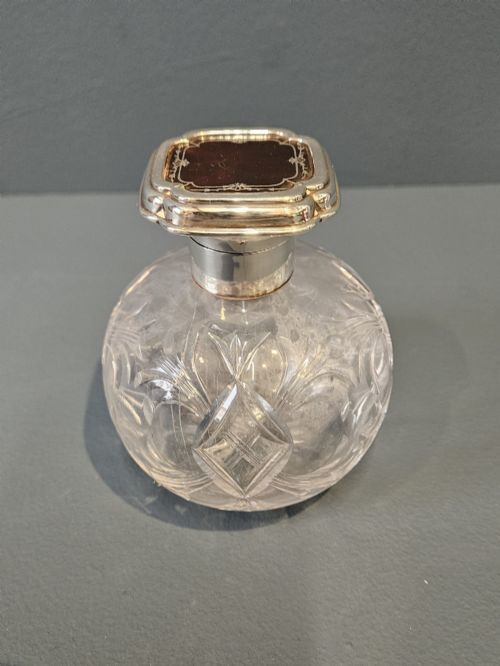
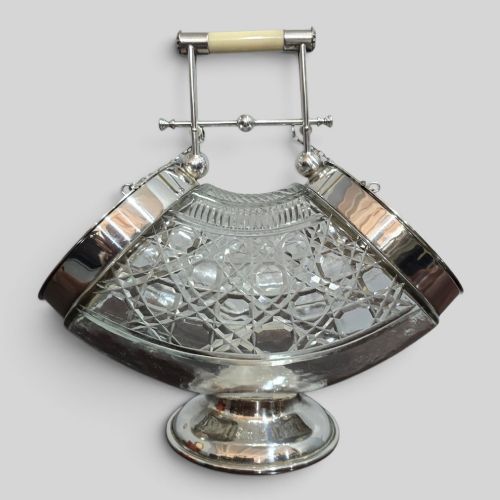
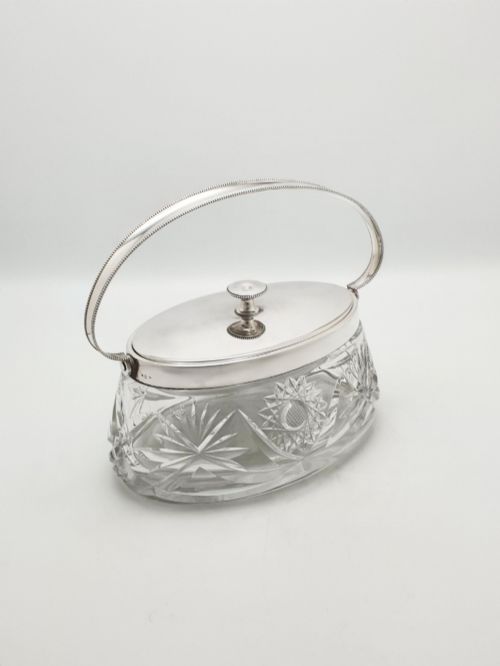
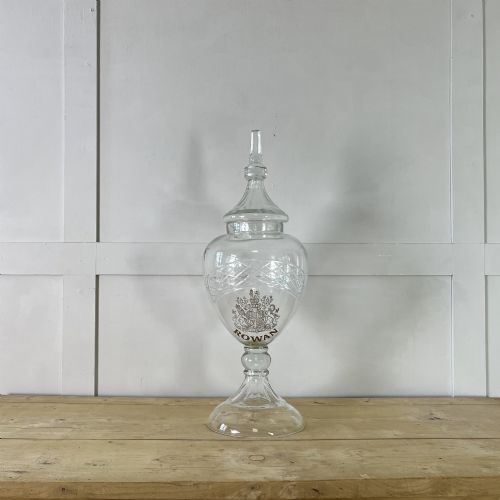
An edwardian cut glass jar sits on a dressing table, a tea table, or a desk as a functional vessel for cosmetics, preserves, or dry goods. The pieces you meet on this page include biscuit barrels, scent bottles, vanity jars, and preserve pots.
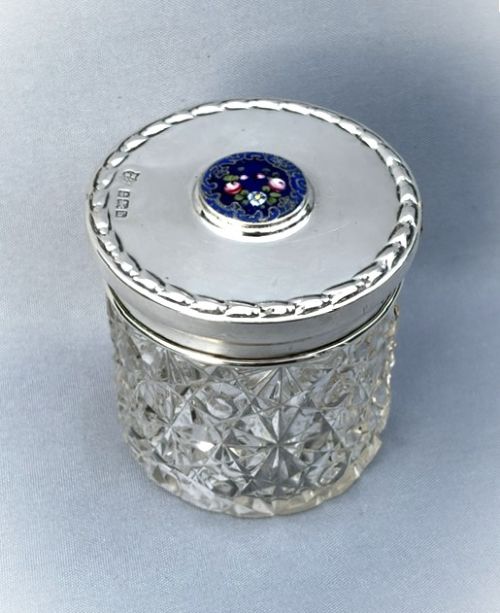
The body of the vessel is heavy blown glass, shaped into cylindrical, globular, or faceted forms, topped with fitted lids of sterling silver, silver plate, tortoiseshell, or enamel. Many examples retain the hallmarks of Birmingham and London makers from the early twentieth century.
While the majority of pieces date from the Edwardian period and the surrounding decades of the late Victorian era through the Art Deco years, they share a distinct reliance on deep refractive facets and metal mounts.
Materials and Techniques
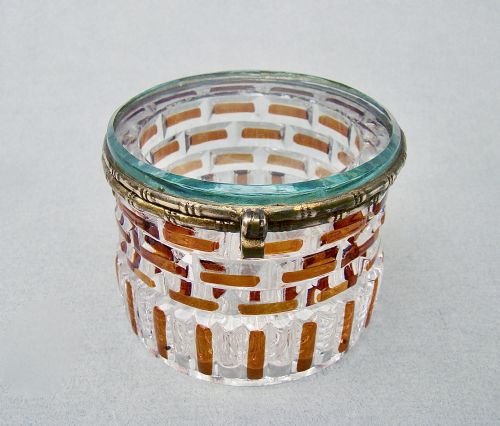
The manufacture of an edwardian cut glass jar required heavy-walled glass blanks, which artisans then ground and polished on iron and stone wheels to produce deep geometric cuts such as the hobnail pattern. This cutting created sharp, brilliant facets designed to catch gaslight or early electric illumination.
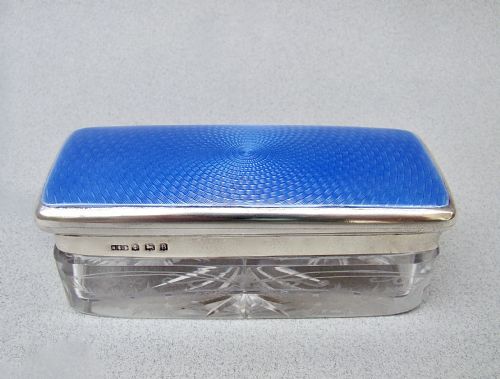
Silversmiths formed matching lids, collars, and swing handles from sterling silver or silver plate, frequently embellishing them with repoussé floral motifs, guilloché enamel, or inset tortoiseshell. Makers often secured these metal mounts directly to the glass neck with plaster or specialised adhesives.
Listings feature materials spanning cut glass, sterling silver, silver plate, tortoiseshell, and enamel across the Victorian, Edwardian, and Art Deco eras.
Recognising Quality
Quality rests primarily on the depth and crispness of the glass cutting, where sharper facets and higher lead content yield greater brilliance and weight. Lesser examples display shallow, moulded impressions that imitate hand-cutting without the same refractive weight.
The weight and gauge of the metal lid also separate tiers of production, as solid sterling silver mounts with clear assay office hallmarks and tight hinges outlast thin silver plate over fragile glass collars.
Henry Clifford Davis·Hasset and Harper·Barnsley and Co·William Comyns·R Comyns
The Edwardian Cut Glass Jar Glossary
- Hobnail cut
- A glass-cutting pattern featuring rows of small, pointed pyramids that create a textured, highly refractive surface. This method demands significant skill from the glasscutter.
- Guilloché enamel
- Decorative metalwork covered in translucent enamel over an engine-turned geometric pattern. It appears frequently on the lids of dressing table jars from the Art Deco period.
- Repoussé
- A metalworking technique where the silversmith hammers and pushes the design from the reverse side to form raised floral or scroll motifs on the lid.
- Hallmark
- A series of official marks stamped on precious metals indicating the maker, assay office, and year of testing. These marks provide reliable dating for the silver mounts.
- Blank
- The unadorned, solid piece of blown glass before the artisan applies decorative cuts and facets. The thickness of this initial form determines the depth of the finished pattern.
Edwardian Cut Glass Jar: Frequently Asked Questions
What were cut glass jars used for?
These vessels held personal items on dressing tables or served foodstuffs at the dining table, depending on their specific form. Biscuit barrels and preserve jars stored dry goods and sweets, while vanity jars and scent bottles held cosmetics and perfumes.
The inclusion of tight-fitting metal lids protected the contents from moisture and air. Their decorative presence meant they remained visible in public rooms and private chambers alike.
How do I date a silver mounted jar?
The silver mounts carry hallmarks that indicate the assay office, standard of metal, and the exact year of production. London and Birmingham offices recorded thousands of these items annually.
Stylistic shifts also help identify the era, moving from ornate Victorian floral repoussé to clean Edwardian facets and geometric Art Deco enamel.
Can I use these jars for food today?
Preserve jars and biscuit barrels function adequately for serving dry items or sealed preserves, provided the glass and internal seals remain sound. You should inspect the interior glass for any historic residue or staining.
Hand washing in warm water preserves both the glass and the original silver mount without damaging the historical adhesives securing the collar.
How do I care for silver and glass?
Cleaning requires mild soapy water for the glass body and gentle polishing for the silver mounts, taking care to avoid abrasive compounds near the metal-to-glass join. Keeping moisture away from the interior of the plaster collars prevents loosening.
Proper placement away from direct heat sources protects the tortoiseshell and enamel inserts from drying or cracking.