





Clear Glass Chemist Bottles
Clear glass chemist bottles bring the diagnostic clarity of the nineteenth-century dispensary into a modern interior through blown forms and applied labels.
Clear Glass Chemist Bottles
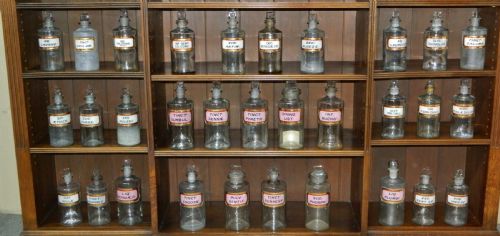
Clear glass chemist bottles form the functional core of historic apothecary storage, spanning the Georgian, Victorian, and Edwardian eras. These containers served pharmacies and dispensaries to hold dry drugs, liquid tinctures, and chemical preparations safely.
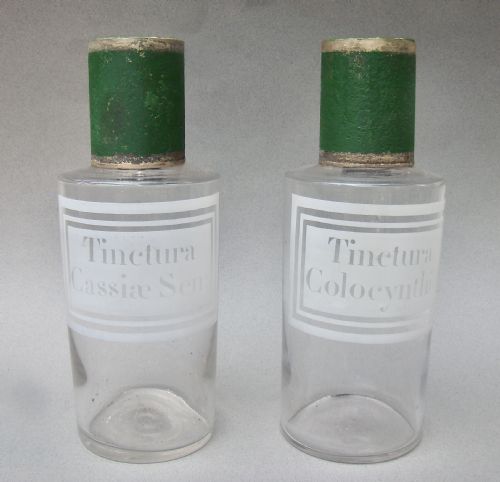
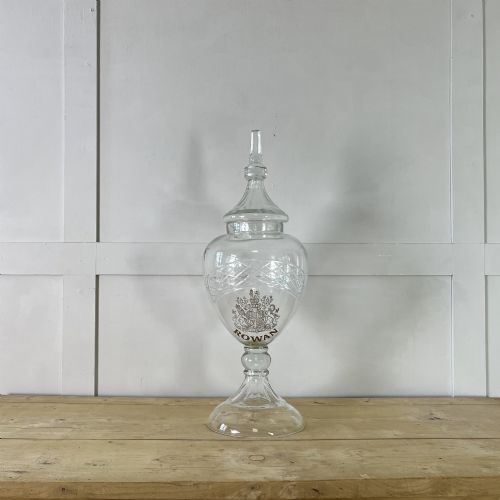
The versions met on this page run from small tincture bottles to large display carboys and covered jars. French and English origins appear across the nineteenth century, including matched pairs and substantial sets.
Forms include dedicated apothecary jars, pharmacy bottles, and large display vessels designed for shop windows or back-shelf storage. Each piece reflects the functional storage needs of historical medical practice.
How they were made
Makers formed these vessels using traditional glassblowing techniques, resulting in varied wall thicknesses, pontil marks, and bubbles trapped within the clear glass. Larger display carboys and jars required skilled manipulation of hot metal to achieve stable, balanced proportions.
Surface decoration and labeling involved techniques such as acid etching, paint, gold leaf, and paper labels applied directly to the glass. Cut glass detailing appears on heavier Edwardian jars, providing facets that catch and refract light.
Clear Glass Chemist Bottles Retail Price Guide 2026
Typical asking prices for clear glass chemist bottles among the pieces listed under this phrase on Sellingantiques today, from the lower quarter to the upper quarter. They describe what is for sale here now, not the wider market.
Some larger jars retain traces of nineteenth-century gelatine inside, reminding everyone of sticky medicinal origins.
What varies in quality
Quality rests in the clarity and substance of the glass, where heavier hand-blown examples display characteristic surface movement and depth. The presence of original fitted covers, matching sets, and intact surface markings elevates individual pieces.
The sophistication of secondary details, such as precise wheel-cutting or delicate French etching, separates standard utilitarian storage from exhibition-grade dispensaryware.
The Clear Glass Chemist Bottles Glossary
- Carboy
- A large, bulbous glass vessel used in laboratories and pharmacies for holding liquids in bulk. These pieces often sat in windows to attract passing trade.
- Tincture bottle
- A small medicinal bottle specifically designed to hold alcoholic extracts of plant or animal material. They typically feature ground glass stoppers to prevent evaporation.
- Pontil mark
- The rough scar left on the base of a blown glass object where the pontil rod was snapped off. Its presence indicates traditional hand-blown manufacture.
- Apothecary jar
- A vessel used by medical practitioners to store dry drugs, herbs, and preparations. These containers frequently include fitted lids to protect contents from moisture.
Clear Glass Chemist Bottles: Frequently Asked Questions
What did chemist bottles store?
Pharmacies utilised these glass vessels to hold dry medicinal powders, herbal ingredients, and liquid tinctures safely away from light and air.
The clear material allowed dispensers to inspect contents and monitor volume levels quickly during daily practice.
How do I date an apothecary jar?
Dating relies on observing manufacturing traits such as pontil scars, glass weight, and stylistic changes across the Georgian, Victorian, and Edwardian periods.
Heavier cut glass and machine-finished rims typically point towards the later nineteenth and early twentieth centuries.
Are stoppers usually original?
Many surviving bottles retain their matched ground glass stoppers, though replacements occur frequently due to centuries of handling and daily dispensary use.
Close inspection of the glass tint and wear patterns around the neck helps determine if stopper and bottle belong together.
How should I display chemist bottles?
Positioning these glass vessels near natural light sources highlights the clarity, bubbles, and surface irregularities of the historic material.
Grouping sets or mixing large carboys with smaller tincture bottles creates balanced arrangements on shelves or deep windowsills.