



Vintage Glass Pharmacy Bottles
These vintage glass pharmacy bottles carry the tangible weight of nineteenth-century dispensaries, offering striking colour and historic utility for modern interiors.
Vintage Glass Pharmacy Bottles
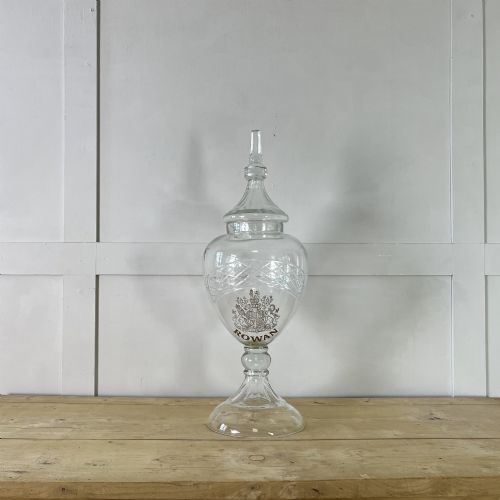
Vintage glass pharmacy bottles encompass a diverse range of containers designed for medicinal storage, spanning the Georgian, Victorian, and Edwardian eras. Buyers searching this phrase encounter everything from diminutive tincture vessels to large window carboys and fitted mahogany travelling cases.
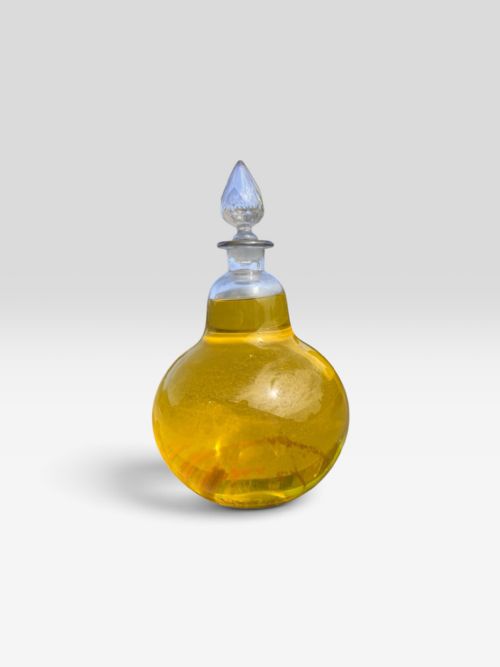
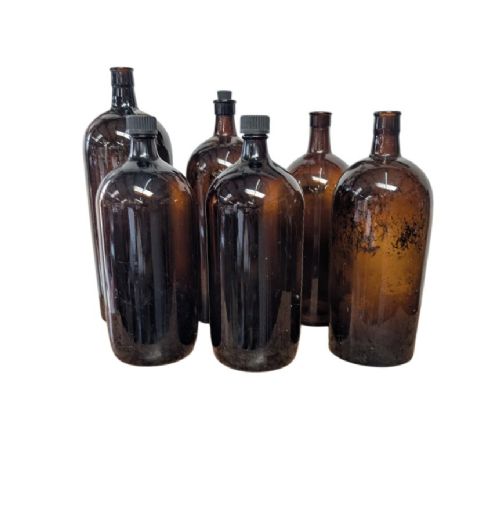
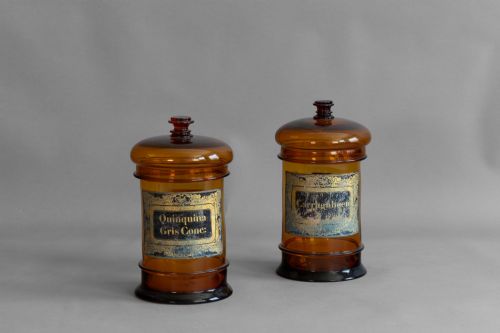
The pieces appearing on this page originate predominantly from nineteenth-century workshops, alongside early twentieth-century examples. Common forms include apothecary jars with glass covers, chemist bottles featuring lollipop stoppers, and amber winchester containers.
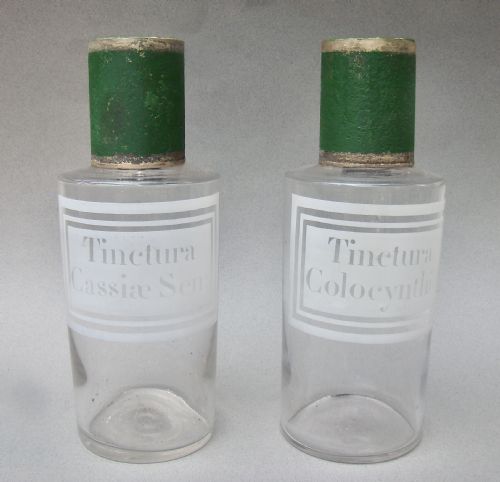
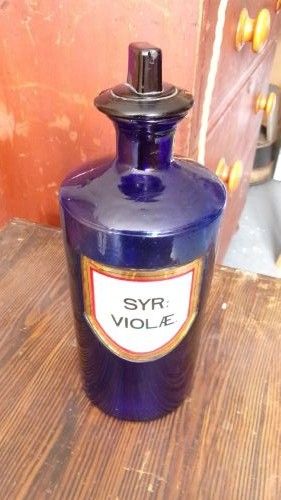
Vessels constructed from clear, Bristol blue, and green glass dominate the selection, frequently accompanied by original paper labels, gold leaf lettering, and brass details. Some specimens arrive housed within mahogany chests and cabinets complete with internal drawers.
Assessing quality in apothecary glass
Quality rests significantly upon the depth of colour, clarity of the glass, and the presence of matching original stoppers. Bottles displaying rich Bristol blue or amber tones command attention through their visual saturation and light-catching properties.
The survival of original paper labels or intact gold leaf lettering elevates a piece, particularly when combined with crisp etching or hand-blown optical distortions. Complete sets and matched pairs offer greater visual impact than isolated examples.
Cased pieces depend on the condition of the internal fitted woodwork and the completeness of the original glass contents within the drawers. Superior craftsmanship shows in tight joinery, original brass hardware, and well-preserved velvet interiors.
The listings on this page span the Georgian, Victorian, and Edwardian periods, utilising materials including glass, mahogany, and brass.
The Vintage Glass Pharmacy Bottles Glossary
- Carboy
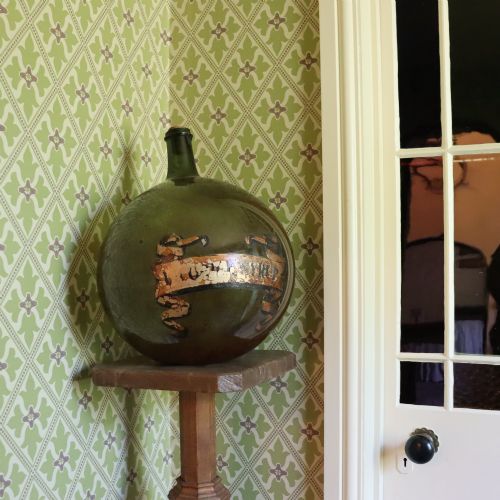
- A large glass vessel with a narrow neck, traditionally used in dispensaries for storing bulk liquids and displaying in chemist windows. These large pieces often feature deep hand-blown characteristics.
- Tincture bottle
- A small glass container specifically designed to hold alcoholic solutions of medicinal substances. They frequently retain paper labels or gold leaf nomenclature.
- Lollipop stopper
- A flat, circular glass closure shaped like a confectionary disc, fitted to the top of chemist bottles. Their wide profile provides a secure grip for dispensing.
- Winchester
- A standard heavy-duty glass bottle shape, commonly produced in amber glass for light-sensitive compounds. The design dates back to Victorian commercial manufacturing.
Vintage Glass Pharmacy Bottles: Frequently Asked Questions
Are stoppers usually original?
Many surviving bottles retain their matched glass stoppers, ground by hand to fit individual necks during production. Because stoppers were easily misplaced or swapped over decades of use, finding a completely original pairing remains a notable bonus for collectors.
Slight variations in glass tint or bubble distribution between bottle and stopper can indicate a replacement. Close inspection of the ground glass seating areas often reveals whether the components grew together in the workshop.
How were these bottles used?
Apothecaries and chemists utilised these vessels to store dry drugs, liquid tinctures, powders, and chemical compounds required for daily prescriptions. Large carboys sat in windows to signal the presence of a medical practitioner to the street.
Smaller bottles lived on dispensary shelves or inside portable mahogany travelling cases for house calls. Their specific glass colours protected sensitive compounds from degrading under sunlight.
Can I display them in sunlight?
Coloured glass such as Bristol blue and amber creates striking visual effects when placed near natural light sources. Sunlight highlights the manual bubbles and textural ripples inherent in nineteenth-century glass production.
Extended exposure to direct, intense sunlight can occasionally affect fragile paper labels or cause fading on old applied finishes. Positioning pieces to catch indirect light balances visual appreciation with material preservation.