





Red Stopper Glass Bottles
These red stopper glass bottles are functional vessels of varied periods, offering distinct visual punch for a collector's display.
Red Stopper Glass Bottles
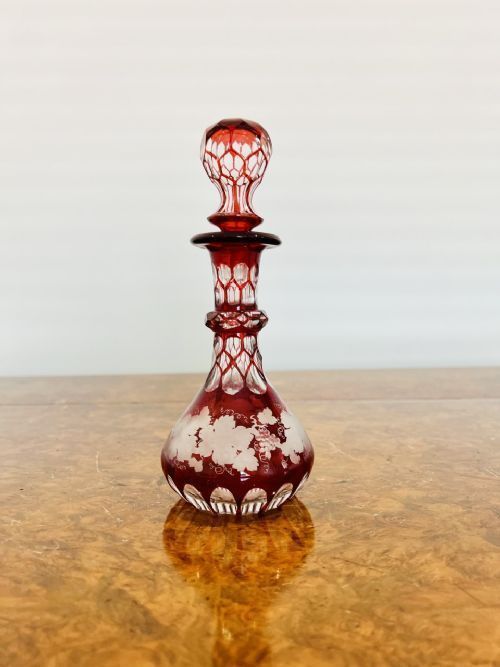
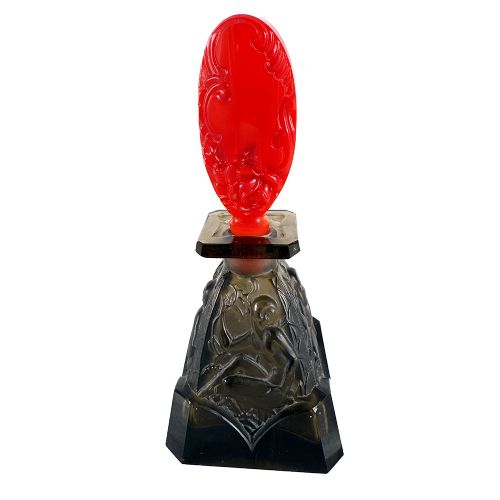
When you search for red stopper glass bottles, you encounter a focused selection of vessels spanning the Victorian era through the Art Deco period. The inventory includes perfume bottles, scent bottles, decanters, barware, and apothecary bottles.
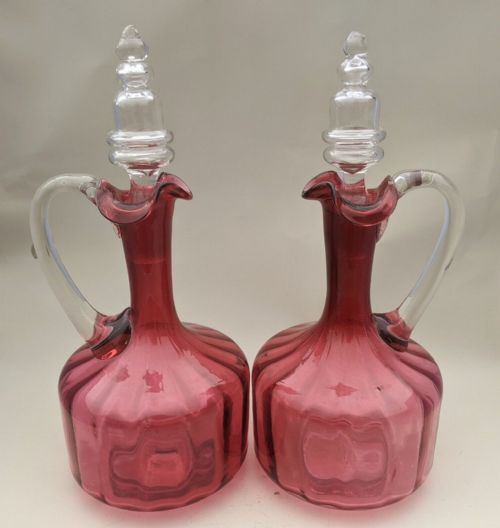
Victorian examples frequently appear in rich ruby or cranberry glass, often paired with matching stoppers and cut glass details. Art Deco pieces from the nineteen twenties and thirties introduce moulded glass forms and enamel decoration, occasionally featuring silver mounts.
Larger utilitarian forms like apothecary carboys also surface, representing the broader nineteenth century production of coloured glassware. Most pieces you meet on this page originate from English and continental workshops.
How they were made
Glassmakers utilised various techniques, from traditional free-blowing and heavy cutting to nineteenth century ruby overlay methods where a thin layer of red glass fuses over clear material. Cranberry glass achieves its distinct hue through the addition of gold chloride during the melting process.
Moulded glass production gained prominence by the Art Deco period, allowing workshops to shape intricate geometric patterns directly into the vessel. Enamel work and silver fitting added refined decorative layers to dressing table and bar accessories.
A travelling campaign decanter comes tucked securely inside its own fitted wooden case, ready for gentlemanly refreshment on the move.
What varies in quality
Quality rests primarily on the depth and saturation of the glass colour, alongside the precision of any cut decoration. Hand-cut facets on Victorian ruby glass display crisp edges that catch the light sharply, whereas simpler moulded pieces show softer definition.
The integration of the stopper forms another key distinction, as matched original stoppers with ground glass fitments indicate higher original manufacture. Silver mounts and enamel detailing exhibit varying degrees of hand-finishing, distinguishing standard utilitarian items from finer dressing table pieces.
Karl Palda
The Red Stopper Glass Bottles Glossary
- Ruby Glass
- A deep red glass created by adding gold or copper to the batch during melting. It became particularly popular during the Victorian era for decorative decanters and glassware.
- Cranberry Glass
- A transparent pinkish-red glass produced by using gold in the glass formulation. This material defines many nineteenth century scent bottles and tableware items.
- Overlay Glass
- A technique involving a layer of coloured glass fused over a body of clear glass. Cutting through the outer layer reveals the contrasting clear glass beneath.
- Carboy
- A large, bulbous glass vessel used historically for holding liquids. Early twentieth century examples often served shop displays or apothecary storage.
- Moulded Glass
- Glass shaped by being pressed into a metal or wooden mould rather than free-blown. This method enabled consistent production of decorative Art Deco patterns.
Red Stopper Glass Bottles: Frequently Asked Questions
What periods do these bottles cover?
The pieces span from the nineteenth century through the Edwardian era and into the Art Deco period of the nineteen thirties. Victorian examples sit alongside later twentieth century designs.
Production methods and aesthetic styles shift noticeably across these decades, moving from heavy cut ruby glass towards streamlined moulded forms.
How were cranberry glass decanters used?
These decanters served for holding and serving spirits or liqueurs at the dining table or sideboard. Their striking colour added visual warmth to domestic barware.
Matching stoppers helped preserve the contents while completing the decorative profile of the vessel.
How do I identify an Art Deco scent bottle?
Art Deco scent bottles typically feature geometric moulded glass designs, enamel decoration, or silver mounts. They frequently date to around nineteen thirty and often originate from continental makers such as Czechoslovakia.
These pieces contrast sharply with the heavier, cut glass styles of the Victorian period.
Are apothecary carboys considered bottles?
Apothecary carboys represent large-scale glass vessels utilised for chemical storage or shop window displays during the early twentieth century. While sharing glass manufacturing origins with smaller bottles, their scale serves a strictly utilitarian purpose.
They offer a distinct architectural presence compared to dressing table perfume flasks.