


Vintage Medical Glass Jars
These vintage medical glass jars carry the practical weight of nineteenth-century pharmacies and consulting rooms.
Vintage Medical Glass Jars
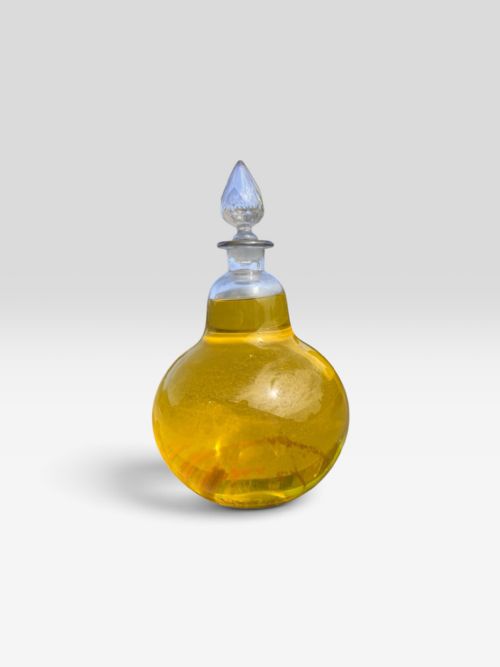
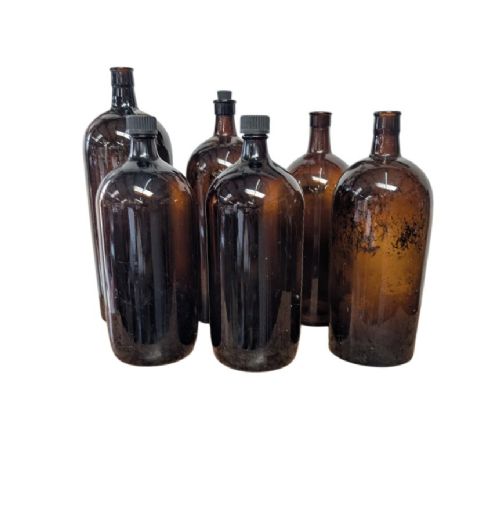
When you search for vintage medical glass jars, you find heavy utilitarian vessels designed to hold chemical preparations, herbs, and compounds in nineteenth and early twentieth-century dispensaries. The most common examples on this page are apothecary bottles and pharmacy jars originating from the Victorian and Edwardian periods.
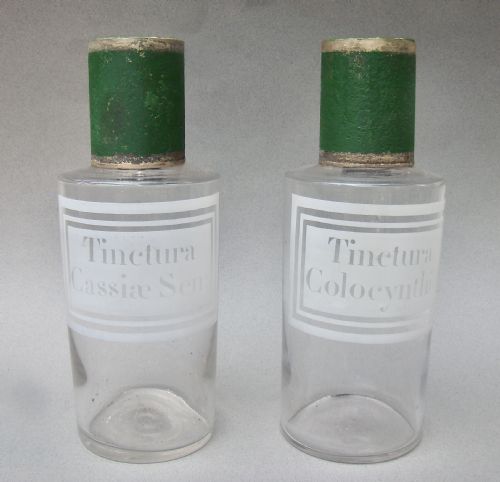
These pieces encompass tall carboys, chemists' storage bottles, and covered drug jars in clear, amber, and green glass. Many retain their original paper or gold leaf labels, whilst others display French etched surfaces or simple industrial forms.
The assortment reflects the daily equipment of nineteenth-century practitioners and apothecaries. They range from small shelf bottles to large display carboys meant to signal the chemist's trade to the street.
How they were made
Makers produced these vessels using traditional glassblowing techniques, resulting in thick walls, pontil marks, and characteristic bubbles trapped within the clear, amber, or green glass. Hand-blown manufacturing gives each jar a distinct weight and irregularity.
Label details relied on surface etching, painted lettering, or applied paper and gold leaf to identify the contents. Metal and plastic components appear on later twentieth-century additions, but nineteenth-century examples rely purely on glass manipulation and applied labelling.
Many of these jars still smell faintly of the long-evaporated compounds they guarded through the Victorian era.
What varies in quality
Quality rests upon the crispness of the hand-blown form, the presence of original stoppers, and the survival of authentic paper or gold leaf labels. Untouched nineteenth-century examples with clear maker marks or etched French detailing sit above plain utilitarian containers.
The presence of matching sets and unusual colours such as deep green or rich amber alters the character of the grouping. Simpler pharmacy bottles with losses to their original painted or paper identification marks represent the more common end of the scale.
The Vintage Medical Glass Jars Glossary
- Carboy
- A large globular glass bottle enclosed in a protective basket or standing independently on a base. These vessels stood in apothecary windows to identify the chemist's shop.
- Pontil mark
- A rough scar left on the base of blown glass where the pontil rod was snapped away after shaping. Its presence confirms hand-blown manufacture.
- Winchester
- A standard heavy glass bottle shape with a narrow neck and screw or stopper top, widely used for storing chemical substances.
- Apothecary jar
- A vessel specifically formed to house medicinal drugs and dry ingredients in a dispensary. They often feature ground glass stoppers to maintain an airtight seal.
Vintage Medical Glass Jars: Frequently Asked Questions
How were these glass jars used?
Apothecaries and chemists used these vessels to store dry drugs, liquid remedies, and chemical compounds safely behind the dispensary counter. Large carboys also served as colourful window displays to advertise the apothecary's premises to the public.
Smaller bottles held specific ingredients needed for daily dispensing. Their thick glass construction protected volatile contents from light and moisture.
How do I date an apothecary jar?
Dating relies upon manufacturing traits such as hand-blown pontil marks, glass colour, and the style of any applied paper or gold leaf labels. Nineteenth-century pieces typically show greater irregularities in the glass than twentieth-century equivalents.
Form also guides the period, with heavy Victorian carboys and French etched jars displaying distinct decorative restraint compared to later industrial examples.
Do original stoppers matter?
Original ground glass stoppers complete the vessel and ensure it survives in its intended functional state. Matching stoppers that fit the individual neck indicate that the piece remains together as originally made.
Many surviving bottles lost their stoppers through decades of working use in the dispensary. Finding a jar with its original matching cover is a notable bonus.
How should I clean vintage medical glass?
Warm water and gentle soap remove dust and surface grime without disturbing fragile interior residue or historic paper labels. Avoid submerging bottles that retain original paper or gold leaf designations.
Aggressive scrubbing can damage the delicate etched surfaces found on French pieces. Patting the glass dry preserves the tactile quality of the old material.