

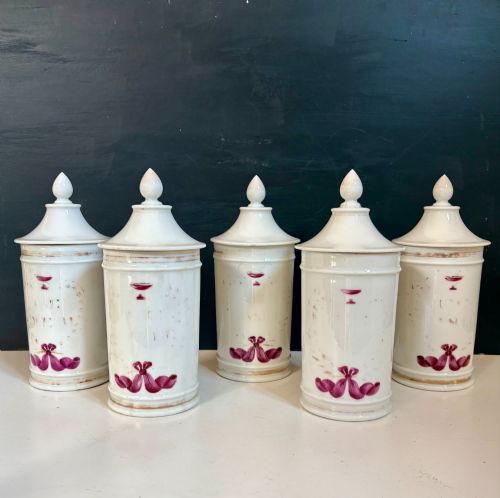
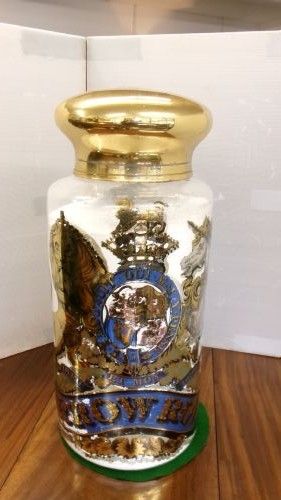
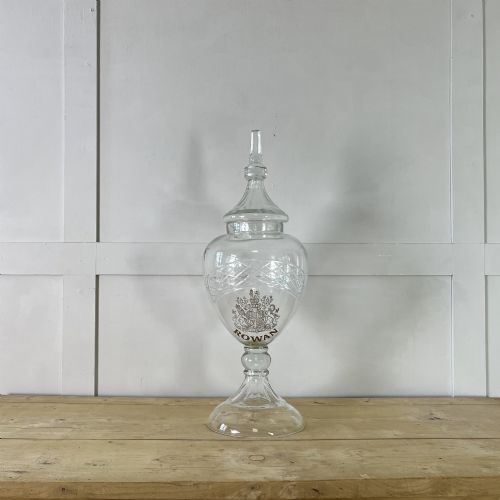


Apothecary Jar Lid
These apothecary jar lid pieces protect medicinal contents with fitted covers spanning the eighteenth to early twentieth centuries.
Apothecary Jar Lid
An apothecary jar lid represents the protective cover for chemist containers, storage vessels, and display jars used to house medicines and dry ingredients. These covers survive from the eighteenth, nineteenth, and Edwardian periods in materials ranging from cut glass to tin-glazed earthenware.
The versions most commonly met on this page belong to the Victorian era and eighteenth-century Dutch or Italian traditions. Buyers encounter standalone covers alongside complete lidded vessels such as storage jars, vases, and chemist canisters.
How they were made
Makers fashioned these lids from cut glass, lead crystal, brass, and tin-glazed earthenware using period manufacturing techniques. Glass examples feature precision cutting, while ceramic pieces display tin glazes typical of Dutch delftware and Italian workshops.
Wood also appears in nineteenth-century box wood chemist jars, demonstrating turned construction methods. Each material reflects the functional requirements of apothecary storage across different centuries.
Apothecary Jar Lid Retail Price Guide 2026
Typical asking prices for apothecary jar lid among the pieces listed under this phrase on Sellingantiques today, from the lower quarter to the upper quarter. They describe what is for sale here now, not the wider market.
Listings feature items from the 18th century, 19th century, and Edwardian period, utilising cut glass, brass, lead crystal, and tin-glazed earthenware.
What varies in quality
Quality separates through the crispness of glass cutting and the finesse of the ceramic glaze. Superior pieces display heavier lead crystal and sharper facets, whereas simpler examples show basic moulding.
Artistic execution on tin-glazed earthenware or Mary Gregory glass sets finer covers apart from standard utility vessels. The cohesion between the jar and its original lid also influences the standing of the piece.
The Apothecary Jar Lid Glossary
- Tin-Glazed Earthenware
- Pottery covered with a tin-opacified glaze that provides a white surface for painted decoration. This technique defines eighteenth-century Dutch and Italian jars.
- Lead Crystal
- Heavy, brilliant glass containing lead oxide to increase refractive index and weight. It appears frequently in Victorian cut glass vessels.
- Box Wood
- A dense, pale hardwood used by turners to create nineteenth-century chemist jars and associated wooden covers. It offers a smooth surface finish.
- Mary Gregory
- Glass decorated with white enamel silhouettes depicting Victorian children in pastoral settings. This style is found on decorative jars and covers from around nineteen hundred.
Apothecary Jar Lid: Frequently Asked Questions
What were apothecary jar lids used for?
These covers sealed medical ingredients, herbs, and chemicals inside glass or ceramic jars to protect them from moisture and air. Apothecaries and chemists relied on them to keep storage contents dry and potent on shop shelves.
Over time, many lids became separated from their original bases, while others survived as complete lidded display pieces in nineteenth-century pharmacies.
How do I date an apothecary jar lid?
Dating relies on identifying the material, manufacturing technique, and stylistic markers recorded in the piece. Eighteenth-century examples often feature tin-glazed earthenware, whereas Victorian items frequently showcase heavy cut glass or lead crystal.
Edwardian and later pieces display distinct decorative glass methods, such as enamelling, which help narrow down the period of origin.
Are these lids interchangeable between jars?
Most antique apothecary lids were individually ground or fitted to their specific base during manufacture. Variations in hand-blown glass and hand-turned ceramics mean covers rarely fit other vessels securely.
Buyers should examine the seating rim to determine if a lid belongs natively to a particular jar or vase.
How should I display glass jar lids?
Glass and crystal lids look best in well-lit display cabinets where light can pass through the cut facets. Placing them atop their matching jars creates the intended silhouette of the period.
Ensure stable shelving away from edges, as heavy lead crystal and glass covers are vulnerable to accidental knocks.