


Edwardian Glass Cookie Jar
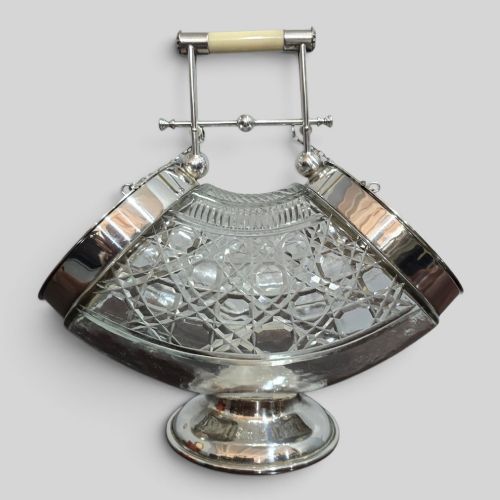
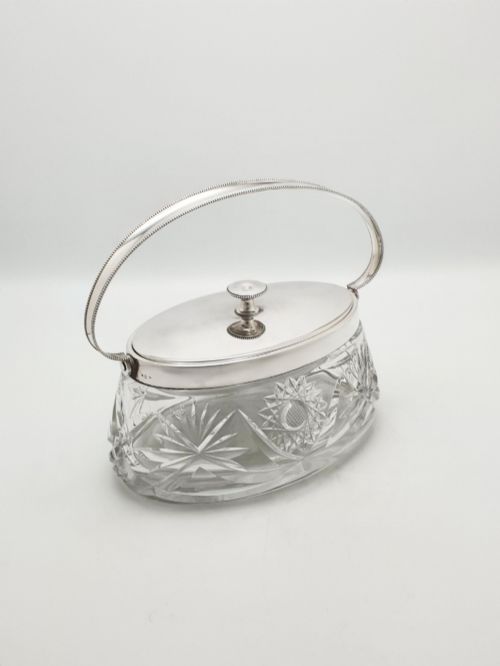
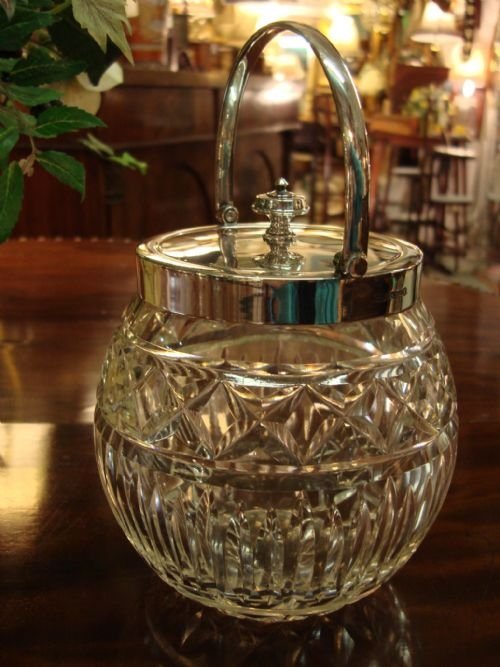
An Edwardian glass cookie jar brings brilliance to the table, combining heavy cut glass with gleaming silver plate to store biscuits in style.
Edwardian Glass Cookie Jar
When you search for an Edwardian glass cookie jar, you are looking at heavy glass vessels designed to keep baked goods fresh while sitting on a sideboard. These pieces originate predominantly from the Edwardian era, though the selection also reaches back into the Victorian period and forward into the 1920s and 1930s.
The vessels appear under various names in the listings, including biscuit barrels, biscuit jars, and biscuit boxes. Most examples combine clear or cranberry glass bodies with metal components, featuring handles and lids that make them practical for serving.
How they were made
The bodies of these jars rely on glass techniques such as hobnail cutting, faceting, and twisting to catch the light. Cranberry glass and clear lead crystal form the primary vessel walls, sometimes enhanced with enamel decoration.
Listings feature periods spanning from 1860 through the Edwardian era up to 1930, uniting Victorian, Edwardian, Jugendstil, and Art Deco design influences.
What varies in quality
Quality rests on the depth and crispness of the glass cutting, where sharp facets and clean hobnails elevate a piece above simpler smooth forms. The weight of the lead crystal and the clarity of the glass matter significantly to the overall presence.
The metalwork further distinguishes the pieces, particularly the weight of the silver plate or sterling silver mounts and the intricacy of any pierced decoration or hinged hardware.
James Dixon and Sons·WMF
The Edwardian Glass Cookie Jar Glossary
- Biscuit barrel
- A covered container designed specifically for storing dry biscuits or cookies on the dining table. These vessels became essential dining accessories during the late nineteenth and early twentieth centuries.
- Hobnail cut
- A raised, faceted pattern cut into the surface of glassware that resembles the head of a traditional hobnail boot. This technique creates a tactile and highly reflective texture.
- Silver plate
- A layer of silver fused to a base metal, commonly utilised for the rims, lids, and swing handles of these glass jars. It provides the appearance of solid silver with practical durability.
- Cranberry glass
- A rich red glass created by adding gold chloride to the molten batch. It is frequently seen in Edwardian tableware.
- Lead crystal
- Glass containing metal oxide that increases brilliance, weight, and clarity. It allows for deeper and sharper cutting than standard glass.
Edwardian Glass Cookie Jar: Frequently Asked Questions
How were glass biscuit barrels used?
These jars sat on dining tables or sideboards to hold biscuits and keep them dry during tea service. Guests or hosts would lift the metal lid to serve.
They functioned both as practical storage vessels and as decorative table ornaments in middle and upper-class homes.
Are these jars safe for food?
While the glass and metal components are generally stable, modern users often keep them for display or dry storage rather than everyday food use.
The vintage silver plate and older glass compositions require careful, gentle hand washing rather than dishwasher cleaning.
How do I tell Edwardian from Victorian pieces?
Edwardian examples tend to feature lighter, airier silver-plated mounts and cleaner glass designs compared to the heavier ornamentation often found on Victorian pieces.
The listings here span several decades, incorporating styles from the late nineteenth century through to the 1920s and Art Deco periods.