




Georgian Glass Tableware
Georgian glass tableware brings utility and sparkle to the dining table through salt cellars, sugar castors, and condiment jars.
Georgian Glass Tableware
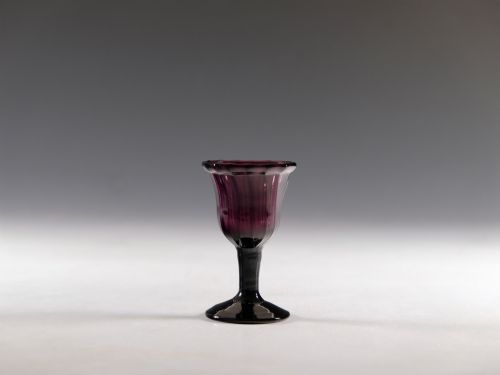
When you search for georgian glass tableware, you look at items designed for dining and entertaining during the eighteenth and nineteenth centuries. These vessels include salt cellars, sugar castors, mustard pots, egg cups, and celery vases.
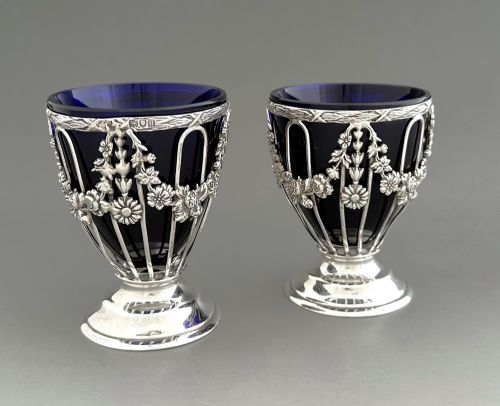
The pieces you meet most often on this page date from the Georgian and Regency periods, alongside later revival pieces. They combine functional glass bodies with silver mounts, wirework frames, or sterling silver stands.
Materials and Construction
The items combine lead crystal, cut glass, and coloured glass such as cobalt blue or amethyst. Craftsmen shaped the glass through blowing, moulding, or wrythening before finishing the surfaces with hand-cut facets or engraved patterns.
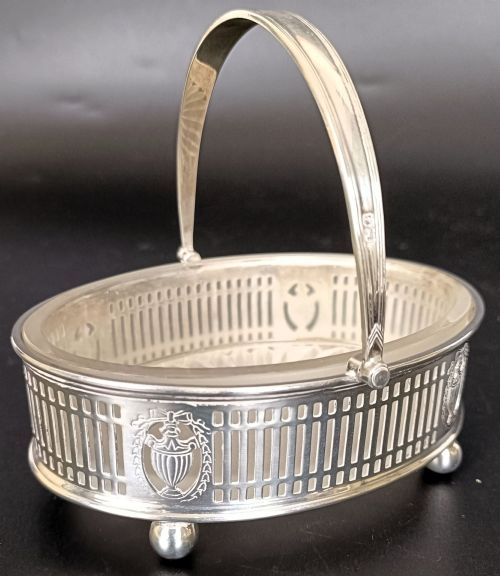
Many glass vessels integrate sterling silver elements, including swing handles, wirework frames, and mounted rims. These metal fittings provide structural support and secure handling for the delicate glass components.
Listings feature items from the 18th Century, Georgian period, Victorian era, and 1910, spanning glass and sterling silver materials.
Judging Quality
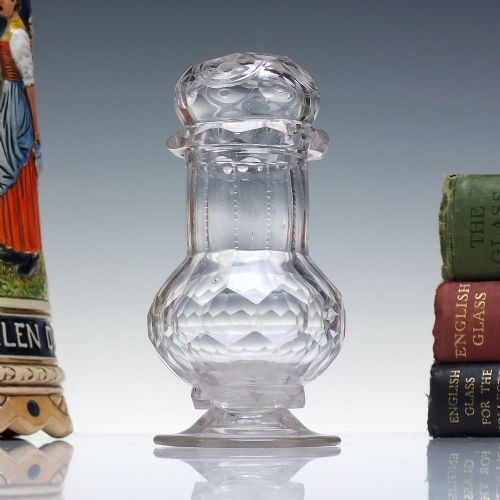
Quality depends on the clarity of the lead crystal and the precision of the cut glass facets or engraved decoration. Crisp, deep cutting and unclouded glass distinguish finer pieces from simpler utilitarian items.
The integration of the sterling silver mounts also marks out better examples. Well-fitted silver wirework, matching silver spoons, and complete sets with fitted saucers indicate higher standards of production.
Asprey & Co.·Charles Stuart Harris
The Georgian Glass Tableware Glossary
- Lead crystal
- Glass containing lead oxide, which increases brilliance, weight, and clarity. This heavy material allows for deep, sharp facet cutting.
- Wrythened
- A decorative spiral or twist pattern formed in the glass while hot. It creates a subtle optical movement across the body of jugs and cups.
- Salt cellar
- A small open dish or container placed on the dining table for individual or shared salt. They often feature cut glass bowls paired with sterling silver stands.
- Sugar caster
- A perforate-topped jar used for sprinkling sugar onto food. They frequently incorporate screw feet and silver mounts.
- Celery vase
- A tall glass vessel intended to display celery upright on the dining table. Regency examples often display heavy crystal cutting.
Georgian Glass Tableware: Frequently Asked Questions
What is georgian glass tableware used for?
These items serve dining and condiment functions on the table, holding salt, sugar, mustard, cream, and celery. They were practical vessels for domestic service.
Today, collectors use them to set a traditional dining table or display them in cabinets. Their varied forms accommodate multiple table settings.
How do I identify a Georgian piece?
Look at the manufacturing characteristics, form, and material combinations typical of the eighteenth and early nineteenth centuries. Hand-cut lead crystal and cobalt blue glass frequently point to this era.
Context also comes from associated silver mounts and hallmarks where present. Revival pieces from later periods often mimic these earlier styles.
How should I clean glass tableware?
Wash glass items gently in warm water using mild soap. Avoid harsh scrubbing brushes that might scratch the surface.
Dry them immediately with a soft cloth to prevent water spots. Take extra care with pieces that feature sterling silver mounts or delicate wirework.
Are sets common with these pieces?
Some items appear as pairs, trios, or matched sets of four or seven, particularly salt cellars and finger bowls. Single vessels also occur frequently.
Complete sets with fitted saucers or matching cruet stands are less common. These grouped items offer a more uniform table display.