




Georgian Sugar Basin
These georgian sugar basin pieces are the refined table vessels that signal a well-set tea service, prized for their craftsmanship in silver and porcelain.
Georgian Sugar Basin
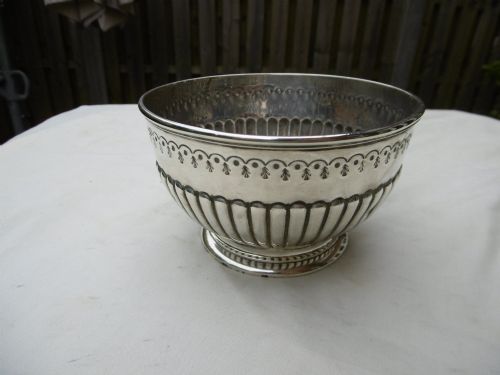
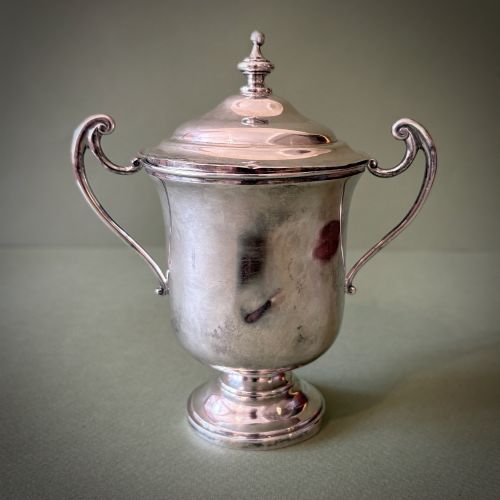
When you search for a georgian sugar basin, you encounter an array of tableware designed to hold loose sugar, spanning bowl forms, covered sucriers, and handled baskets. These pieces originate primarily across the eighteenth and nineteenth centuries, taking shape during the Georgian, Regency, and early Victorian periods.
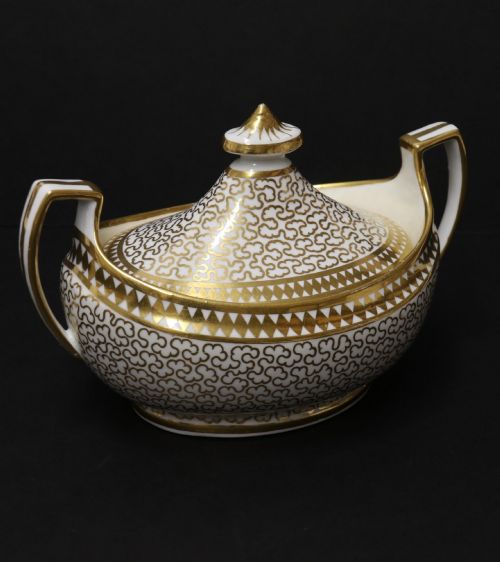
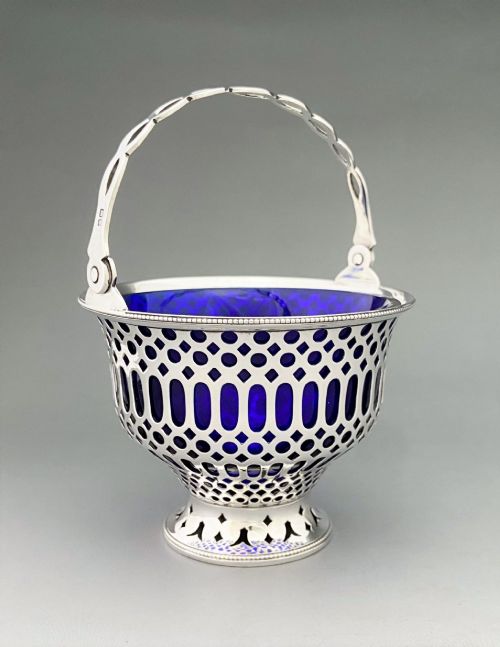
The selection here encompasses several distinct manufacturing centres and material traditions, including English, Irish, and Scottish sterling silver alongside porcelain sucriers from factories such as Worcester, Spode, and Coalport. Many feature covers, swing handles, or blue glass liners, reflecting the evolving rituals of tea and dining.
How they were made
Silver vessels are shaped through hammering and piercing, utilising techniques like casting and chasing to form swing-handled baskets and footed bowls. Makers mark their sterling silver and Sheffield plate works with punches denoting maker and assay office.
Porcelain sucriers and boxes are thrown or moulded from fine pastes, then hand-painted or transfer-printed with enamel patterns and gilt highlights. Glass sugar basins employ blown and cut methods, often utilising cobalt glass inserts within pierced metal frames.
Some baskets swing their handles with such balance they remember every lump of tea-time sugar they ever carried.
What varies in quality
The distinction between tiers rests upon the crispness of the chasing on silver surfaces and the delicacy of piercing on swing-handled baskets. Maker attribution plays a significant role, with pieces bearing marks from known silversmiths or established porcelain factories commanding greater attention.
Preservation of hand-painted enamels, original gilding, and matching covers or glass liners elevates a piece. Form and decorative style dictate the visual impact, from plain George III bowls to intricate Adam style piercing.
Peter and William Bateman·John Kincard·George Fox·Walter Brind·Alice and George Burrows
The Georgian Sugar Basin Glossary
- Sucrier
- A covered sugar bowl or sugar box designed for the tea table. This French term appears frequently in porcelain listings from factories such as Worcester and Spode.
- Sterling silver
- A silver alloy containing 92.5 percent pure silver by mass, standard for British tableware. Items often carry hallmarks indicating the date and maker.
- Sheffield plate
- A material made by fusing a thin sheet of silver to a copper base, common in eighteenth and nineteenth-century domestic wares. It offers the appearance of solid silver at a different weight.
- Swing handle
- A movable metal handle attached to a basket or bowl via pivots. These are typical on sugar baskets from the Georgian and Edwardian eras.
- Wrythen
- Twisted or spiral fluting moulded into glass or ceramics. This optical decoration adds texture to Sunderland glass vessels.
Georgian Sugar Basin: Frequently Asked Questions
What is a sucrier?
A sucrier is a covered container specifically made to hold sugar for tea service.
These ceramic or porcelain vessels usually include a matching lid and appear in various factory patterns from the Regency period.
How were sugar baskets used?
Sugar baskets served on the tea table to hold lump or loose sugar during formal gatherings.
Many examples feature swing handles and removable cobalt glass liners to protect the silver or plated frame.
How do I date a silver sugar basin?
Silver pieces often carry hallmarks stamped directly into the metal that record the assay office, year, and maker.
Stylistic cues such as neoclassical piercing or Adam style handles also help narrow down the production era.
What is the difference between porcelain and silver basins?
Porcelain versions, often called sucriers, were produced by factories like Worcester and Spode with painted enamel decoration.
Silver basins are forged from metal by silversmiths, utilising techniques like piercing, chasing, and embossing.