





18th Century Glass Bowl
An 18th century glass bowl brings heavy lead crystal and Georgian form into a room, offering tactile weight and historic clarity that collectors prize.
18th Century Glass Bowl
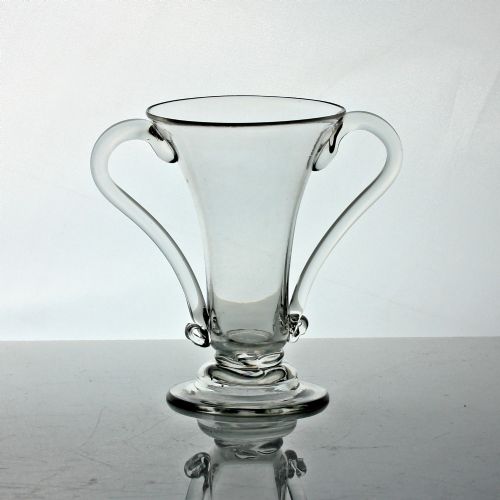
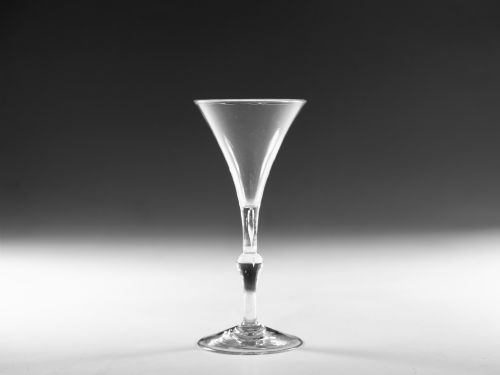
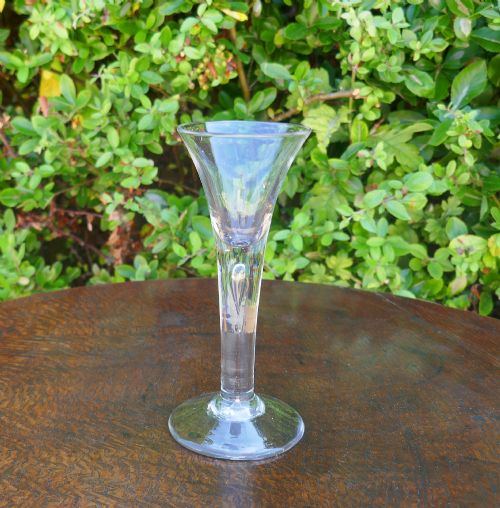
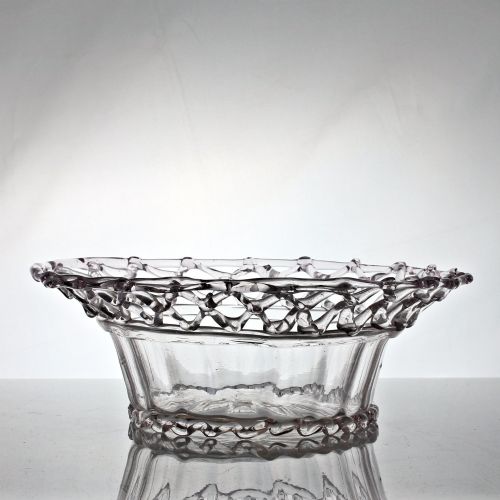
When you search for an 18th century glass bowl, you enter a field dominated by Georgian domestic glassware, featuring items ranging from large decorative bowls and cut glass centerpieces to smaller sweetmeat glasses, jelly glasses, and sugar baskets.
The material encountered most frequently on this page is lead glass or flint glass, shaped into vessels that often accompany tea caddies or stand independently as table centerpieces.
Makers and glasshouses of the period produced these pieces utilising heavy metal formulas, resulting in substantial weight and optical clarity that distinguish them from later Victorian wares.
How they were made
Craftsmen utilised lead crystal and flint glass formulations, melting batch ingredients in glasshouses to achieve the distinctive heavy handle and bright refraction seen in Georgian vessels.
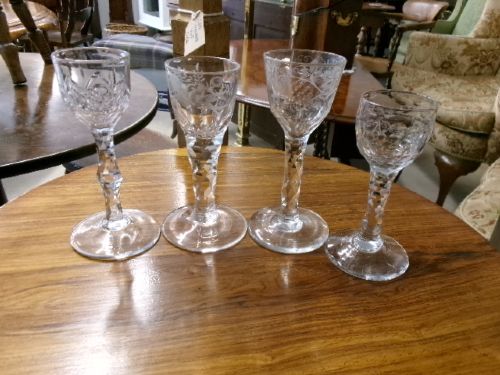
Techniques included mould-blowing for ribbed, fluted, or panelled bowls, alongside hand-cutting and polishing to create faceted surfaces on the glass body.
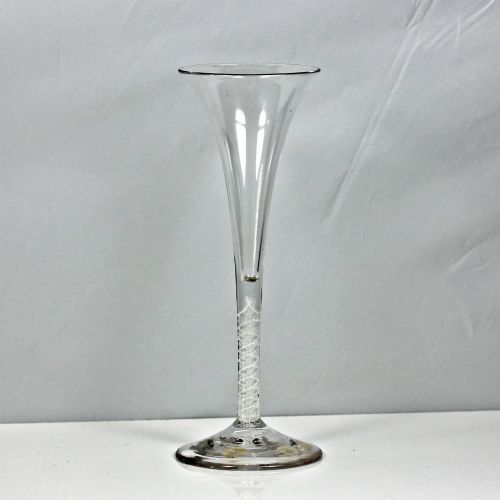
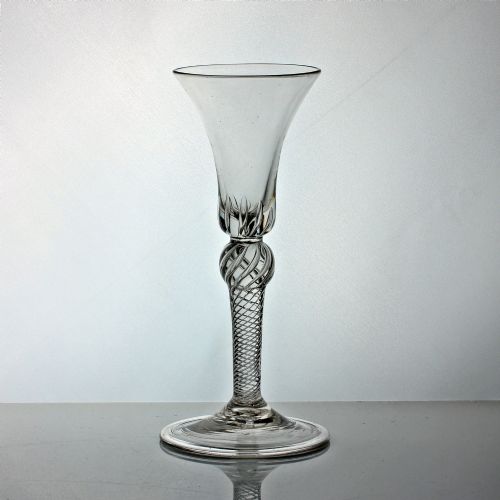
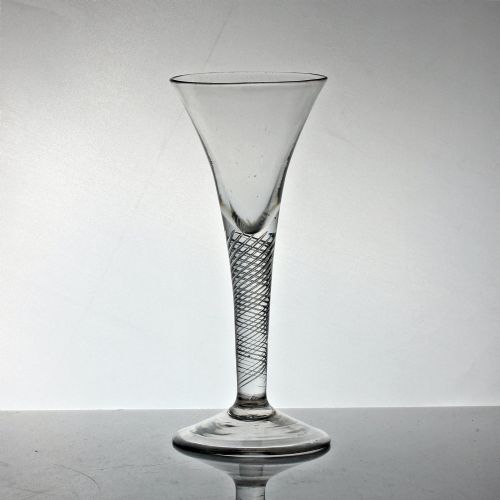
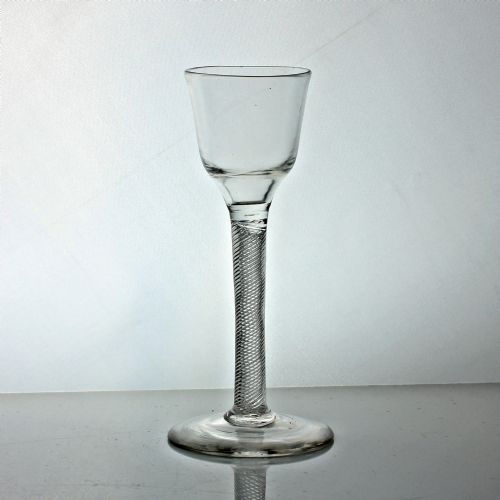
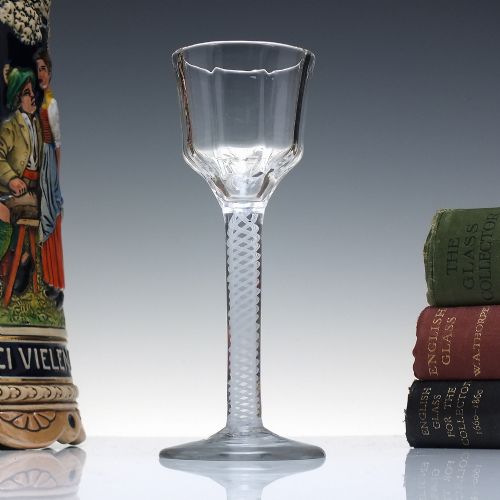
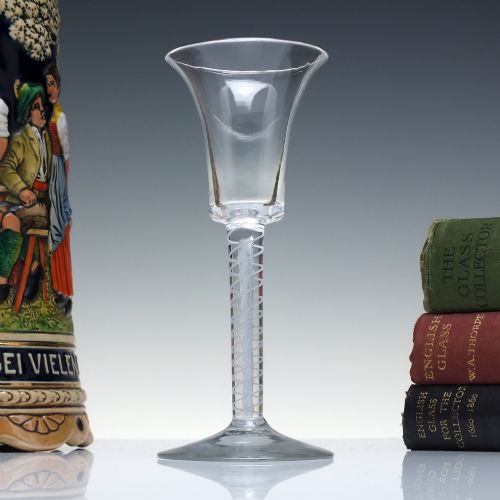
Stems and feet were often formed separately and hot-worked to the bowl, incorporating air twists, opaque twists, or baluster formations into the molten structure.
Materials recorded across the inventory include clear lead glass, flint glass, cobalt glass, and white enamel highlights.
What varies in quality
The grade of an 18th century glass bowl rests upon the purity of the metal and the absence of heavy clouding or excessive inclusions within the crystalline structure.
Design execution dictates value, separating standard domestic vessels from masterworks possessing deep wheel-cutting, crisp mould-puffs, and perfectly drawn stems.
Proportion and foot stability also define the piece, where an evenly balanced folded foot and symmetrical bowl contour demonstrate superior workshop control.
The 18th Century Glass Bowl Glossary
- Lead glass
- A heavy, highly refractive type of glass containing lead oxide, developed to improve clarity and weight in domestic vessels.
- Flint glass
- An early British term for high-quality clear glass, often synonymous with lead crystal.
- Opaque twist
- A stem formation created by enclosing white or coloured enamel threads within clear glass and drawing them into a spiral.
- Air twist
- A technique where elongated air bubbles inside the stem are twisted into a spiral pattern during hot-working.
- Sweetmeat glass
- A pedestal vessel with a shallow bowl used for serving small confections, nuts, or preserved fruits during formal dining.
- Folded foot
- A base edge doubled over while hot to add weight, stability, and strength to the rim of a drinking glass or bowl.
18th Century Glass Bowl: Frequently Asked Questions
What is an 18th century glass bowl used for?
These vessels served various functions in Georgian households, ranging from holding sugar and sweetmeats to containing liquid contents alongside tea caddies or on dining tables.
Collectors today utilise them primarily for display, appreciating the tactile weight and historic presence they bring to a room.
How do I identify a Georgian glass bowl?
Look for the characteristic weight and high refractive index of lead glass, alongside hand-finished traits such as pontil marks on the base and variations in wall thickness.
Forms typically align with Georgian aesthetic standards, often incorporating mould-blown ribbing, faceted cutting, or applied feet rather than modern machine-pressed seams.
Are all 18th century glass bowls clear?
While clear lead glass and flint glass dominate the inventory, the period also produced pieces in coloured metals including cobalt glass, turquoise green, and opaque white enamel.
Decoration sometimes included enamel painting or structural inclusions like air bubbles trapped within the stem or bowl walls.
How should I care for historic glass?
Wash pieces gently by hand using lukewarm water and mild soap, avoiding harsh scrubbing agents or modern dishwashers that can damage the soft surface of early lead metal.
Handle bowls by the body rather than delicate applied elements, and place them on stable, padded surfaces to protect the fragile foot rims.