
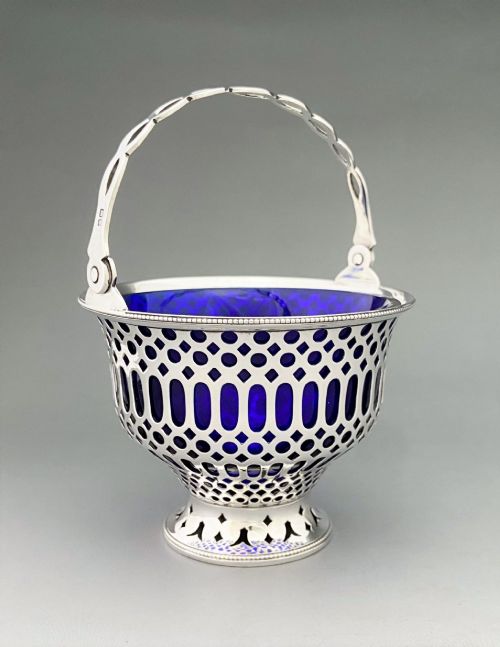


Blue Glass Sugar Basin
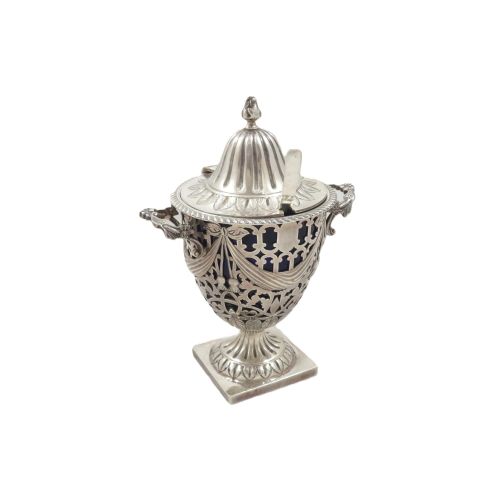
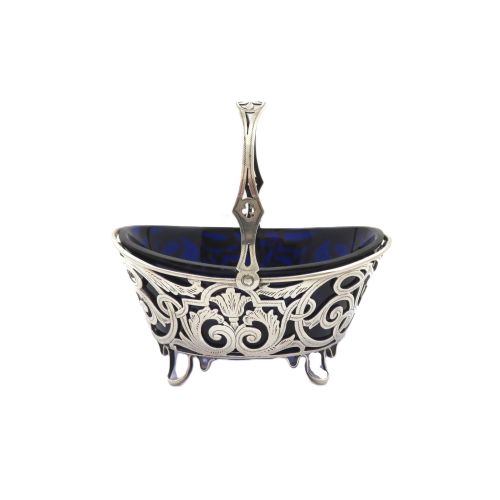
These blue glass sugar basin pieces bring rich cobalt colour and pierced silver framework to a table, offering a bright focal point for afternoon tea.
Blue Glass Sugar Basin
When you search for a blue glass sugar basin, you find vessels designed to hold loose sugar on the dining table, often paired with metalwork frames. The pieces on this page span several eras, including the eighteenth century, the Victorian period, and the Edwardian era, showing how tableware evolved over generations.
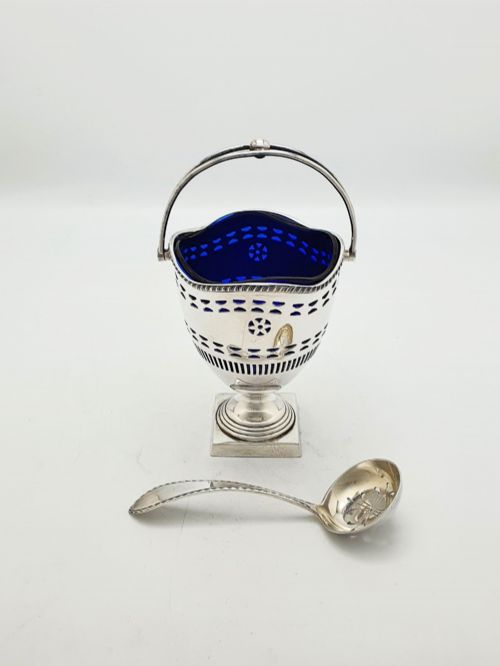
You are most likely to meet footed baskets and pierced frames fitted with removable coloured glass liners, alongside blown glass bowls. These table accessories reflect Georgian neoclassical tastes and later nineteenth-century revival styles.
Origins range from English workshops to French glasshouses, with forms varying from lidded urns to open swing-handled baskets. Each object displays the distinctive contrast of deep blue glass set against polished sterling silver or silver plate.
How they were made
Glassmakers shaped these vessels using free-blowing techniques, sometimes incorporating white latticinio threads or twisted wrythen patterns into the molten material. Cobalt oxides imparted the signature rich blue tone, while specific rims gained colour through applied glass canes.
Silversmiths constructed the accompanying frames through casting and piercing, producing intricate openwork lattices and swing handles. Liners were then fitted precisely into these metal housings, often secured with hinged lids or cast floral details.
Listings on this page span multiple periods, ranging from eighteenth-century Georgian examples to Edwardian pieces.
What varies in quality
Quality rests on the crispness of the metal piercing and the weight of the silver framework. Finer examples exhibit deep, clean apertures in the silver plate or sterling silver, alongside heavier cast handles that balance the vessel securely.
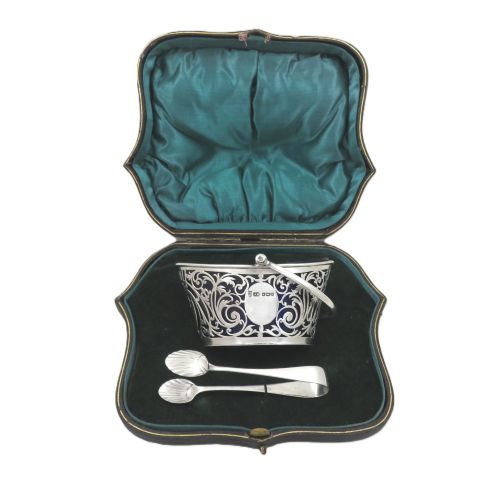
The glass component itself distinguishes pieces, with superior basins showing even colour saturation and fine hand-blown characteristics rather than heavy mould seams. Complete sets retaining their original fitted cases or matching sifter spoons command greater attention from collectors.
The Blue Glass Sugar Basin Glossary
- Latticinio glass
- Glasswork featuring opaque white twist threads embedded within clear or coloured metal. This technique creates delicate net-like patterns across the body of the vessel.
- Wrythen
- A decorative spiral pattern twisted into the body of blown glass during formation. This texture catches the light and adds depth to the blue colour.
- Pierced
- Metalwork perforated with decorative cut-out patterns to lighten the appearance of baskets and frames. It allows the coloured glass liner to show through the design.
- Swing handle
- A movable arched metal handle attached to the rim of a basket by pivot pins. This feature allows easier access to the contents of the bowl.
- Neoclassical
- A decorative style drawing inspiration from classical antiquity, prominent during the Georgian period. It governs the symmetrical urn shapes and geometric piercing found on these pieces.
Blue Glass Sugar Basin: Frequently Asked Questions
What is a blue glass sugar basin?
A blue glass sugar basin is a tableware vessel used for serving sugar, typically featuring a coloured glass bowl held within a decorative silver or silver-plated frame.
These pieces were central to tea service rituals in affluent homes during the eighteenth and nineteenth centuries.
How were sugar basins used?
They sat on the tea table to hold lump or loose sugar, which guests would transfer to their cups using tongs or spoons.
The removable glass liner protected the precious metal frame from moisture and made cleaning straightforward after tea service concluded.
How do I date a sugar basket?
Dating relies on assay marks stamped into the silver framework, stylistic cues like Georgian neoclassical symmetry, and manufacturing techniques visible in the glass.
Comparing the handle attachment and piercing patterns against established period designs helps narrow down the decade of production.
How do I care for antique glass?
Wash the glass liner gently in warm soapy water, avoiding harsh abrasives that might scratch the surface or chemical cleaners on the metal.
Keep the piece away from direct sunlight and extreme temperature shifts to protect the integrity of both the glass and the silver frame.