




18th Century Silver Basket
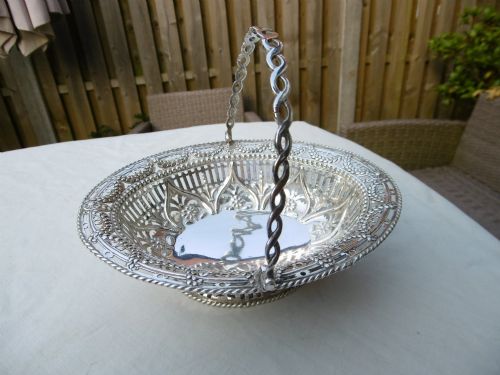
An 18th century silver basket brings George III craftsmanship and delicate wirework or pierced sheet metal straight to the table.
18th Century Silver Basket
When you search for an 18th century silver basket, you encounter table pieces designed for sugar, sweetmeats, bread, and cream pails. These vessels date from the Georgian era, with specific examples spanning the mid to late decades of the seventeen-hundreds.
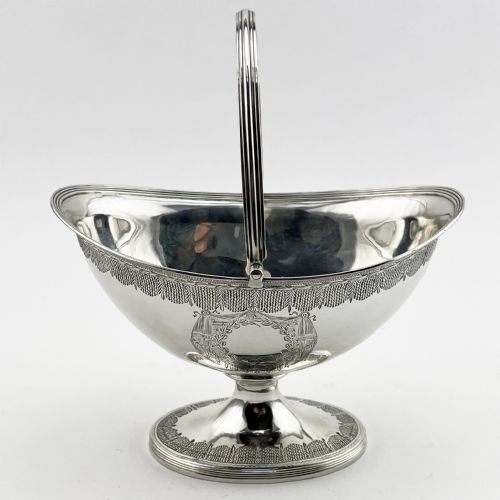
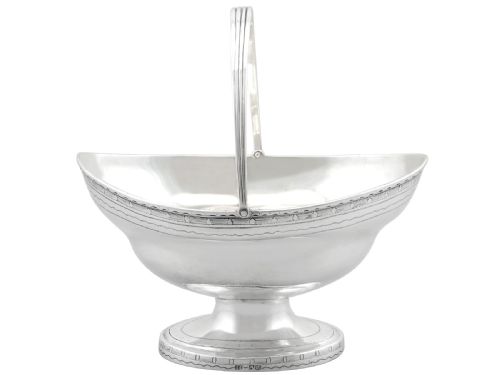
The objects take various forms including swing-handled baskets, oval sugar baskets, and sweetmeat dishes. Irish, Scottish, and English makers produced these items in sterling silver, Old Sheffield plate, and wirework.
Sugar baskets and cream pails represent the forms most frequently met on this page. They often feature cobalt glass liners visible through pierced or wirework sides.
Materials and Construction
Silversmiths utilised sterling silver and Old Sheffield plate, sometimes combining copper and gold wash with the primary metal. Wirework construction required delicate soldering of silver wires into geometric or open patterns.
Pierced sheet metal formed the bodies of many cream pails and sugar baskets, shaped by hand-piercing designs into the silver. Swing handles were attached with pins to cast or wrought rims, allowing the handle to fold down flat.
18th Century Silver Basket Retail Price Guide 2026
Typical asking prices for 18th century silver basket among the pieces listed under this phrase on Sellingantiques today, from the lower quarter to the upper quarter. They describe what is for sale here now, not the wider market.
Several baskets swing their handles with the exact friction they possessed during the reign of George the Third.
Assessing Quality and Execution
Quality rests in the crispness of the piercing and the balance of the wirework construction. The refinement of the swing handle mechanism and the retention of any original cobalt glass liner dictate the standing of a piece.
Maker marks and regional hallmarks stamped into the sterling silver or Old Sheffield plate provide historical substance. Solid silver forms command greater attention than plated variants, though high-grade wirework demonstrates equal dexterity.
Aldridge & Green·Henry Chawner·Samuel Herbert·William Bond
The 18th Century Silver Basket Glossary
- Sterling Silver
- An alloy of silver containing ninety-two point five percent silver by mass, with other metals constituting the remainder. This standard material forms the body of Georgian sugar baskets.
- Old Sheffield Plate
- A composite material made by fusing a thin sheet of silver to a thicker copper base. It appears on sweetmeat and wirework baskets from the eighteenth century.
- Cobalt Glass
- A deep blue glass used to line pierced or wirework sugar baskets and cream pails. The dark hue contrasts sharply with the bright silver framework.
- Wirework
- A technique involving fine silver wires soldered together to create openwork vessels. It produces light, airy baskets characteristic of the Georgian period.
- Cream Pail
- A small bucket-shaped vessel with a swing handle, used for holding cream at the tea table. They often mirror the pierced designs of larger sugar baskets.
18th Century Silver Basket: Frequently Asked Questions
What were silver baskets used for?
These vessels held provisions for the tea table and dining table, including bread, sweetmeats, and sugar. Sugar baskets and cream pails served specific condiments during formal meals.
Smaller bonbon baskets held confectionery or dried fruits. Their open wirework or pierced designs kept the contents visible and dry.
How do I identify a Georgian basket?
Look for hallmarks stamped into the sterling silver, which indicate the assay office, date letter, and maker's mark. Eighteenth-century pieces often display George III or Georgian stylistic traits.
Construction methods like hand-piercing and soldered wirework point directly to the seventeen-hundreds. Swing handles and cobalt glass liners further support the period.
Are all baskets solid silver?
Not every piece is made of solid sterling silver, as Old Sheffield plate appears regularly among the listings. This material layers silver over a copper core.
Wirework baskets and sweetmeat dishes utilised both solid silver and plated metals. Each method meets the standards of eighteenth-century tableware.
How should I clean my silver basket?
Maintenance requires gentle cleaning with a soft cloth and specialist silver polish to preserve the original hallmarks. Avoid harsh abrasives that might wear down thin wirework or silver plating.
If the piece includes a removable cobalt glass liner, wash and dry it separately from the metal basket. Store the item in a dry environment to prevent tarnishing.