

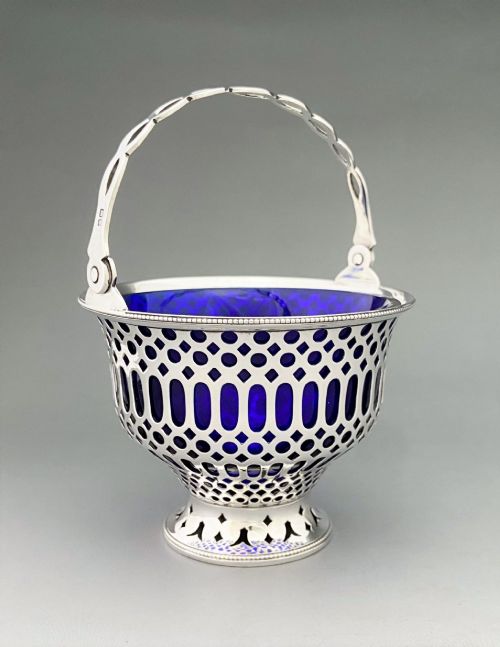


Blue Glass Liner Basket
A blue glass liner basket combines openwork metal frames with rich cobalt inserts, serving as a striking centrepiece for the dining table.
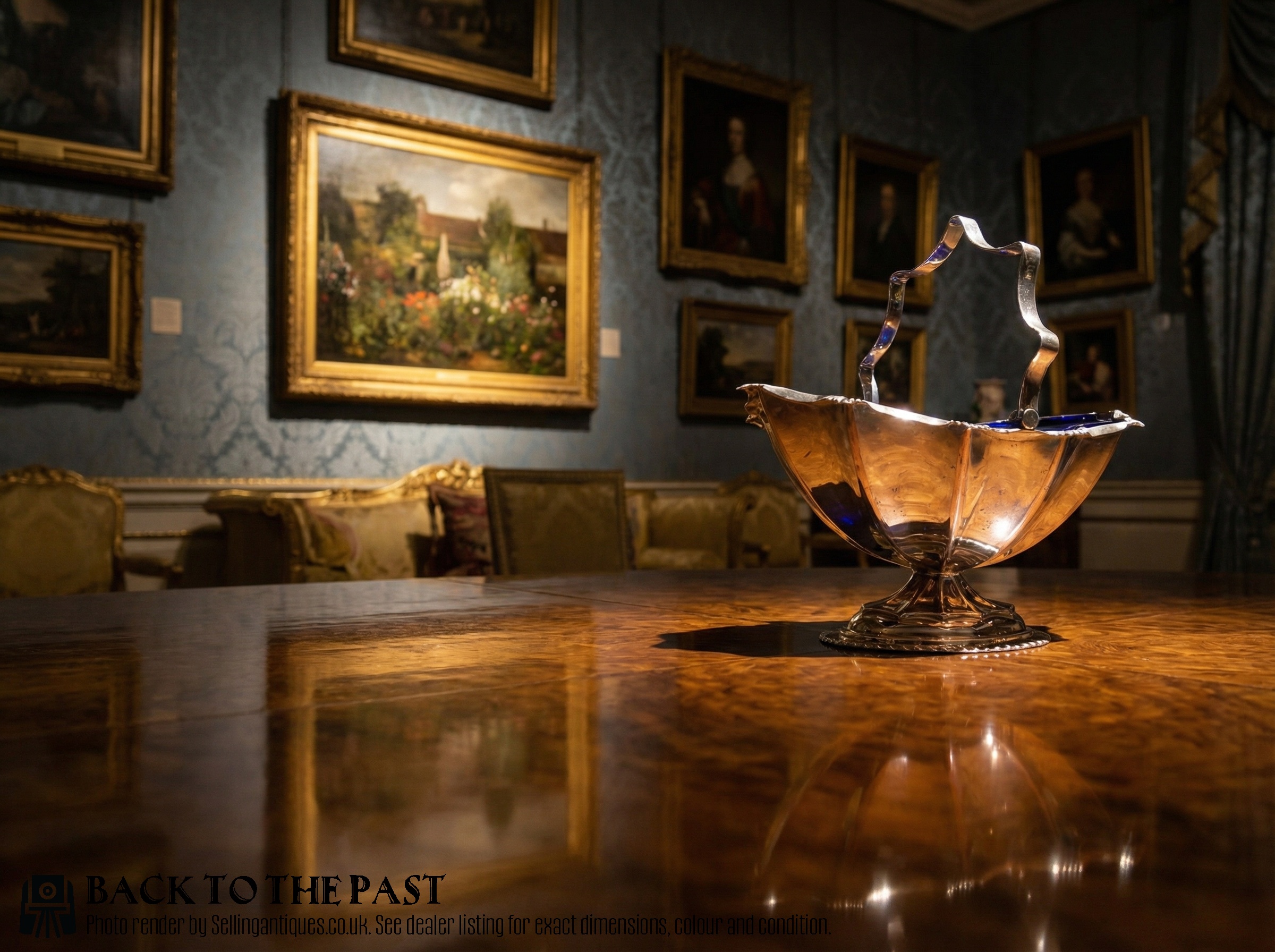
Blue Glass Liner Basket
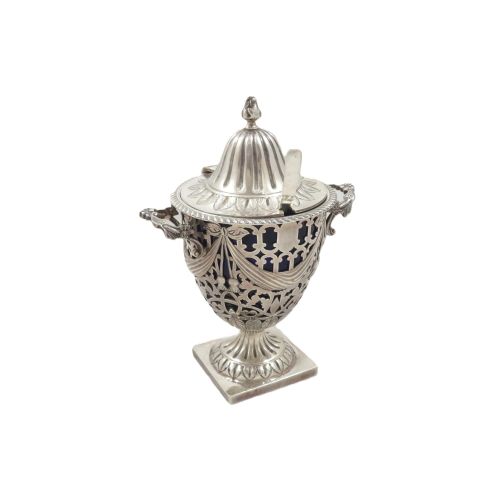
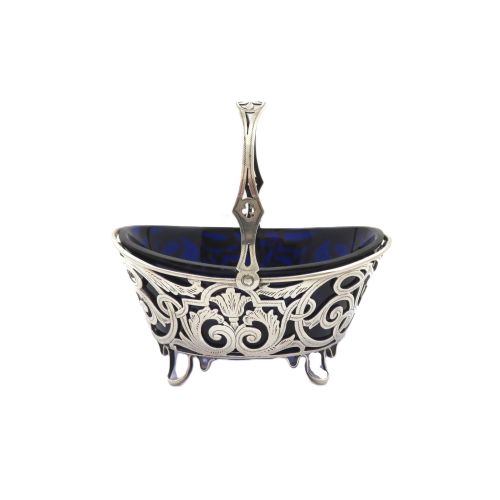
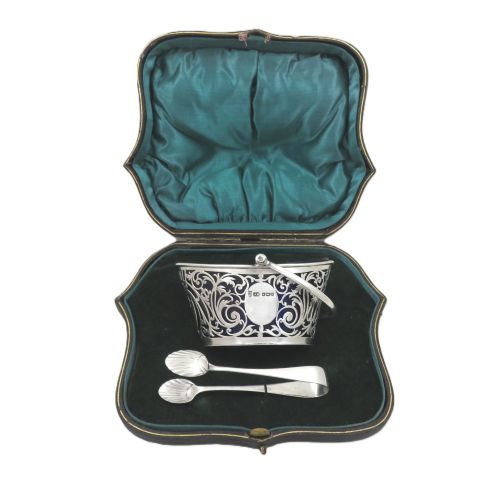
A blue glass liner basket brings together a pierced or wirework metal frame and a contrasting cobalt glass insert designed for holding sugar or cream. When you search for a blue glass liner basket, you encounter tablewares primarily originating from the Georgian, Victorian, and Edwardian eras.
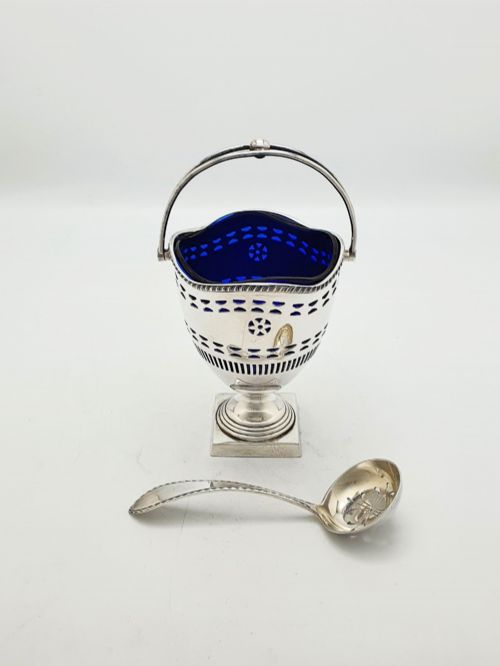
The form most frequently met on this page is the sugar basket or cream pail, often fitted with a swing handle and resting on a footed base. These vessels served functional roles in formal dining before evolving into purely decorative tableware.
Originating in periods spanning the eighteenth century through the early twentieth century, these pieces demonstrate a clear evolution from neoclassical wirework to ornate Victorian casting and Edwardian refinement.
What varies in quality
The standard of craftsmanship is evident in the crispness of the piercing and the weight of the metal frame. Finer examples display hand-cut fretwork and cast floral handles with sharply defined details, whereas simpler versions rely on plain wirework or standard silver plating.
The presence of the original blue glass liner significantly influences the integrity of the piece. Replacements alter the fit and historical consistency, while surviving original liners demonstrate exact pairing with the outer basket.
The listings span the eighteenth century to the Edwardian period, uniting sterling silver, silver plate, and cobalt glass.
Aldridge & Green·Elkington & Co
The Blue Glass Liner Basket Glossary
- Pierced silver
- Metalwork decorated by cutting patterns through the sheet with a fine saw. This technique lightens the visual weight of the basket.
- Cobalt glass
- Deep blue glass coloured by the addition of cobalt oxide. It provides the signature vivid contrast seen inside silver frames.
- Cream pail
- A small bucket-shaped vessel used for serving cream at the table. These often mirror the design of larger sugar baskets.
- Swing handle
- A hinged handle attached to the rim of the basket that moves freely. It allows the vessel to be easily passed during tea service.
- Wirework
- An open metal construction formed by soldering individual wires together. It defines many eighteenth-century tableware designs.
Blue Glass Liner Basket: Frequently Asked Questions
What was a blue glass liner basket used for?
These baskets were placed on formal dining and tea tables to hold loose sugar lumps or cream containers. The metal frame supported the heavy glass insert while presenting an ornamental display.
Over time, their usage shifted from active dining service to decorative display pieces within cabinet collections.
How do I date a silver sugar basket?
Dating relies heavily on hallmarks stamped onto the metal, which record the assay office, date letter, and maker's mark. Stylistic clues such as neoclassical wirework or Edwardian forms also indicate the period of manufacture.
Examining the construction methods of the handle and base provides further confirmation of the era.
Are original glass liners important?
The original glass liner ensures the piece remains in its intended historical state. Because glass is fragile, many surviving baskets have replacement liners fitted at later dates.
An original liner fits the internal dimensions precisely and matches the manufacturing characteristics of the period.
How do I care for antique silver and glass?
Gentle cleaning with a soft cloth preserves the silver surface without wearing away thin plating or delicate hallmarks. The glass liner should be washed separately in lukewarm water to protect the inner surfaces.
Avoiding harsh chemical dips ensures the metal retains its natural patina over years of display.