




Silver Plated Sugar Basket
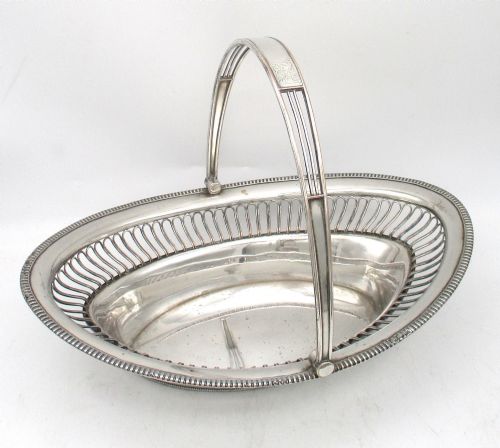
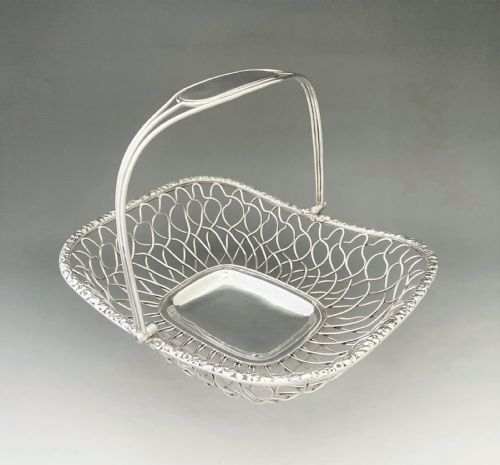
These silver plated sugar basket designs bring coloured glass liners and pierced metalwork together for the table.

Silver Plated Sugar Basket
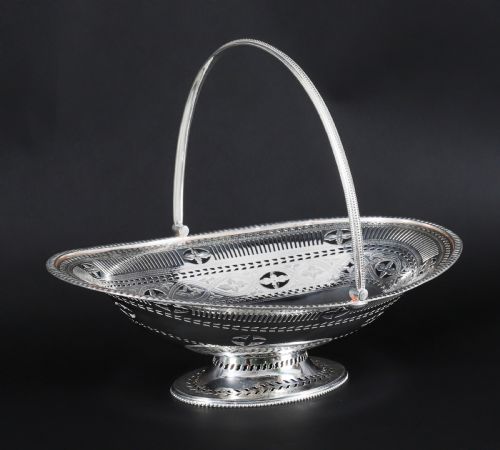
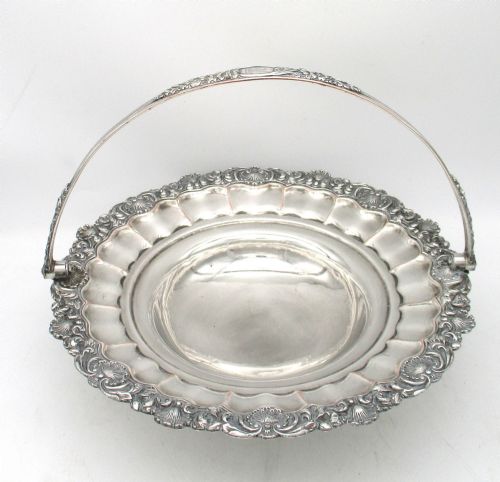
A silver plated sugar basket serves as a small table container designed to hold loose sugar or lumps, frequently paired with a contrasting glass liner. When you search for a silver plated sugar basket, you encounter pieces spanning the eighteenth, nineteenth, and early twentieth centuries, including Georgian, Victorian, and Edwardian examples.
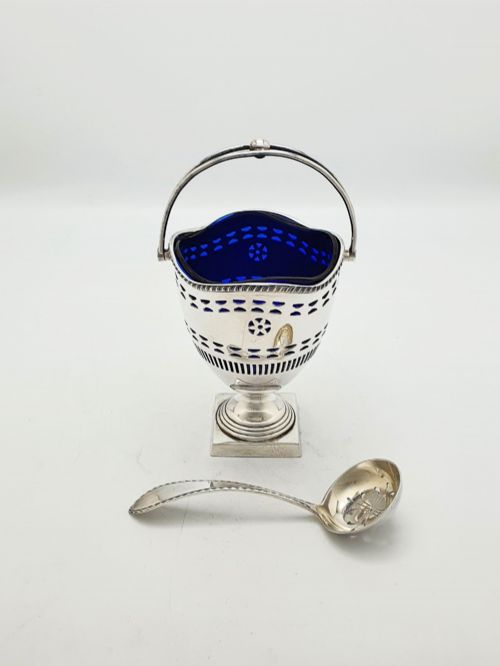
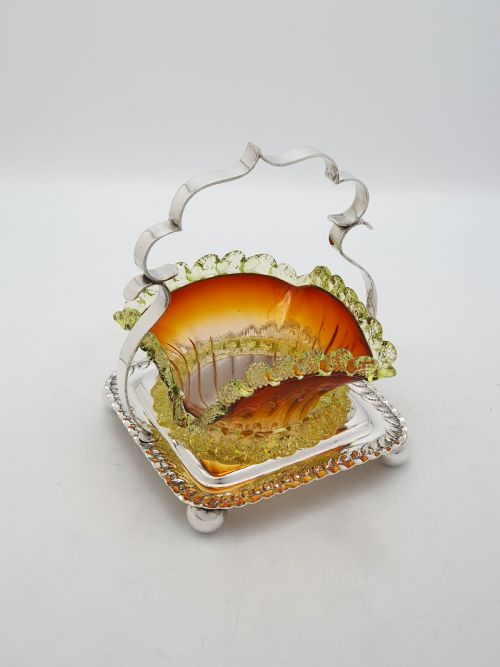
The most common form on this page pairs a pierced or wirework metal frame with a coloured glass insert such as cobalt, ruby, or vaseline glass. These vessels often incorporate swing handles and rest on small feet, taking shapes that range from circular bowls to boat-shaped sweetmeat dishes.

How they were made
Makers formed these pieces using silver plate over a base metal, alongside Old Sheffield Plate which fused a thin sheet of silver to a copper core. Metalwork techniques included wirework construction, piercing, and embossed floral decoration to shape the frames.
Vessels incorporated blown glass liners in varied hues, sometimes held securely within pierced galleries or wire baskets. Gilding was occasionally applied to interior surfaces to complement the outer silver finish.
Vaseline glass liners contain uranium oxide, making these sweet Victorian containers glow an unexpected bright green under ultraviolet light.
What varies in quality
Quality rests upon the crispness of the pierced or wirework patterns and the weight of the underlying metal plate. Finer examples display precise hand-piercing and durable plating that has survived decades of polishing without exposing the base metal.
The glass liner also dictates the standard of the piece, with intact coloured glass inserts - such as cobalt, Bristol blue, or vaseline - retaining their original fit and hue. Maker attribution, such as work by Elkington or WMF, distinguishes standard production from notable workshop output.
Elkington·W M F
The Silver Plated Sugar Basket Glossary
- Old Sheffield Plate
- A fused metal technique where a thin sheet of silver is bonded to a copper base before forming. This method predates modern electroplating and leaves characteristic edge seams.
- Vaseline glass
- A transparent yellowish-green glass produced with uranium oxide content. It glows under ultraviolet light and appears frequently in Edwardian tablewares.
- Swing handle
- A movable arched metal handle attached to the rim of a basket by pivots. It allows the vessel to be lifted easily during service.
- Pierced work
- A decorative technique involving cut-out geometric or floral patterns in the metal body. It lightens the visual weight of the basket and reveals the coloured glass liner within.
- Sweetmeat basket
- A small decorative container intended for confectionery, nuts, or small sweet items. These pieces often feature delicate wirework frames.
Silver Plated Sugar Basket: Frequently Asked Questions
How do I clean a silver plated sugar basket?
Use a soft cloth and a gentle silver polish formulated for plated items, taking care to avoid harsh abrasives that wear away the metal layer.
Remove the glass liner before cleaning the metal frame, and wash the glass separately in warm soapy water.
Are the glass liners usually original?
Many baskets retain their period glass liners, particularly distinctive coloured pieces in cobalt, ruby, or vaseline glass that match the dimensions of the frame.
Replacement liners do occur due to the fragile nature of glass over the centuries, so check the fit within the wirework or pierced gallery.
What is the difference between Old Sheffield Plate and silver plate?
Old Sheffield Plate involves mechanically fusing a sheet of silver to a copper core through heat and pressure before shaping the object. Standard silver plate utilises an electrochemical process to deposit silver onto a base metal substrate in a bath.
How do I date a silver plated sugar basket?
Examine the style, such as Georgian wirework, Victorian neoclassical motifs, or Art Nouveau fluid lines, alongside any maker marks stamped on the base. Construction methods like Old Sheffield Plate point towards the eighteenth and early nineteenth centuries.