



Antique Glass Condiment Set
An antique glass condiment set brings table organisation to life through cut crystal, vibrant liners and bright metalwork.
Antique Glass Condiment Set
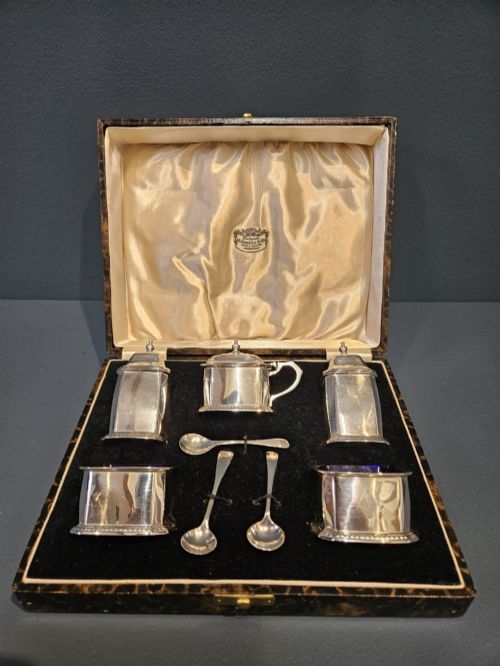
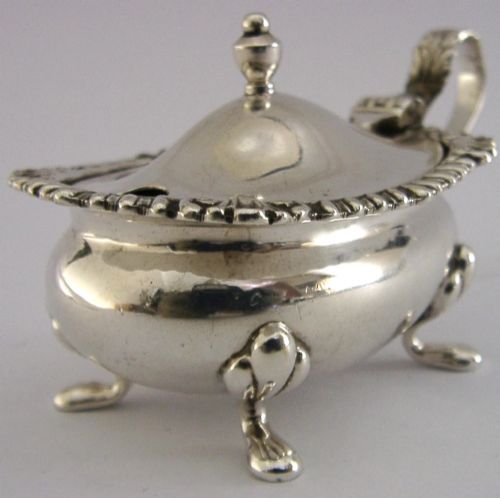
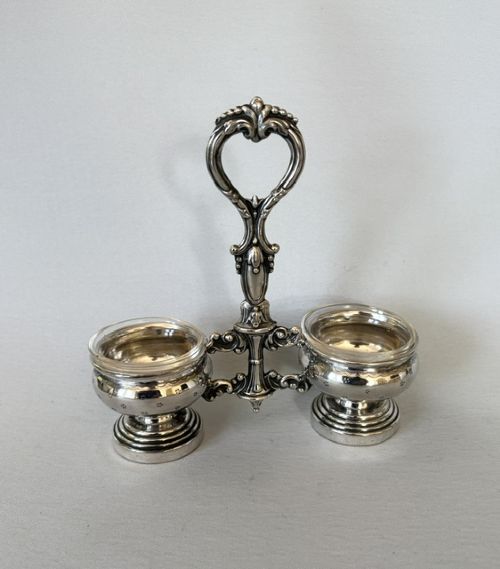
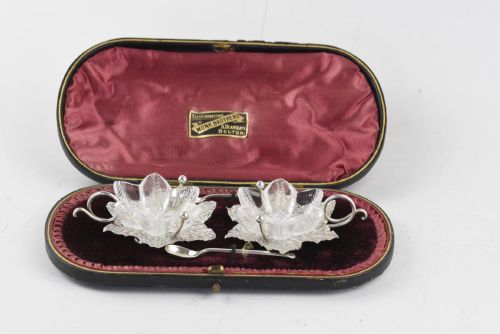
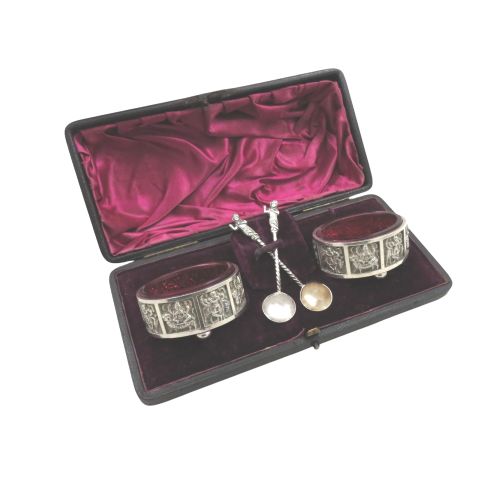
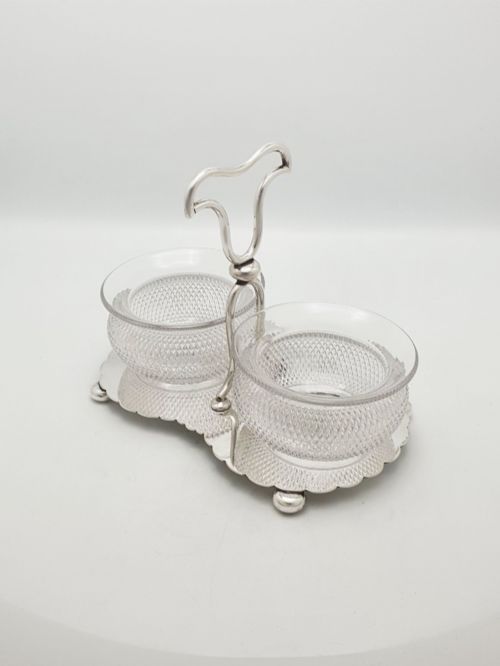
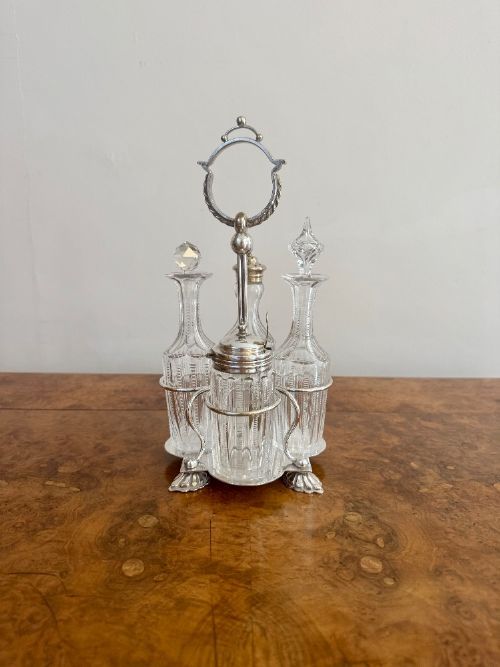
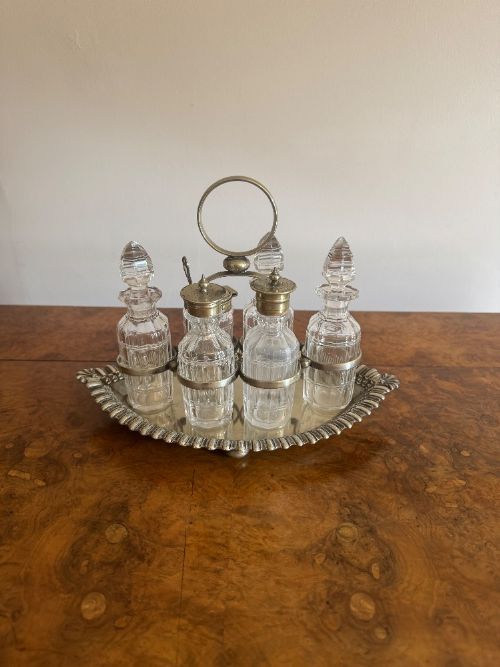
When you search for an antique glass condiment set, you encounter assembled table services designed to hold mustard, salt, oil, vinegar and pepper. These groupings range from multi-bottle stands in silver plate to small pairs of open salts with removable glass liners.
The most common versions on this page date from the Edwardian and Victorian eras, frequently taking the form of plated frame stands holding several glass bottles or jars. Georgian and Art Deco examples also appear, offering either heavy lead crystal cutwork or sleek geometric enclosures.
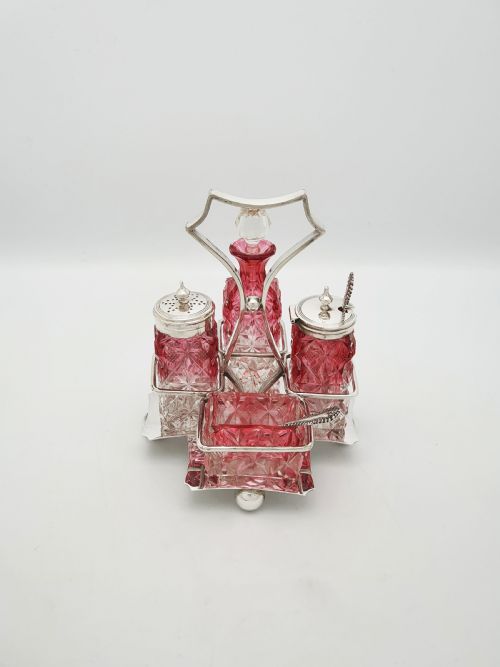
Pieces span single mustard pots to grand seven-bottle cruet stands, reflecting formal dining habits of past centuries. Many retain matched spoons or specific coloured glass inserts such as cobalt blue or cranberry flash.
Materials and construction
Glass components rely on lead crystal and heavy press-moulding or hand-cutting, creating faceted surfaces that catch the light. Coloured inserts utilise cobalt or cranberry glass techniques to provide strong contrast against metal frameworks.
Metal mounts and stands combine sterling silver and silver plate, often shaped through casting, piercing or repoussé work. Frames frequently incorporate handles and feet, whilst fitted velvet cases appear on select sets intended for gifting.
Measures of quality
Quality rests on the crispness of the glass cutting and the weight of the metal frame. Thicker silver plate and heavy lead crystal indicate substantial manufacture, whereas lighter wares show simpler press-moulded forms.
Completeness dictates value, particularly the presence of matching glass stoppers, original liners and correct spoons. Pierced silver gallery work and makers' marks contribute to finer execution.
William Neale·Mappin Brothers·Walker & Hall·Charles Thomas Fox
The Antique Glass Condiment Set Glossary
- Cruet set
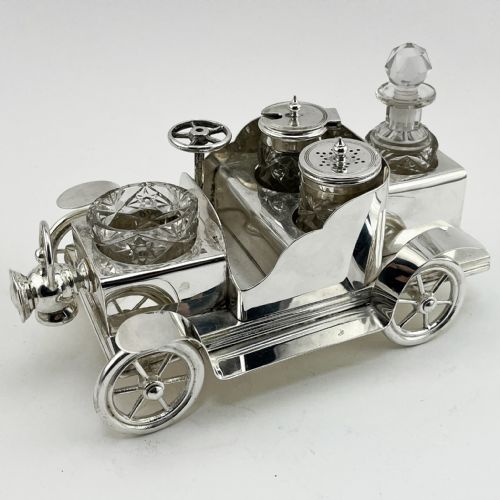
- A stand holding multiple bottles or containers for condiments such as oil, vinegar, salt and pepper.
- Salt cellar
- An open bowl or vessel used to hold loose salt at the table, frequently paired with a miniature spoon.
- Cobalt glass
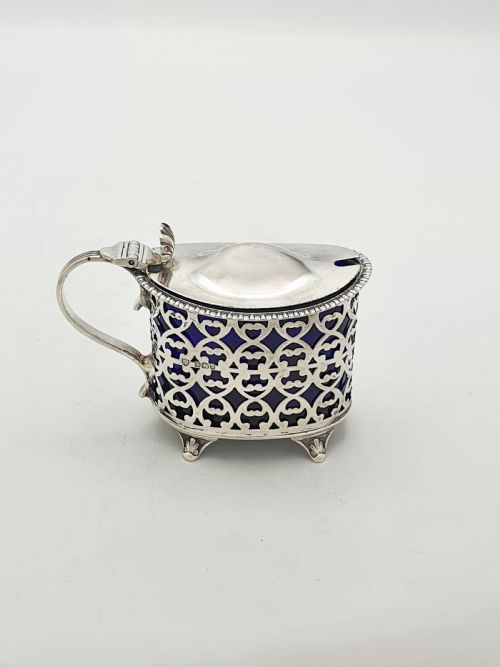
- Deep blue glass commonly used for removable liners inside open salt cellars and mustard pots.
- Lead crystal
- Heavy, high-clarity glass that allows for deep, sharp decorative cutting.
- Bachelor cruet
- A smaller scale condiment set designed for individual use or intimate dining.
Antique Glass Condiment Set: Frequently Asked Questions
What is included in a typical set?
A standard set includes glass bottles, jars or salt cellars held within a metal frame or stand. Many incorporate mustard pots and cruet bottles with matching spoons.
Larger configurations hold up to eight pieces, including dedicated compartments for oil and vinegar bottles complete with glass stoppers.
How do I clean antique glass liners?
Wash glass liners gently in warm soapy water using a soft cloth. Avoid abrasive sponges that can scratch older crystal.
Take care to remove glass inserts from silver or plated frames before washing to prevent moisture trapping against the metal.
How do I date an antique set?
Examine the metal mounts for hallmarks, which indicate the assay office, standard of silver and year of manufacture. Stylistic clues such as geometric Art Deco lines or heavy Victorian piercing also narrow the production era.
Sheffield plate or early electroplate marks help distinguish nineteenth-century examples from later twentieth-century productions.
Are replacement liners available?
Finding exact replacement glass liners for antique stands requires matching precise measurements for diameter and depth. Many collectors accept matched or period-appropriate replacements when originals are missing.
Cobalt and cranberry coloured liners can be sourced through specialist antique dealers and fairs.