

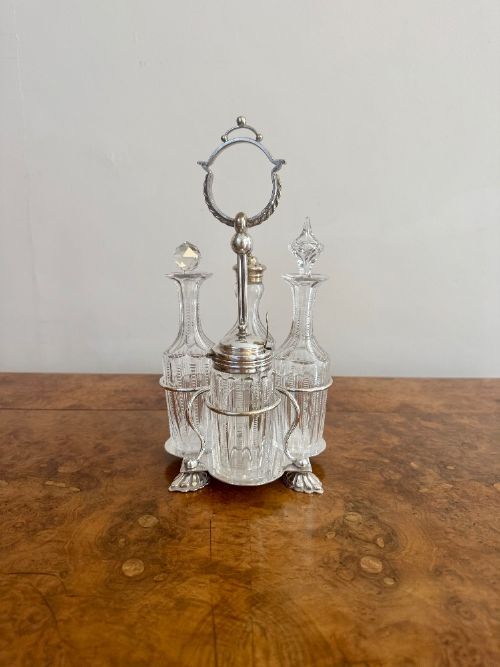


Glass Pot Condiment Caddy
A glass pot condiment caddy is a table stand holding small vessels for sauces and seasonings, combining practical dining utility with decorative metalwork.
Glass Pot Condiment Caddy
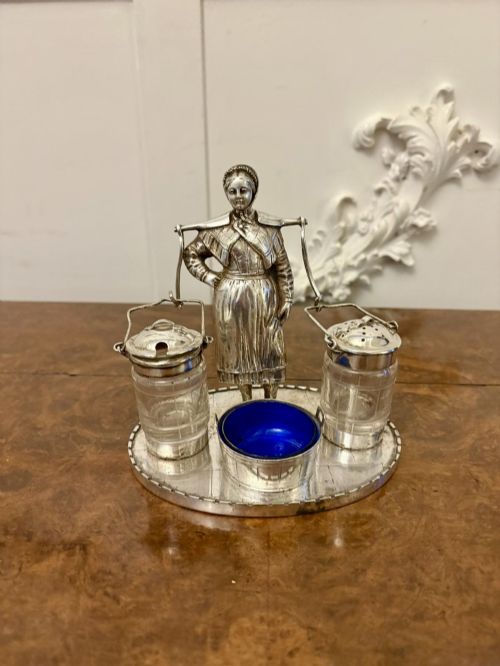
A glass pot condiment caddy brings together framed stands in silver plate, sterling silver or silver plate with glass inserts designed for the dining table. When you search for a glass pot condiment caddy, you are looking at items primarily from the Victorian and Edwardian periods, alongside examples spanning the nineteenth century into the early twentieth century.
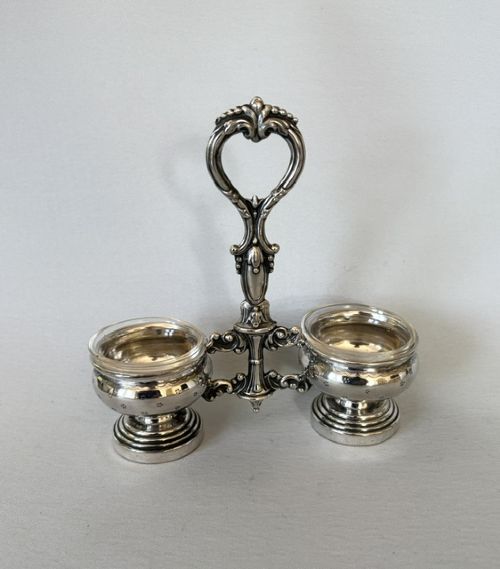
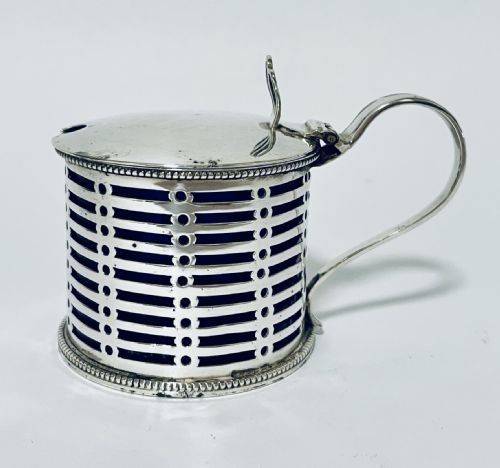
The selections here frequently take the form of cruet sets, condiment sets, or condiment stands, holding cut glass or plain glass pots. Single pieces such as mustard pots, open salts, and preserve dishes also appear within this group.
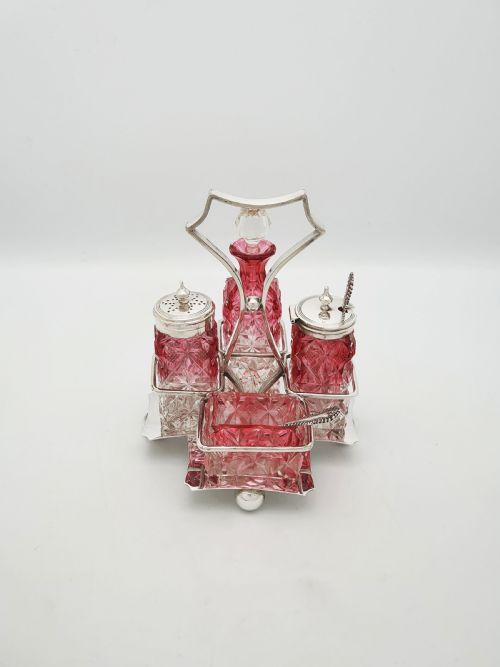
Most pieces you meet on this page date from the Edwardian era or the late Victorian period, often featuring silver plated frames holding cut glass or cranberry glass bottles. Stand designs range from simple bachelor cruets to elaborate carriage cruets and French double condiment stands.
How they were made
Makers constructed the framework using silver plate or sterling silver, shaped through casting, stamping, and soldering to form sturdy handles and bottle rings. These metal mounts hold glass elements produced via cutting, pressing, and blowing.
Glass components include cut glass, cranberry glass, and vaseline glass, displaying facets and colour achieved through specialised mineral additions during the glassmaking process. Metal frames often receive a layer of silver plating over a base metal foundation to create a bright finish.
Glass Pot Condiment Caddy Retail Price Guide 2026
Typical asking prices for glass pot condiment caddy among the pieces listed under this phrase on Sellingantiques today, from the lower quarter to the upper quarter. They describe what is for sale here now, not the wider market.
Carriage cruet sets include miniature wheels so diners could roll the mustard across the table with industrial glee.
What varies in quality
Quality rests in the crispness of the glass cutting and the weight of the metal frame. Thicker glass vessels with deep, hand-polished facets and heavier silver plated mounts represent the finer end of the scale.
The integrity of the matching glass pots within a stand influences desirability. Sets retaining their original coordinated cut glass bottles without replacement inserts demonstrate higher craftsmanship and better preservation.
Mappin Brothers
The Glass Pot Condiment Caddy Glossary
- Cruet set
- A matched assembly of small bottles, jars, or pots held in a metal stand for holding condiments at the table. These sets often included containers for oil, vinegar, mustard, and pepper.
- Silver plate
- A manufacturing method where a thin layer of silver is bonded to a base metal, commonly copper or nickel brass. This technique offered the appearance of solid silver at a lower cost.
- Cranberry glass
- A type of transparent red glass produced by adding gold chloride to the molten batch. It appears frequently in late Victorian and Edwardian tableware.
- Vaseline glass
- A transparent yellowish-green glass coloured with uranium oxide that glows under ultraviolet light. It is characteristic of nineteenth-century and early twentieth-century decorative pieces.
- Open salt
- A small open dish used for holding loose salt before the invention of free-flowing table salt. Diners used a small spoon or pinched the salt out by hand.
Glass Pot Condiment Caddy: Frequently Asked Questions
What is a glass pot condiment caddy used for?
These caddies held essential dining table liquids and powders like mustard, vinegar, oil, and salt within easy reach of diners.
They sat centrally on the dining table or sideboard during meals, allowing guests to season their food according to taste.
How do I date a silver plated cruet set?
Dating relies on stylistic clues in the metalwork, such as the heavy ornamentation of Victorian pieces compared to lighter Edwardian designs.
Maker marks, registration numbers, and base metal stamps underneath the stand also help narrow down the period of manufacture.
Are all glass pots in these sets original?
Because glass pots broke easily over decades of use, replacement bottles appear frequently in older condiment stands and cruet sets.
Examining the fit inside the metal rings and checking the consistency of the glass colour or cutting style helps determine if the bottles belong together.
How should I clean silver plated condiment stands?
Clean silver plate gently using a soft cloth and a specialised silver polish formulated to avoid stripping the thin silver layer.
Wash glass inserts separately in warm soapy water, ensuring they dry completely before placing them back into the metal frame.