



Silver Plate Condiment Frame
A silver plate condiment frame holds your dining table seasonings and sauces in order, combining polished metalwork with cut glass bottles.
Silver Plate Condiment Frame
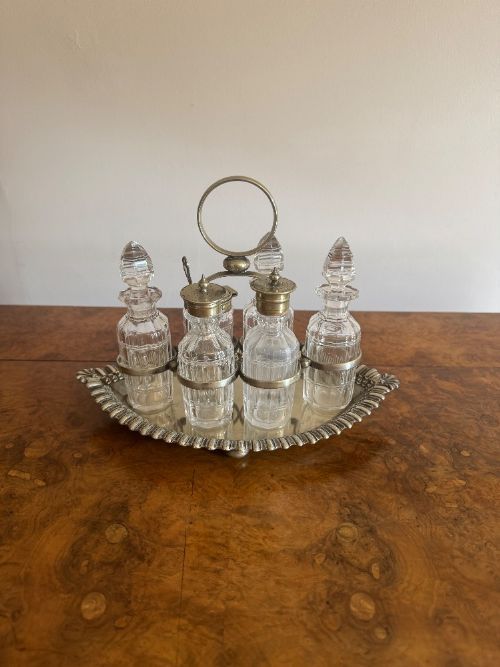
A silver plate condiment frame is a tabletop stand designed to carry multiple bottles, jars, or cruets for everyday dining. When you search for a silver plate condiment frame, you encounter varied domestic forms ranging from small three bottle decanter cruets to large seven bottle and eight piece table sets.
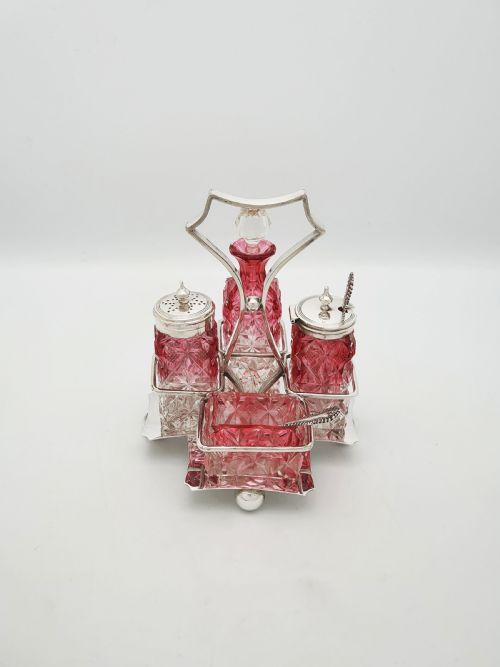
The pieces on this page span the Georgian, Victorian, Edwardian, and Art Deco periods, with Edwardian examples frequently appearing alongside Victorian and earlier Georgian designs. Makers utilised silver plate and Old Sheffield plate alongside clear glass, cut glass, and cranberry glass inserts.
Beyond standard cruet sets, the category encompasses condiment stands and figural novelty pieces such as relish caddies. These frames served a central role in formal dining by keeping sauces, oils, and vinegars within reach of guests.
Materials and construction
Silversmiths constructed these frames using silver plate or Old Sheffield plate as the primary metal base, shaping the frames to hold bespoke glass vessels securely. Many pieces incorporate cut glass, cranberry flashed glass, or simple clear glass bottles fitted with matching silver plated collars and stoppers.
Production techniques relied on durable metal plating over base metals, combined with heavy glass blowing and hand cutting for the cruet bottles. Ornate Victorian examples display chased and cast decorative mounts, while simpler Edwardian frames focus on clean wirework or gallery edges.
Silver Plate Condiment Frame Retail Price Guide 2026
Typical asking prices for silver plate condiment frame among the pieces listed under this phrase on Sellingantiques today, from the lower quarter to the upper quarter. They describe what is for sale here now, not the wider market.
Judging quality and craftsmanship
Quality in a silver plate condiment frame rests on the crispness of the metalwork, the weight and matching integrity of the glass bottles, and the overall proportion of the stand. Superior examples retain their original cut glass inserts without chips, alongside even plating that covers the underlying metal cleanly.
Better pieces often originate from recognised makers or feature specialised elements like figural novelty designs, cranberry glass, or Old Sheffield plate construction. Simpler utilitarian stands show less intricate casting and lighter glass work, while still fulfilling their original domestic purpose.
Mappin Brothers
The Silver Plate Condiment Frame Glossary
- Cruet set
- A collection of glass bottles or jars held in a metal frame for oils, vinegars, and sauces at the dining table. These sets range from small three bottle frames to elaborate seven bottle arrangements.
- Old Sheffield plate
- An early form of silver plating produced by fusing a sheet of silver to a copper ingot before rolling. This technique predates modern electroplating and is found on eighteenth and early nineteenth century pieces.
- Cranberry glass
- A rich pinkish-red transparent glass created by adding gold chloride to the molten glass batch. It appears frequently in late Victorian and Edwardian cruet inserts.
- Condiment stand
- An open metal frame designed to carry sauce bottles, mustard pots, or relish caddies without necessarily forming a traditional multi-bottle cruet set. They provide a portable way to serve table additions.
- Bachelor cruet
- A smaller version of a standard cruet set, typically made with fewer bottles for individual or small household use.
Silver Plate Condiment Frame: Frequently Asked Questions
What is a silver plate condiment frame used for?
A silver plate condiment frame organises and presents table sauces, mustards, oils, and vinegars during meals. The metal stand keeps the bottles steady and allows hosts to pass condiments around the table easily.
Historically, these frames sat at the centre of the dining table for family meals and formal dinners alike. Today, they function both as decorative dining accessories and practical servers for everyday use.
Are the glass bottles usually original?
Many frames retain their original cut glass or cranberry glass bottles, which fit the specific cutouts and collars of the metal stand precisely. Because glass bottles suffered frequent breakage during use, replacement bottles do occur in surviving examples.
Matching stoppers and uniform glass wear across the set help indicate original composition. Close inspection often reveals whether the bottles share the exact age and manufacture of the frame.
How do I date an antique condiment frame?
Dating relies on stylistic markers, manufacturing methods, and any registration marks stamped into the metal frame. Georgian and early Victorian pieces often feature heavier Old Sheffield plate or hand-chased details, while Edwardian examples show lighter wirework and simpler frames.
Design trends shifted from ornate Gothic and Victorian novelty motifs towards cleaner Edwardian lines and later Art Deco geometric forms. Maker marks and registration numbers provide further clues to the exact production era.