

Antique Sweetmeat Basket
When you search for an antique sweetmeat basket, you encounter small, ornate vessels shaped for sugar, confectionery and small treats on the dining table.
Antique Sweetmeat Basket
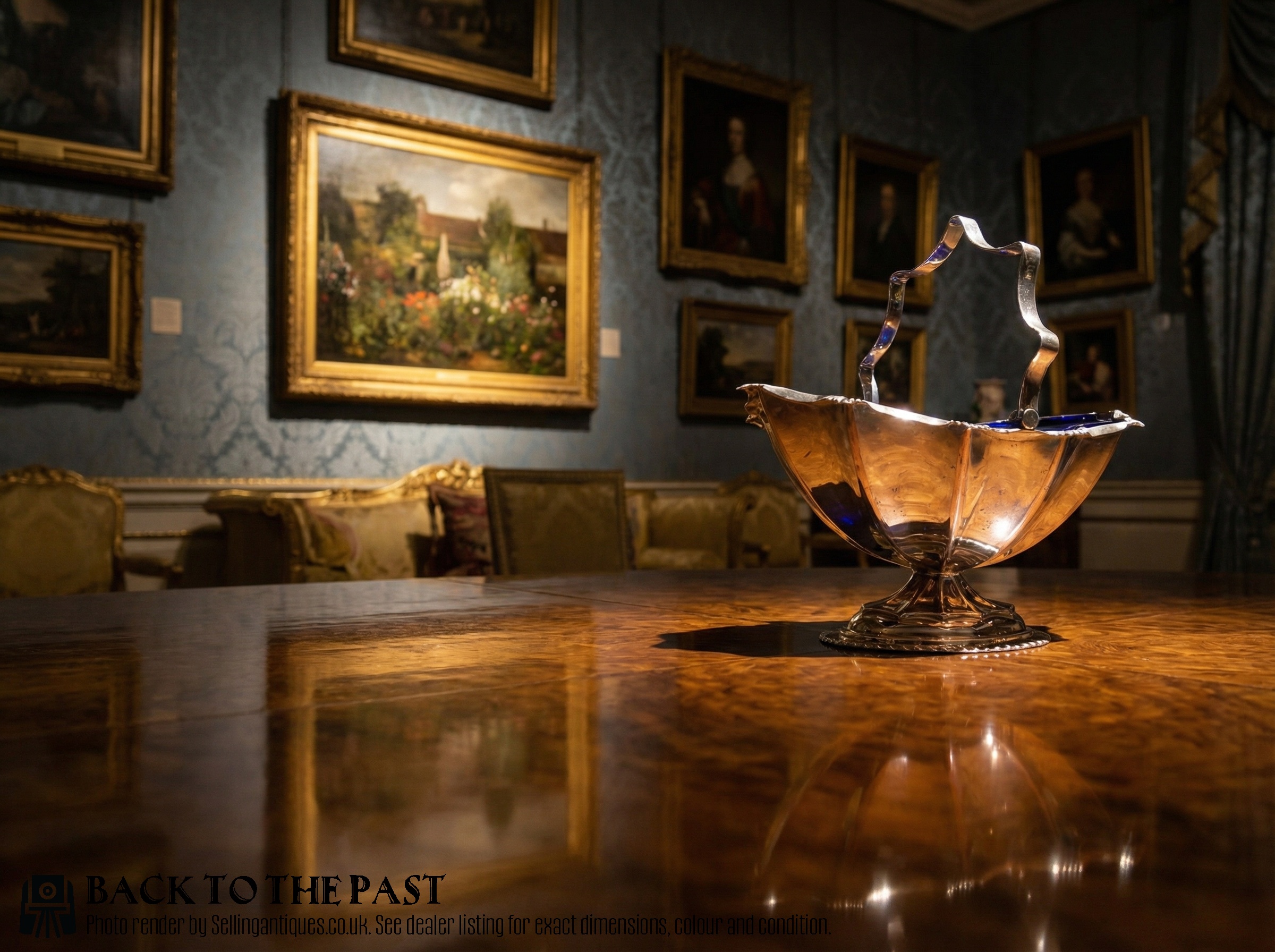
An antique sweetmeat basket is a small, portable container designed for serving confections, sugar or small morsels during formal meals and tea service. The form appears across the eighteenth, nineteenth and early twentieth centuries in various British and European styles.
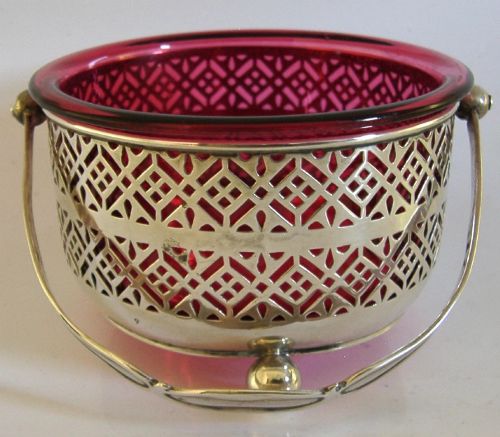
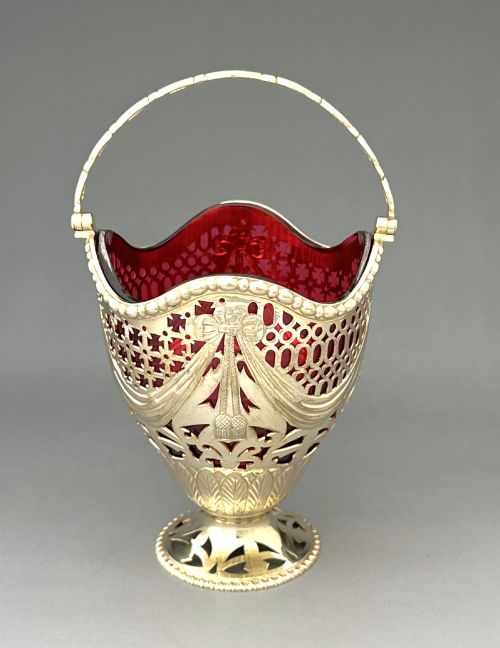
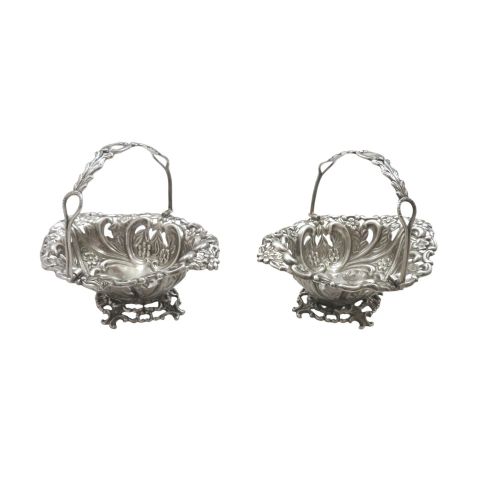
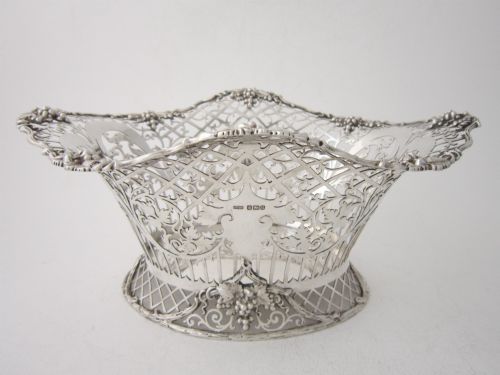
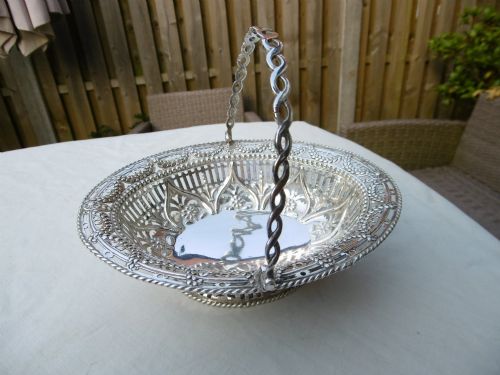
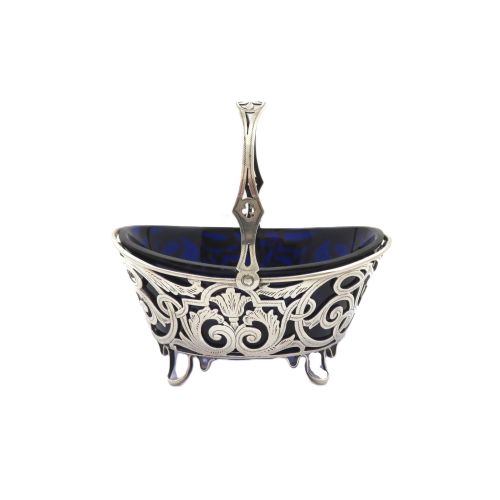
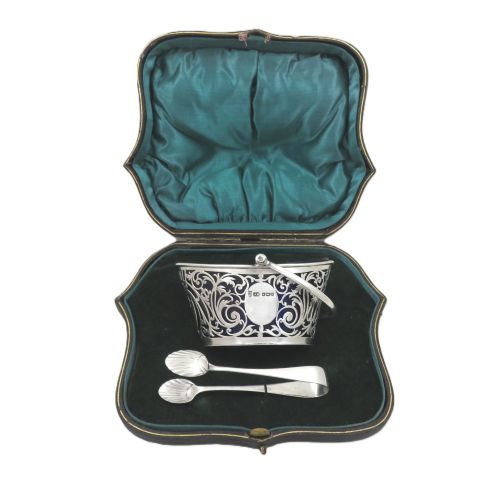
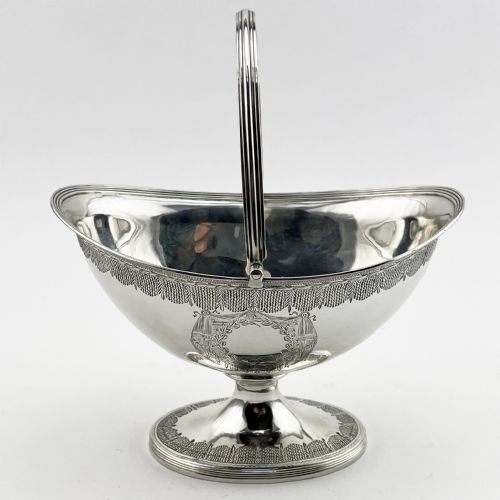
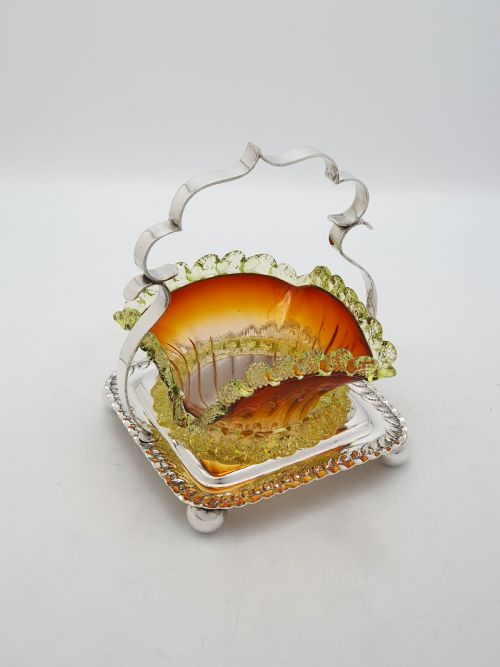
You frequently meet silver examples featuring pierced lattice walls or swing handles, often paired with contrasting glass liners in shades of cranberry, ruby or amber. Porcelain figurals and ceramic bowls also represent the category, particularly from Georgian, Victorian and Edwardian periods.
Makers produced these vessels to sit centrally on the table or pass among guests for sweetmeats, functioning as both functional tableware and decorative centrepieces. The selection spans simple plated items to elaborate sterling silver creations with embossed or filigree detailing.
How they were made
Silversmiths constructed sterling silver and silver plated baskets through techniques of piercing, casting and embossing, cutting intricate lattice patterns into sheet metal and attaching swing handles. Many incorporate coloured glass liners blown to fit the specific basket frame.
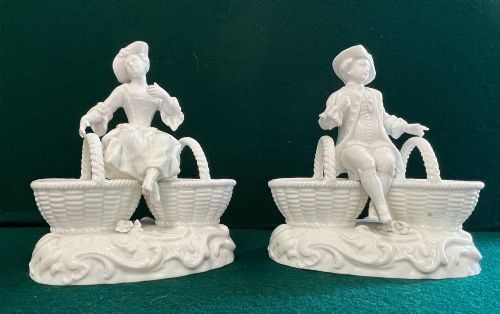
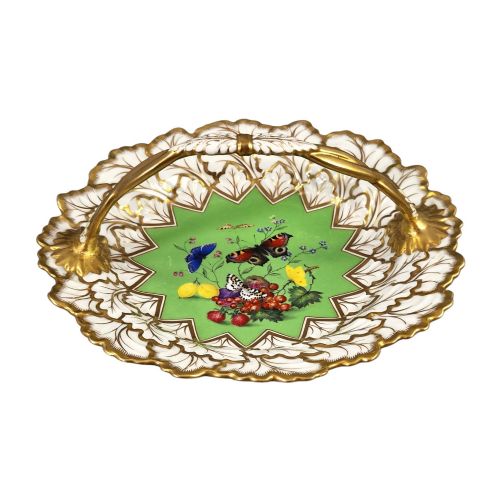
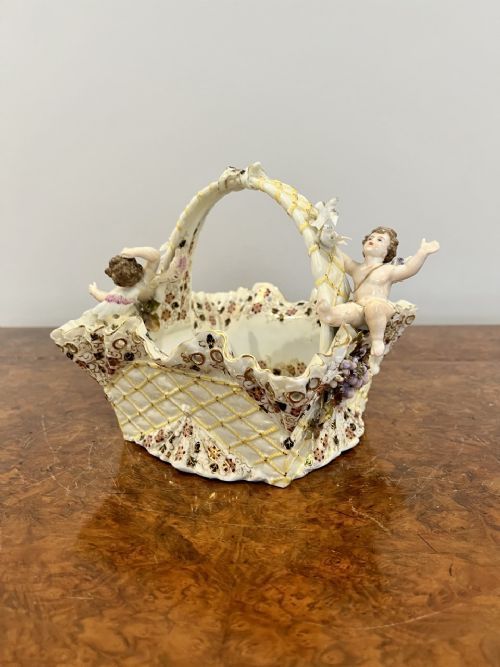
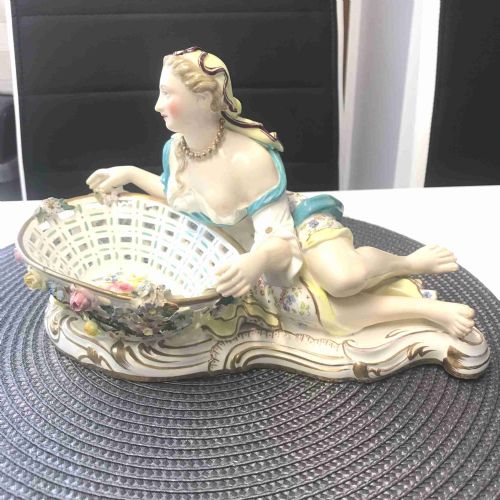
Porcelain examples from factories such as Meissen, Worcester and Volkstedt involve moulded ceramic figures and hand-painted floral details, combining sculptural elements with woven basket textures in the clay.
Some porcelain figures hold tiny ceramic petals in their baskets, frozen mid-harvest by nineteenth-century modellers.
What varies in quality
The distinction between ordinary and exceptional pieces rests on the crispness of pierced metalwork, the weight of the solid silver and the integrity of any glass liner. Hand-chased floral details and cast handles demonstrate superior craftsmanship compared to stamped or thinly plated alternatives.
In ceramic and porcelain pieces, the finesse of the modelling on figural supports and the precision of the hand-painted decoration separate standard factory output from finer artistic works.
Aldridge and Green·Flight Barr and Barr·Henry Chawner·Fenton Brothers·William Comyns·James Deakin and Sons·Meissen·Volkstedt·Royal Worcester
The Antique Sweetmeat Basket Glossary
- Swing handle
- A movable arched handle attached to the rim of a basket by pins or hinges, allowing the handle to drop to either side.
- Pierced work
- A decorative technique where metal is cut through to create openwork patterns such as lattices, scrolls or geometric designs.
- Glass liner
- A coloured or clear glass insert fitted inside an open metal basket to hold moisture or sticky confectionery safely.
- Filigree
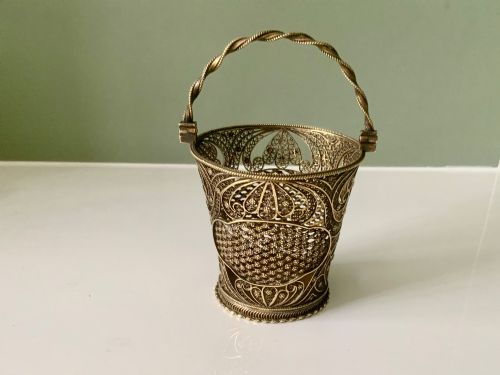
- Delicate ornamental work consisting of fine silver or gold wire twisted into intricate open patterns.
- Sweetmeat
- A confection made with sugar, honey or fruit, historically served in small quantities at the conclusion of a meal.
Antique Sweetmeat Basket: Frequently Asked Questions
What was an antique sweetmeat basket used for?
These vessels held sweetmeats, preserved fruits and confectionery served during dessert courses or formal tea gatherings. Guests selected treats directly from the container as it sat on the table or circulated around the room.
They also functioned as sugar baskets for the tea service, holding refined sugar lumps or loose crystals near the teapot and cups.
How do I distinguish Georgian from Victorian baskets?
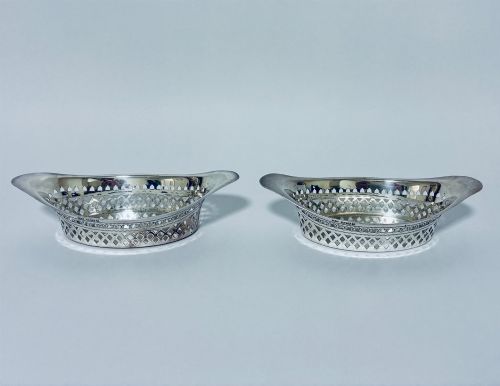
Georgian pieces from the eighteenth century typically exhibit restrained neoclassical piercing, bright-cut engraving and thinner gauge silver with crisp hallmarks. They often display simpler oval or boat shapes.
Victorian and Edwardian examples tend toward heavier casting, more elaborate floral embossing, ornate swing handles and frequent combinations with coloured glass liners.
Are all sweetmeat baskets made of silver?
While silver and silver plate predominate, makers also produced these baskets in porcelain, ceramic and glass. Continental and English porcelain factories created figural sweetmeat dishes featuring painted figures holding baskets.
Old Sheffield plate and later silver plate provided more affordable alternatives to solid sterling silver during the Georgian and Victorian eras.
How should I clean a silver basket with a glass liner?
Remove the glass liner before cleaning the metal portion to avoid exposing the glass to silver polish or harsh chemical dips. Wash the glass liner separately in warm soapy water.
Use a soft cloth and mild polish on the silver, paying attention around pierced sections and engraved details to preserve the original finish.