

Swing Handle Basket
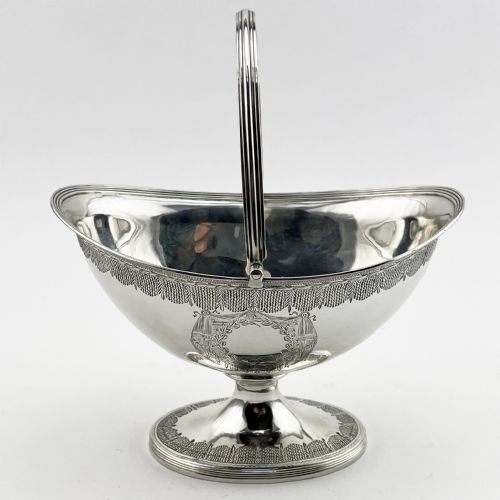
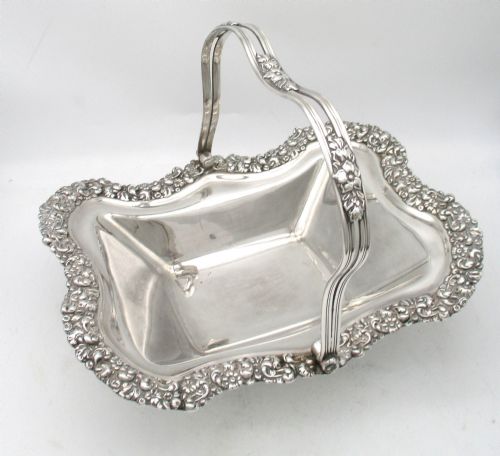
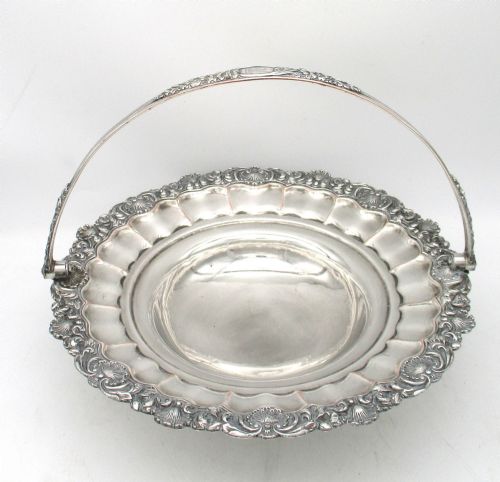
When you search for a swing handle basket, you are looking at functional tableware from the Georgian, Victorian, and Edwardian eras designed for sugar, fruit, or bread.

Swing Handle Basket
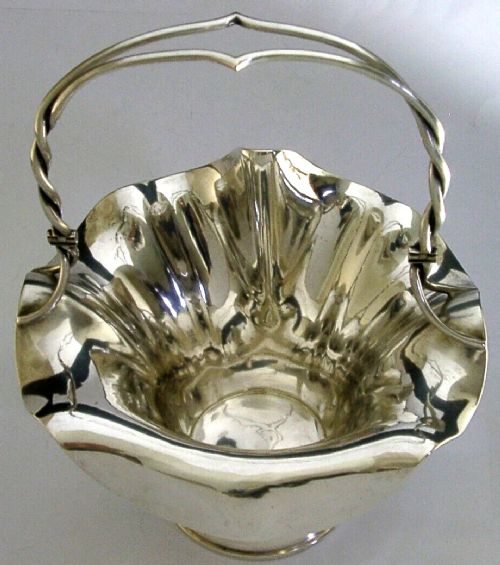
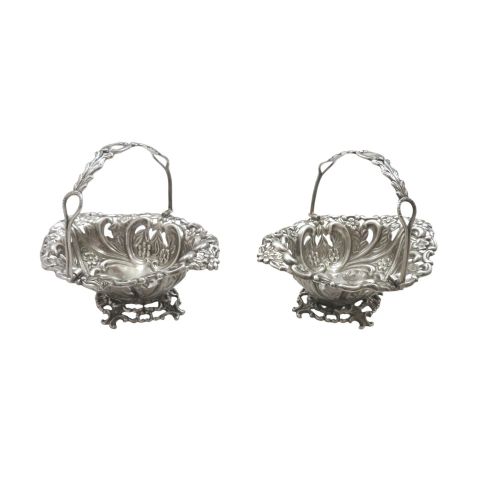
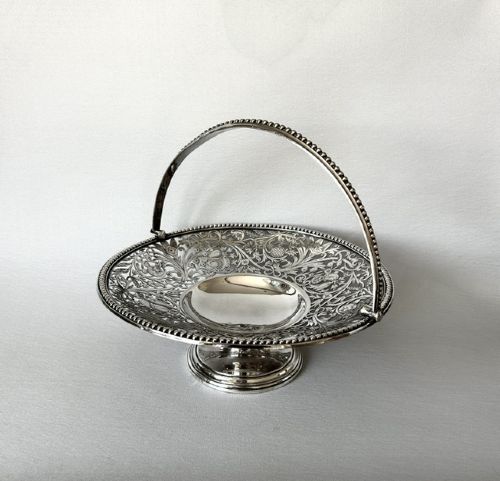
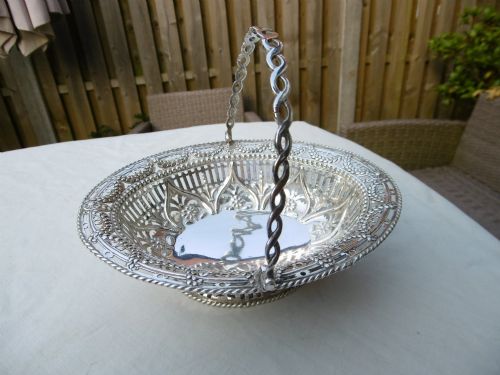
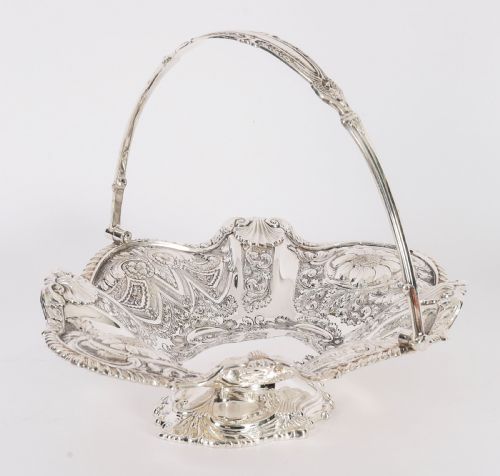
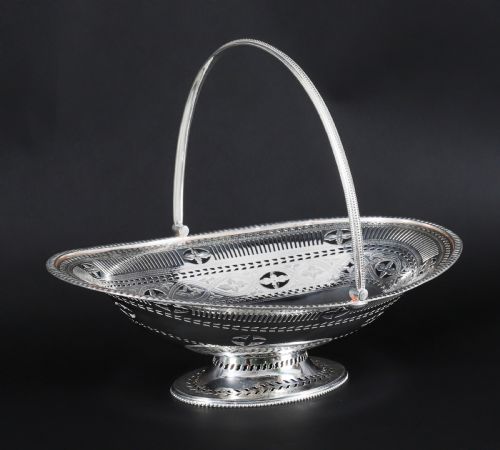
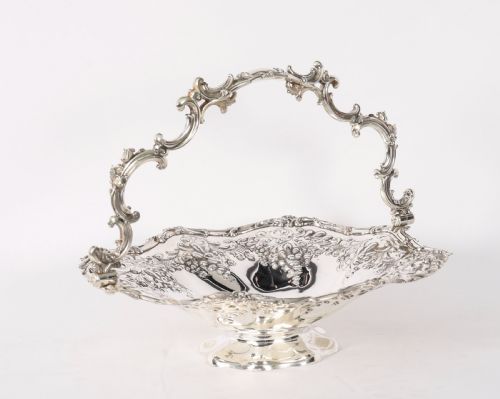
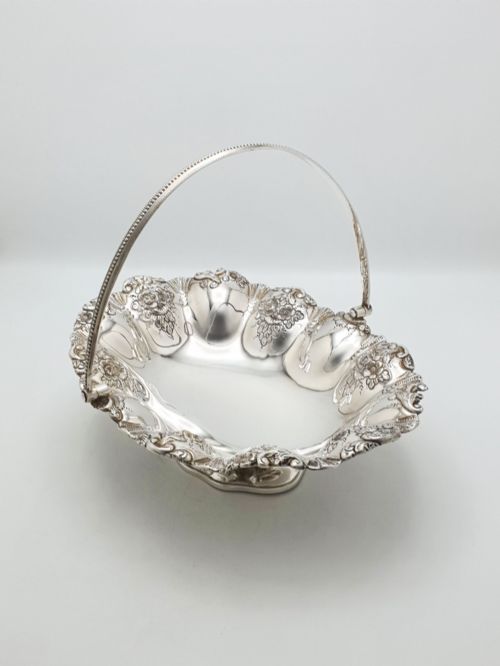
A swing handle basket is a versatile domestic vessel designed with a movable arch handle, predominantly appearing across Georgian, Victorian, and Edwardian periods in forms such as sugar baskets, fruit baskets, and bread baskets.
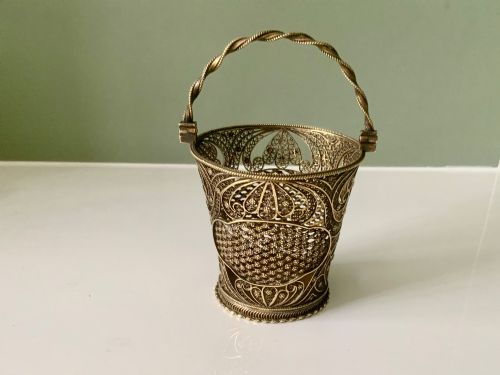
The pieces on this page range from small eighteenth-century sweetmeat containers and cream pails to large nineteenth-century fruit bowls and Edwardian lattice-pierced table centrepieces.
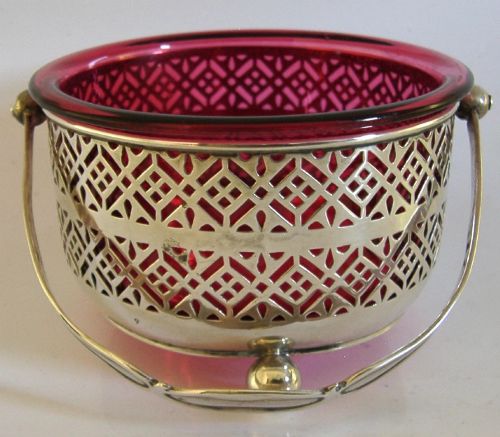
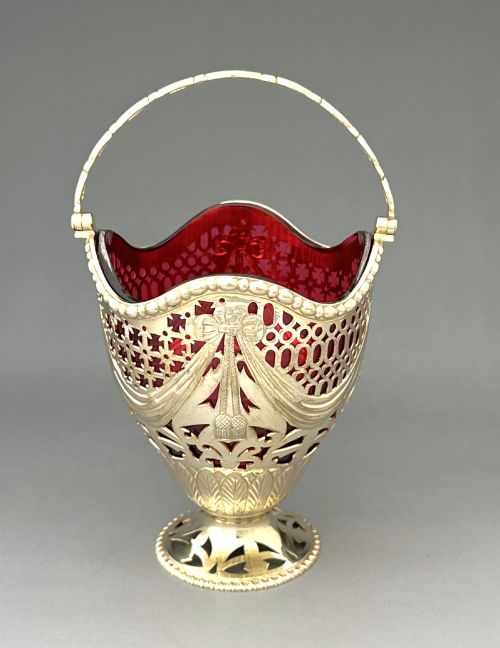
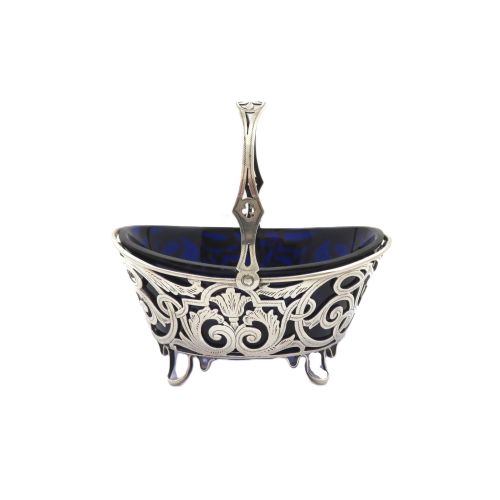
Many designs incorporate fitted glass liners in cobalt, green, or cranberry tones, allowing coloured light to pass through pierced silver or plated lattices.
How They Were Made
Silversmiths and manufacturers utilised sterling silver, silver plate, and Old Sheffield Plate, shaping bodies through piercing, fretwork, wirework, and repoussé embossing.
Swing Handle Basket Retail Price Guide 2026
Typical asking prices for swing handle basket among the pieces listed under this phrase on Sellingantiques today, from the lower quarter to the upper quarter. They describe what is for sale here now, not the wider market.
A sturdy nineteenth-century copper cauldron proves that even heavy kitchenware occasionally demanded a swing handle for transport.
What Varies in Quality
Quality reveals itself in the crispness of pierced or fretwork detailing, the weight of the metal utilised in the body and handle, and the presence of original, undamaged coloured glass liners.
Finely cast floral handles and intact maker marks distinguish superior workshops from standard production pieces, ensuring the structural integrity of the moving hinge mechanism over centuries.
Aldridge And Green·Henry Chawner·George W Scott And Sons Ltd·William Hutton And Sons·James Dixon And Sons Ltd·James Deakin And Sons·Samuel Herbert·William Plummer·Solomon Houghman·Harry Atkin·Hammond Creake And Co·William Bond·Elkington
The Swing Handle Basket Glossary
- Piercing
- The technique of cutting decorative patterns out of sheet metal to create light lattice or fretwork designs. This method was widely used on eighteenth and nineteenth-century sugar and fruit baskets.
- Silver Gilt
- Silver that has been coated with a thin layer of gold on its interior or exterior surface. This finish provided a luxurious appearance and protected the underlying silver from tarnish caused by acidic foods.
- Old Sheffield Plate
- A composite material made by fusing a layer of silver to a thicker copper core before rolling it into sheets. It is characteristic of pieces produced before the invention of electroplating.
- Sweetmeat Basket
- A small decorative vessel intended for holding confectionery, nuts, or small sweet treats. These delicate items often featured intricate wirework or pierced bodies.
- Repoussé
- A metalworking technique where the artist hammers the metal from the reverse side to form a raised design in relief. This method created textured floral rims and decorative borders on Edwardian and Victorian examples.
- Cranberry Glass
- A distinctive pinkish-red glass produced by adding gold chloride to the molten glass batch. It appears frequently as a contrasting liner inside pierced silver baskets.
Swing Handle Basket: Frequently Asked Questions
What were swing handle baskets used for originally?
These vessels served various functions on formal dining tables, holding items like sugar lumps, fresh fruit, bread, or sweetmeats. The movable handle allowed servants to easily pass or position the basket among guests.
Over time, their domestic utility shifted from functional dining room serveware to decorative display items that showcased the craftsmanship of period silversmiths.
How do I care for an antique silver basket?
Gentle handling and occasional cleaning with a soft cloth and proprietary silver polish maintain the metal surface without wearing down thin details or hallmarks. Avoid harsh chemical dips, especially on pieces with fitted glass liners or delicate wirework.
Glass liners should be washed separately in warm soapy water and dried thoroughly before being placed back into the metal frame to prevent moisture trapping.
How can I tell a Georgian basket from a Victorian one?
Georgian pieces from the eighteenth century often feature restrained neo-classical piercing, bright-cut engraving, or fine wirework frames. Makers marks from this era typically consist of stamped initials rather than full factory names.
Victorian and Edwardian examples tend to display heavier cast floral handles, elaborate repoussé embossing, and more complex machinery-assisted piercing techniques alongside detailed registry or date marks.
Why do some baskets have coloured glass liners?
Coloured glass liners in cranberry, cobalt, or green protected the underlying silver from direct contact with acidic contents like fresh fruit or moist sugar. They also added a striking visual contrast when viewed through the open fretwork and pierced lattices of the silver exterior.