
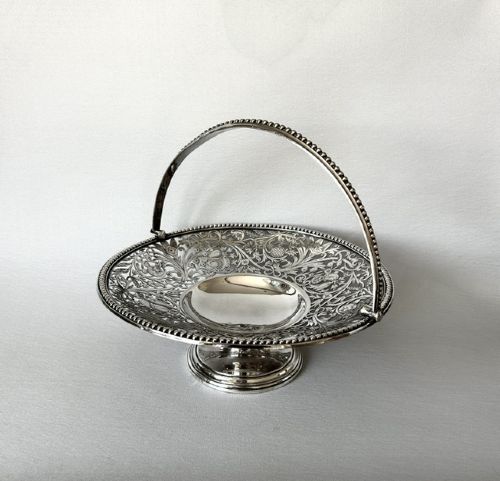
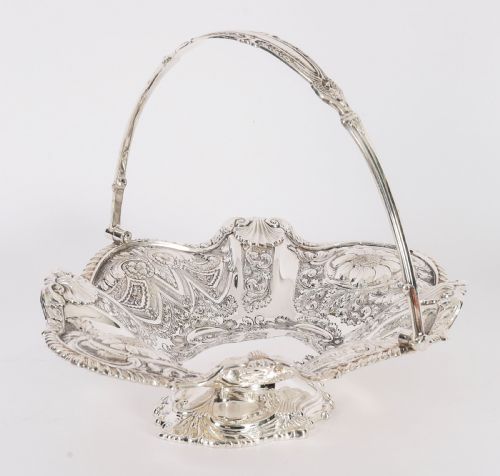
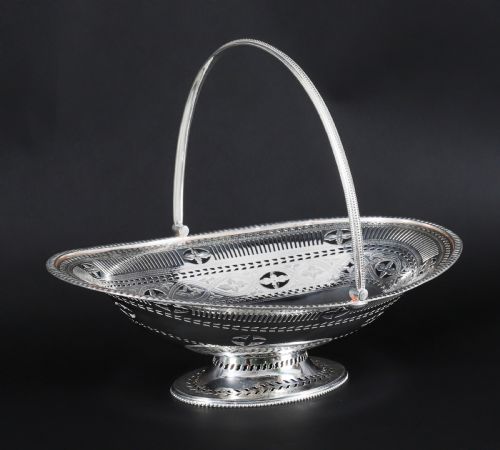
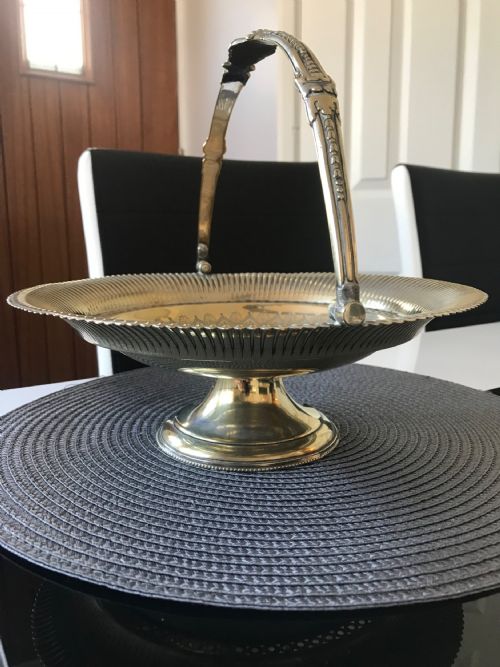
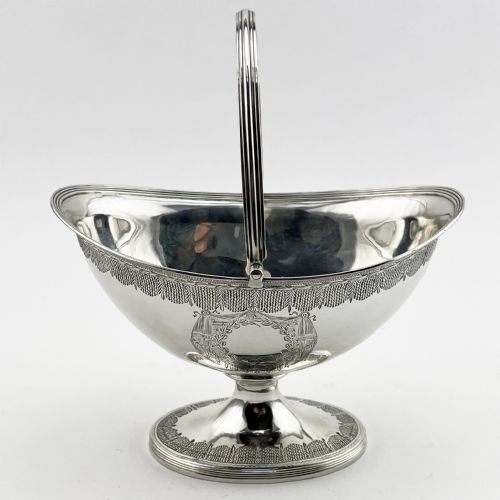


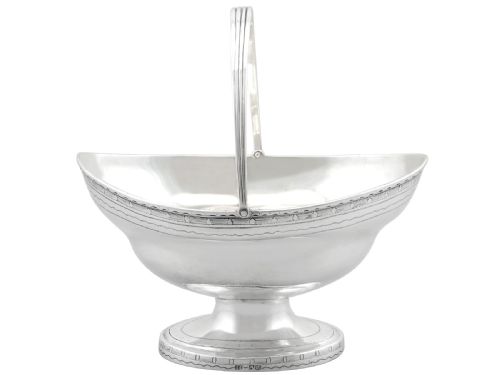


Silver Pedestal Basket
A silver pedestal basket elevates fruit, sweets or floral arrangements upon a footed base, bringing formal elegance to any table.

Silver Pedestal Basket
A silver pedestal basket takes various forms, functioning as a fruit basket, sugar basket, cake basket, or sweetmeat dish raised on a formal footed base. When searching for a silver pedestal basket, collectors encounter pieces spanning the Georgian, Victorian, and Edwardian eras.
The objects serve primarily as table centrepieces and decorative serveware. Forms range from compact sugar baskets with swing handles to large fruit baskets and centrepiece bowls exceeding half a metre in width.
Victorian and Edwardian examples dominate the selection, frequently displaying elaborate decorative treatments such as pierced lattice work, embossing, and neoclassical motifs. Earlier Georgian and 18th-century iterations appear alongside later silver-plated and electroplated nickel silver alternatives.
Materials and construction
Silversmiths constructed these pieces using sterling silver, solid silver, or base metals treated with silver plating, Old Sheffield plating, or electroplated nickel silver, often complemented by interior gold washes and glass inserts. Brass and copper also appear as base or decorative components in specific designs.
Makers shaped the metal through piercing, fretwork, lattice detailing, and embossing to create openwork walls and textural relief. Swing handles, loop handles, and fixed pedestals were soldered or riveted to the main body, while hallmarking stamped the standard of the metal and the assay office directly onto the surface.
Design styles transition from Georgian and Victorian neoclassical forms to fluid Art Nouveau and elaborate Rococo revival patterns.
Assessing craftsmanship and distinction
Quality rests in the crispness of the piercing and the depth of the embossed detailing across the body of the basket. Hand-cut lattice work and delicate fretwork demonstrate superior silversmithing compared to simpler cast or stamped alternatives.
The structural integrity of the pedestal base and the smooth movement of any swing handle indicate superior manufacturing standards. Weight, gauge of metal, and clarity of hallmarks further separate standard commercial serveware from exceptional master pieces.
George W. Scott & Sons Ltd·Henry Chawner·Joseph Rodgers·Hammond, Creake & Co·James Deakin & Sons
The Silver Pedestal Basket Glossary
- Sterling silver
- A silver alloy containing 92.5 percent pure silver by mass, with the remainder usually copper. This standard is denoted by specific hallmarks on British pieces.
- Old Sheffield plated
- A composite material made by fusing a thin sheet of silver to a thicker copper core before rolling them together. This technique predates modern electroplating.
- Sweetmeat basket
- A small decorative vessel traditionally used for serving sweet confections, nuts, or dried fruits after a meal. These often feature delicate pierced decoration and swing handles.
- Fretwork
- An ornamental design created by piercing patterns through the metal sheet. It requires precise hand-sawing to achieve intricate geometric or floral motifs.
- Gold wash
- A thin layer of gold applied to the interior surface of a silver vessel, also known as vermeil. This treatment protected the silver from tarnishing when holding acidic foods.
Silver Pedestal Basket: Frequently Asked Questions
What were silver pedestal baskets used for?
These vessels held fruit, cakes, bread, or sweetmeats on formal dining tables and sideboards. They served both a practical function for hospitality and a decorative role as centrepieces.
Wealthy households used them to display seasonal produce and confectionery during dinner parties and afternoon tea.
How do I date a silver pedestal basket?
Dating relies on reading the hallmarks stamped into the metal, which indicate the assay office, the year letter, and the maker's mark. Stylistic clues such as neoclassical swags or Art Nouveau curves also point to specific decades.
Georgian pieces display different construction traits compared to later Victorian and Edwardian examples.
What is the difference between solid silver and silver plated?
Solid silver pieces are made entirely of precious metal, usually sterling standard, throughout their structure. Silver-plated items consist of a base metal, such as copper or nickel silver, coated with a thin layer of pure silver.
Plated items offer the appearance and lustre of solid silver at a different tier of manufacture.
How should I clean a silver pedestal basket?
Cleaning requires a soft microfibre cloth and a reputable silver cream formulated to remove tarnish without abrading the surface. Avoid harsh chemical dips, especially on plated items or pieces with gold wash interiors.
Regular, gentle polishing preserves the original detail and patina of the metal.