
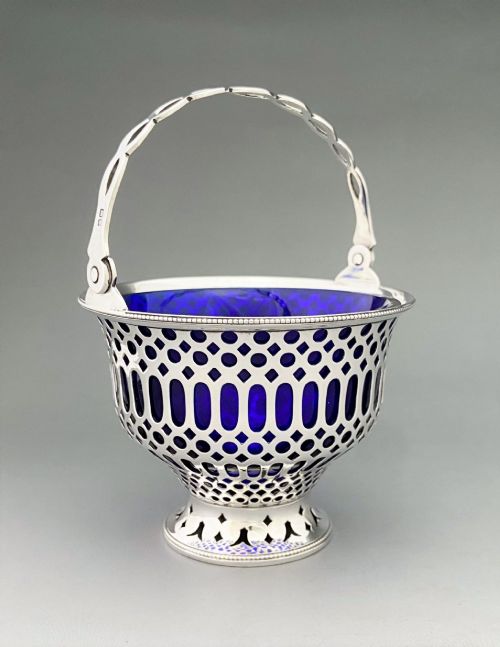


Hallmarked Silver Basket
A hallmarked silver basket brings the refined craftsmanship of the Victorian, Edwardian, and George V eras straight to your table.
Hallmarked Silver Basket
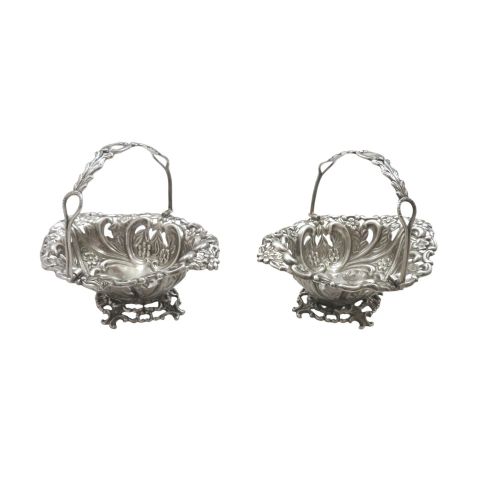
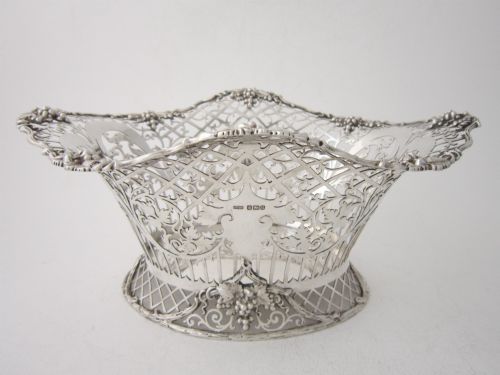
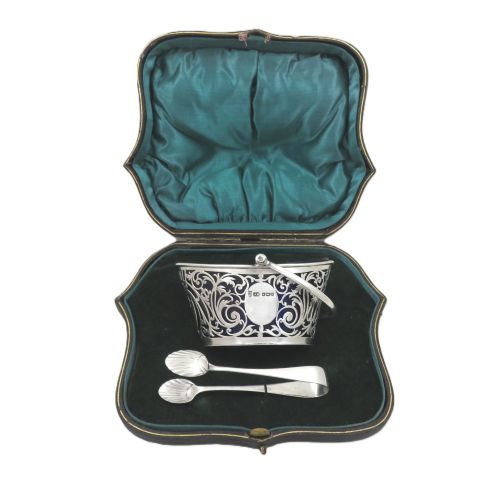
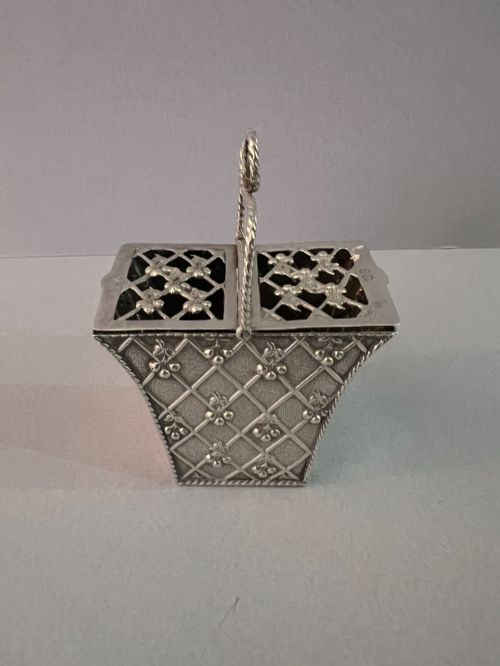
The selection ranges from grand centrepiece bowls and swing-handled vessels to intimate miniature sweetmeat baskets and cased sugar sets. These objects reflect the changing dining habits and decorative tastes of the late nineteenth and early twentieth centuries.
Makers utilised these forms to showcase intricate metalwork, often pairing the sterling silver body with contrasting inserts or mounting them on raised pedestals. Each piece serves as a tangible link to traditional British silversmithing output.
Assessing quality in silver baskets
The distinction between standard and exceptional pieces rests upon the crispness of the pierced decoration and the structural integrity of the handle mechanism. Heavier gauge silver provides a substantial feel and prevents distortion of the openwork walls.
Master silversmiths achieved superior results through balanced proportions and refined chasing, ensuring the hallmarks remain clear and legible despite decades of polishing. The inclusion of original matched components, such as fitted glass inserts or associated spoons, elevates the integrity of the piece.
The listings feature pieces spanning from the 1870s through the 1930s, encompassing Victorian, Edwardian, and George V styles in solid silver.
Joseph Rodgers·William Comyns·Robert Hennell·Atkin Brothers·James Dixon And Sons·Fenton Brothers·Asprey
The Hallmarked Silver Basket Glossary
- Hallmark
- Official stamps applied to precious metals indicating the standard of purity, the assay office, and the year of manufacture. These marks provide the primary means for dating British silver.
- Piercing
- A technique where metal is cut away to form decorative openwork patterns, commonly used on baskets to lighten the visual weight. It requires steady hand-sawing and subsequent filing.
- Swing handle
- A hinged handle attached to the rim of a basket, allowing it to fold flat against the sides. This feature is frequently seen on sugar and fruit baskets from the Victorian and Edwardian periods.
- Silver gilt
- Sterling silver that has been coated with a thin layer of gold on the interior surface. This technique prevents acidic foods from tarnishing the silver and adds a rich internal colour.
- Sweetmeat basket
- A small decorative vessel designed to hold confectioneries, nuts, or small sweet items. These miniature pieces often display the same intricate piercing found on larger bread and fruit baskets.
Hallmarked Silver Basket: Frequently Asked Questions
What were silver baskets originally used for?
These vessels served functional roles on dining tables and sideboards, holding bread, fruit, sugar lumps, or small sweets during formal meals.
Smaller examples were often paired with sifter spoons or presented within fitted cases as gifts for special domestic occasions.
How can I identify the age of a silver basket?
Locate the stamped hallmarks, which typically include a date letter corresponding to specific assay office records from towns such as London, Sheffield, or Chester.
Stylistic cues, such as Edwardian pierced lattice work or Victorian floral chasing, also help narrow down the period of manufacture.
Can I use these baskets for serving food today?
Solid silver is generally food-safe, though items with silver gilt interiors or glass liners are better suited for dry or wrapped confectioneries.
Hand wash the silver gently after use and dry it immediately to prevent water spots and preserve the polished finish.