
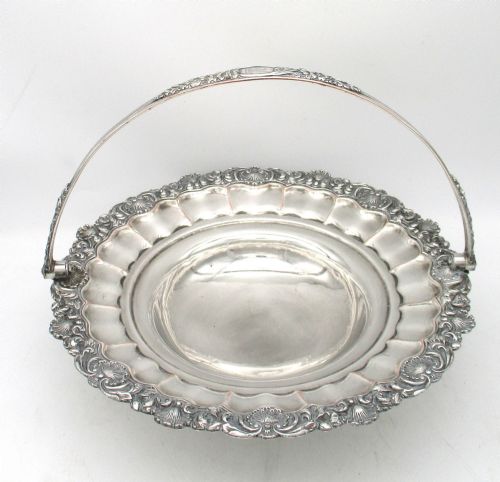


Repousse Silver Basket
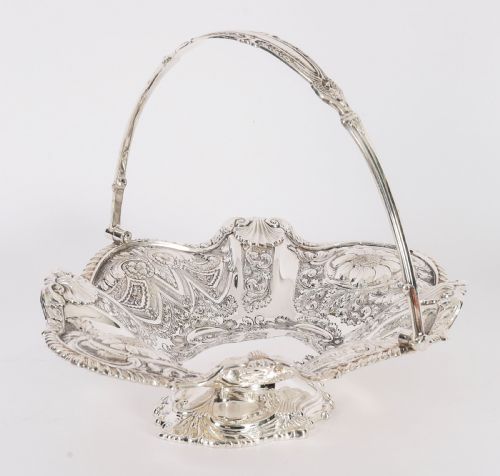
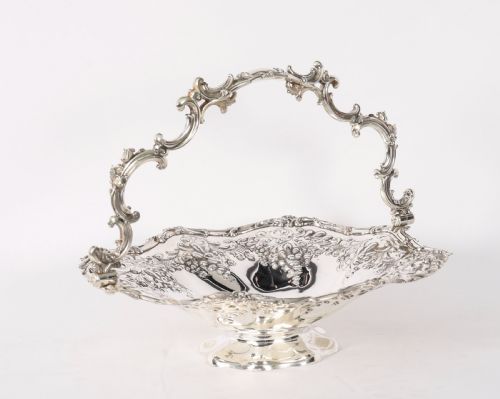
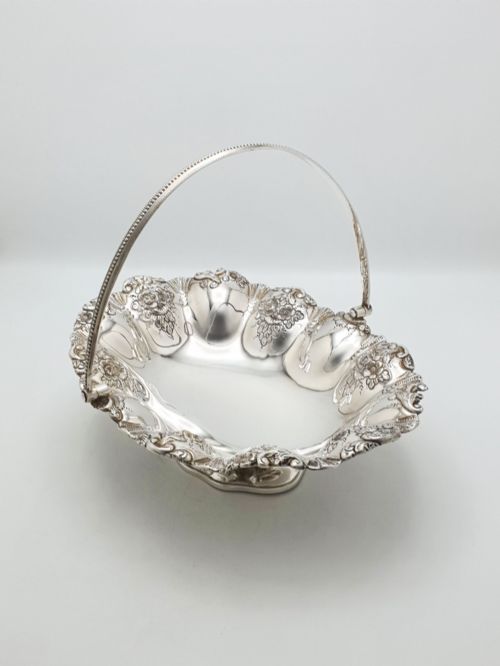
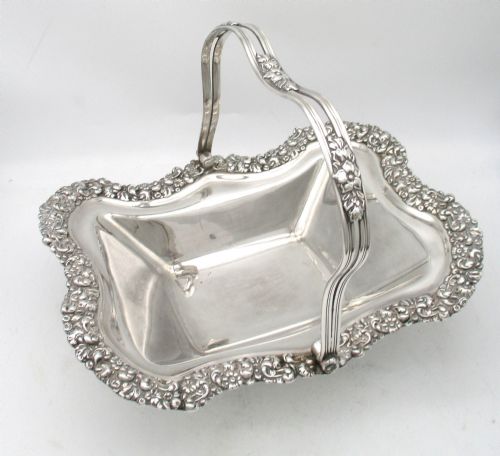
These repousse silver baskets bring heavy floral ornamentation and hand-raised metalwork directly to the table.
Repousse Silver Basket
A repousse silver basket is a decorative vessel intended for fruit, sugar, bread, or general tabletop service. You will frequently encounter Victorian and Edwardian examples shaped as round bowls, oval dishes, or footed fruit baskets.
The form spans solid sterling silver and heavy silver plate over a base metal, often enriched with pierced lattice designs alongside raised floral motifs.
Materials and construction
Makers shaped these pieces from sterling silver or applied heavy silver plate onto copper and base metals using traditional smithing techniques. The characteristic ornamentation relies on hammering the metal from the reverse side to push the relief outwards before refining the details from the front.
Piercing and chasing complement the raised repousse work, removing sections of metal to create openwork borders while sharpening the botanical motifs.
Repousse Silver Basket Retail Price Guide 2026
Typical asking prices for repousse silver basket among the pieces listed under this phrase on Sellingantiques today, from the lower quarter to the upper quarter. They describe what is for sale here now, not the wider market.
One cheerful Georgian offering doubles as a novelty basket pin cushion, proving that even needles deserve an ornate repousse home.
Distinguishing quality in the metalwork
Quality rests entirely on the crispness of the hand-hammered relief and the depth of the chased detailing. Superior examples exhibit sharp, undercut floral work rather than soft, pressed stamping.
The weight of the metal and the precision of any pierced openwork dictate the standing of the piece within its period.
George W. Scott & Sons Ltd·Jonathon Lowndes·John Pepys London·William Speakman·Martin Hall·James Dixon
The Repousse Silver Basket Glossary
- Repousse
- A method of ornamentation where metal is hammered from the reverse side to form a raised design in relief. This technique creates tactile, three-dimensional surface patterns.
- Chasing
- Working the front of the metal with small punches to refine and sink lines into repousse work. It sharpens the edges established during the hammering stage.
- Sheffield Plate
- An early fusing technique where a sheet of silver is fused to a copper core. Pieces made this way display characteristic sandwich edges under magnification.
- Piercing
- Cutting and sawing geometric or organic patterns through the metal wall. It lightens the visual weight of large serving dishes and baskets.
Repousse Silver Basket: Frequently Asked Questions
How do I clean an old silver basket?
Use a soft cloth and a mild silver cleaner formulated to protect antique finishes. Avoid abrasive pastes that wear down delicate raised details.
Take care around pierced sections and deep repousse crevices where old polish can accumulate and harden over time.
Are these baskets safe for serving fruit?
Solid sterling silver and thick silver-plated vessels remain entirely suitable for holding dry fruit or bread. Acidic foods should not sit directly on the metal for extended periods.
Line the interior with a cloth doily if you plan to serve moist items that might react with older silver surfaces.
What is the difference between solid silver and plate?
Solid silver contains a high, regulated purity of precious metal throughout the entire structure. Plated items feature a thin layer of silver bonded over a base metal such as copper.
Examination of the rim or underside often reveals the underlying base metal where the silver layer has thinned from historical use.
How can I date a Victorian repousse basket?
Assay office marks, date letters, and maker stamps stamped directly into the metal provide precise manufacturing years for solid silver pieces. Stylistic shifts from heavy rococo revival curves to lighter floral borders offer further chronological clues.
Compare the mounting style and edge treatment against documented hallmarks from Sheffield and London workshops of the nineteenth century.